
Colinus eatoni
Colinus eatoni
Order: Galliformes / Family: Odontophoridae
About the Colinus eatoni
Colinus eatoni, commonly referred to as Eaton's Quail, is a captivating member of the Odontophoridae family. This species is endemic to the Pacific slopes of southern Mexico, primarily in the states of Oaxaca and Guerrero. The Eaton's Quail thrives in subtropical and tropical moist montane forests and is particularly associated with oak and pine forest habitats. These environments provide the necessary cover and food resources essential for their survival.
Eaton's Quail plays a significant role in its ecosystem, serving as both a predator and prey. It contributes to seed dispersal and pest control through its diet, which consists largely of seeds, berries, and insects. As ground-dwellers, they help to aerate the soil, promoting healthy forest growth. The species is also a key food source for local predators, maintaining the balance within its ecological niche.
Seasonally, Eaton's Quail exhibit notable behavioral changes. During the breeding season, which occurs in the spring and summer months, their calls become more frequent as males establish territories and court females. Outside of the breeding season, they may join small family groups or coveys, which help them to better forage and protect themselves from predators. These quails are known for their elusive nature, often remaining hidden within dense underbrush, making them challenging to observe, yet rewarding for dedicated birders who venture into their mountainous habitats.
The Colinus eatoni belongs to the family Odontophoridae, within the order Galliformes. These birds typically live Unknown, due to limited data on the species..
How to Identify a Colinus eatoni
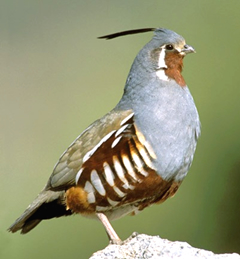
Eaton's Quail is a small to medium-sized bird, measuring approximately 20-25 centimeters in length. One of its most distinguishing features is the bold facial markings. Males typically exhibit a black face with striking white stripes above the eyes and along the throat, giving them a masked appearance. The body plumage is predominantly brown with intricate patterns of black and white, which provides excellent camouflage in their forested environment.
Females, on the other hand, have a more subdued coloration, lacking the stark facial markings of the males. Their plumage is generally more uniform, with a softer brown hue and less distinct patterning, which aids them in nesting duties. Juveniles resemble females but are even duller, with more indistinct markings, allowing them to blend into the understory.
In flight, Eaton's Quail displays a rapid wingbeat and a slight upward tilt, typical of quails, though they prefer to run or walk through their habitat. When perched, they tend to maintain a low posture, often keeping close to the ground or within low vegetation to stay concealed from predators.
Having trouble telling birds apart? Upload a photo to our bird identification tool for an instant species match.
Colinus eatoni Habitat and Range
Preferred Habitat
Eaton's Quail occupies specific habitat types within its range, favoring subtropical and tropical moist montane forests. These environments are characterized by dense undergrowth and a mix of oak and pine trees, providing both cover and a rich food supply. The species is typically found at elevations ranging from 1,000 to 2,500 meters, where the climate and vegetation are best suited to their needs.
In terms of seasonal habitat shifts, Eaton's Quail largely remains within the same geographic area, though they may move slightly higher or lower in elevation depending on food availability and climate conditions during different times of the year. In urban areas, they are rarely seen, as they prefer the tranquility and seclusion of forested regions.
Their preference for densely vegetated habitats makes them more common in rural settings, away from human disturbances, where they can nest and forage with minimal threat from predators or habitat destruction.
Geographic Range
The range of Eaton's Quail is relatively restricted compared to other quail species. They are endemic to the Pacific slopes of southern Mexico, particularly in the states of Oaxaca and Guerrero. Within this region, they are known to occupy specific areas where suitable montane forest habitats exist.
During the breeding season, Eaton's Quail establishes territories within these forests, and their range does not extend significantly beyond these areas. Unlike some other bird species, Eaton's Quail does not migrate long distances, choosing instead to remain within its established range year-round.
Population density can vary within their range, and they are generally more abundant in areas where the forest is dense and human impact is minimal. Although they are not migratory, certain corridors within their range are essential for maintaining genetic diversity among populations, as these birds may occasionally move short distances to find new territories or resources.
Want to know which birds visit your area? Browse our backyard birds by location guides for region-specific species lists.
What Does the Colinus eatoni Eat?
The diet of Eaton's Quail primarily consists of seeds and insects, which they forage for on the forest floor. They prefer seeds from a variety of grasses and plants, which provide the necessary nutrients for their survival. Insects, such as beetles and ants, supplement their diet, particularly during the breeding season when protein is essential for egg production and chick development.
During the spring and summer months, Eaton's Quail may also consume berries and fruits, taking advantage of seasonal abundance. This varied diet allows them to adapt to changes in food availability throughout the year.
Foraging typically occurs during the early morning and late afternoon, when temperatures are cooler, and they can avoid the heat of midday. Eaton's Quail uses a combination of scratching and pecking at the forest floor to uncover food items, a behavior that also helps to aerate the soil and promote plant growth.
Colinus eatoni Behavior and Social Structure
Eaton's Quail exhibits interesting social structures and behaviors. They are generally monogamous during the breeding season, with males establishing territories and performing vocal displays to attract females. Courtship often involves visual displays, with males showcasing their plumage and engaging in a series of calls to entice a mate.
Outside the breeding season, they may form small family groups or coveys, typically consisting of 6-12 birds. These groups provide safety in numbers, allowing them to better detect and respond to predators. Their response to threats typically involves freezing to blend into their surroundings or making a quick, low flight to dense cover.
Daily activity patterns of Eaton's Quail include foraging during the cooler parts of the day and resting during the heat of midday. They are generally terrestrial, preferring to move by walking or running through their habitat, although they can fly short distances if necessary.
Colinus eatoni Nesting and Reproduction
Eaton's Quail builds nests on the ground, typically hidden within dense vegetation to protect from predators. The nest is a simple scrape in the ground, lined with leaves, grass, and feathers to provide insulation and comfort for the eggs and chicks.
The average clutch size ranges from 8 to 12 eggs, with an incubation period of about 22 to 24 days. Both parents participate in incubation, although the female primarily handles this duty while the male stands guard nearby.
After hatching, the chicks are precocial, meaning they are relatively mature and mobile. They leave the nest shortly after hatching, following the parents as they forage. Fledging occurs rapidly, with chicks developing the ability to fly within two weeks. Eaton's Quail typically raises one brood per year, although under favorable conditions, a second brood may be possible.
Colinus eatoni Sounds and Vocalizations
Eaton's Quail is known for its distinctive vocalizations, which play a crucial role in communication within their dense, forested habitats. The primary song consists of a series of clear, whistling notes that rise and fall in pitch, often described as musical and melodious. These calls serve to establish territory and attract mates during the breeding season.
Apart from their song, Eaton's Quail also produces a variety of call notes used for communication between covey members. Alarm calls are sharp and abrupt, alerting others to potential danger. During the dawn and dusk hours, their vocal activity increases, contributing to the forest's soundscape.
Interesting Facts About the Colinus eatoni
- 1Eaton's Quail was named in honor of ornithologist George F. Eaton, who contributed significantly to the study of avian species in Mexico.
- 2The intricate plumage of Eaton's Quail provides excellent camouflage, allowing them to blend seamlessly into the forest floor.
- 3Unlike many quail species, Eaton's Quail prefers to walk or run rather than fly, reserving flight for quick escapes.
- 4Eaton's Quail's diet includes a variety of insects, which helps control pest populations in their forest habitats.
- 5The dense forest habitat of Eaton's Quail makes them one of the more elusive quail species for birders to observe in the wild.
Colinus eatoni Conservation Status
Eaton's Quail is currently listed as Near Threatened by the IUCN. Population trends indicate a decline, primarily due to habitat loss and degradation caused by agriculture, logging, and human encroachment. Conservation efforts focus on habitat preservation and the establishment of protected areas within their range. Historically, Eaton's Quail populations were more robust, but increasing human activity has fragmented their habitats, making it difficult for populations to sustain themselves. Ongoing conservation actions aim to mitigate these impacts, encouraging sustainable land-use practices and raising awareness of the species' ecological importance.
Other Odontophoridae Species


Birds Similar to the Colinus eatoni
These species are often confused with the Colinus eatoni due to similar appearance or overlapping range.

