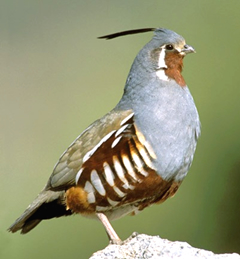
Hibbard's Quail
Colinus hibbardi
Order: Galliformes / Family: Odontophoridae
About the Hibbard's Quail
Hibbard's Quail, known scientifically as Colinus hibbardi, represents a significant species within the family Odontophoridae. These birds are predominantly ground dwellers, preferring the cover of dense vegetation where their cryptic plumage provides excellent camouflage. They inhabit a variety of terrains, predominantly in regions of Central America, where they play an integral role in their ecosystems. The quail's presence is a key indicator of habitat health, as they contribute to seed dispersion and pest control through their diet. During the breeding season, which occurs primarily from late spring to early summer, Hibbard's Quail engage in distinctive courtship behaviors that include vocal displays and physical posturing. This period sees a rise in their activity as they establish territories and form breeding pairs.
Ecologically, Hibbard's Quail supports biodiversity by maintaining balance in insect populations and assisting in seed dispersal, which promotes plant regeneration. These quail are particularly adapted to survive in scrublands, grasslands, and the edges of forests, demonstrating their versatility in habitat preference. Despite their adaptability, Hibbard's Quail populations have faced challenges due to habitat loss and fragmentation, primarily from agricultural expansion and urban development. Conservation efforts are vital for sustaining healthy populations and ensuring that these quail continue to fulfill their ecological roles.
Hibbard's Quail are known for their elusive nature, often heard rather than seen. Their calls contribute to the auditory landscape of their habitats, especially during dawn and dusk. These birds have a unique ecological niche, balancing their role as prey for larger predators while simultaneously exploiting their foraging skills to thrive in various environments. Furthermore, their breeding habits and care for their young are critical to understanding avian life cycles in these regions, offering insights into the broader dynamics of ground-nesting birds.
The Hibbard's Quail belongs to the family Odontophoridae, within the order Galliformes. These birds typically live average 3-5 years with a maximum recorded of 7 years.
How to Identify a Hibbard's Quail
Adult Hibbard's Quail feature a subtly mottled brown and gray plumage that allows them to blend seamlessly into their surroundings. This cryptic coloration is crucial for avoiding predators. The birds exhibit a distinctive black and white facial pattern, which is more pronounced in males, serving as a key identifier. Females tend to have a more subdued appearance, with less contrast in their facial markings. Juveniles resemble the female but have a more uniform, downy plumage that gradually molts into the adult pattern as they mature.
In flight, Hibbard's Quail display a rapid, whirring wing beat, often staying low to the ground before dropping back into cover. This flight pattern is characteristic of quail and can help in distinguishing them from similar ground-dwelling birds. When perched, they adopt a squat posture, accentuating their rounded body shape. Their short, rounded wings and tail are characteristic of the species, aiding in quick take-offs and maneuverability through dense underbrush.
Confusion with similar species may occur, particularly with other quail species such as the Northern Bobwhite (Colinus virginianus). However, Hibbard's Quail can be differentiated by their more muted coloration and specific vocalizations, which vary distinctly from those of the Northern Bobwhite. Observers should note the subtle differences in head markings and overall size, as Hibbard's Quail tend to be slightly smaller.
Having trouble telling birds apart? Upload a photo to our bird identification tool for an instant species match.
Hibbard's Quail Habitat and Range
Preferred Habitat
Hibbard's Quail inhabit a range of environments, favoring dense scrub, grasslands, and forest edges. These habitats provide the necessary cover and food resources they require. They are often found at elevations ranging from sea level to 1500 meters, demonstrating their adaptability to various altitudinal zones. In these settings, the quail utilize the dense underbrush for protection and nesting.
Seasonally, Hibbard's Quail may shift habitats slightly, moving to areas with abundant food sources or safer nesting grounds. While generally avoiding highly urbanized areas, they may occasionally be found on the outskirts of rural communities where natural habitats intersect with agricultural land. This tendency to occupy transitional zones between wilderness and farmland highlights their ecological flexibility.
Their preference for less disturbed habitats means that conservation of these areas is crucial for their continued survival. Efforts to maintain natural landscapes and prevent excessive development are vital for sustaining the diverse ecosystems that Hibbard's Quail depend on.
Geographic Range
Hibbard's Quail are primarily found in Central America, with populations concentrated in countries like Mexico, Guatemala, and Honduras. Their range is predominantly limited to regions that offer the dense cover and open feeding areas they require. During breeding seasons, these quail are most active in their core range, establishing territories in suitable habitats.
While generally non-migratory, Hibbard's Quail may exhibit local movements in response to seasonal changes in food availability or habitat conditions. These movements are typically short-range, confined within their established territories. Despite lacking long-distance migratory behavior, their presence in specific areas can fluctuate with environmental conditions, such as drought or habitat degradation.
Population densities are highest in regions where agricultural practices have not overtaken natural landscapes. These hotspots provide insights into the preferred habitats and conditions that sustain viable quail populations. Conservation of these areas is essential in preventing further range contraction and ensuring the species' long-term survival.
Want to know which birds visit your area? Browse our backyard birds by location guides for region-specific species lists.
What Does the Hibbard's Quail Eat?
The diet of Hibbard's Quail consists primarily of seeds, grains, and a variety of insects, which they forage for on the ground. They exhibit a preference for seeds from native grasses and forbs, which constitute the bulk of their diet during the non-breeding season. During the breeding season, the quail's diet shifts to include more protein-rich insects to support the energy demands of reproduction and chick rearing.
Foraging typically occurs in the early morning and late afternoon, aligning with cooler temperatures and reduced predator activity. Hibbard's Quail use their short, stout bills to glean food from the ground, often scratching at leaf litter and soil to uncover hidden prey. This method not only enables them to access a variety of food sources but also aids in soil aeration and seed dispersal.
Prey size ranges from small insects, such as beetles and ants, to larger invertebrates, depending on availability. The seasonal variation in diet highlights the quail's adaptability and ecological importance in controlling insect populations. Their foraging habits also contribute significantly to the health of their ecosystems, promoting plant diversity and soil quality.
Hibbard's Quail Behavior and Social Structure
Hibbard's Quail are social birds, typically forming small coveys outside of the breeding season. These groups provide safety in numbers, enhancing their vigilance against predators. Territorial behavior becomes more pronounced during the breeding season, when males engage in vocal displays and physical posturing to attract mates and defend nesting sites.
Courtship displays involve a series of calls and movements that signal readiness to potential mates. Once paired, Hibbard's Quail exhibit strong pair bonds, with both parents participating in the care of the young. These quail are primarily ground dwellers, spending much of their time foraging or seeking cover from predators.
Their daily activity patterns include periods of intense feeding during the early morning and late afternoon, interspersed with resting and preening. During these times, Hibbard's Quail remain vigilant, using their well-developed senses to detect threats. In response to predators, they rely on their cryptic coloration and rapid, low flight to escape. Their ability to blend into their surroundings is a key survival strategy, minimizing the need for direct confrontation with predators.
Hibbard's Quail Nesting and Reproduction
Hibbard's Quail construct nests on the ground, often hidden beneath dense cover such as shrubs or tall grass. The nest itself is a shallow depression lined with grass, leaves, and feathers, providing insulation and camouflage. Preferred nesting sites are those that offer protection from both weather extremes and predators.
A typical clutch consists of 8-12 eggs, which are white to pale cream and speckled with brown. The incubation period lasts approximately 23 days, with both parents sharing the responsibility of incubating the eggs. This cooperative behavior ensures that the eggs remain protected and at a consistent temperature.
After hatching, chicks are precocial, meaning they are relatively mature and mobile shortly after birth. They leave the nest within a day, following their parents and learning to forage for food. Fledging occurs around two weeks after hatching, although the young often remain with the parents for an extended period, receiving guidance and protection. Hibbard's Quail typically raise one brood per year, although favorable conditions may allow for a second.
Hibbard's Quail Sounds and Vocalizations
The primary song of Hibbard's Quail is a series of clear, whistling notes that rise and fall in pitch, serving both as a territorial marker and a mating call. These vocalizations are most commonly heard during the breeding season, echoing through their habitats at dawn and dusk. In addition to their song, these quail produce a variety of call notes used for communication within coveys.
Alarm calls are sharp and staccato, designed to alert fellow quail to the presence of predators. These calls prompt immediate vigilance and can trigger a coordinated escape response. Compared to other quail, their calls are softer and more melodic, providing a unique auditory signature that aids in identification.
Dawn chorus behavior is particularly notable, as the collective calls of multiple quail create a rich tapestry of sound that defines the acoustic environment of their habitats. This vocal activity serves a dual purpose of reinforcing social bonds and establishing territorial boundaries.
Interesting Facts About the Hibbard's Quail
- 1Hibbard's Quail have a unique trait where their chicks are precocial, being able to walk and feed shortly after hatching.
- 2The quail's distinctive calls are most active during dawn and dusk, creating a symphony that defines their habitat's soundscape.
- 3Unlike many birds, both male and female Hibbard's Quail participate equally in incubating eggs and rearing chicks.
- 4Hibbard's Quail are known for their rapid, low flight, which is a key survival tactic against ground predators.
- 5These quail play a crucial ecological role in seed dispersion, aiding in the propagation of various plant species.
- 6Their diet shifts seasonally to include more protein, primarily insects, during the breeding season to support chick growth.
- 7Despite being ground dwellers, Hibbard's Quail can be remarkably elusive, often detected by sound rather than sight.
Hibbard's Quail Conservation Status
Hibbard's Quail currently hold a status of least concern according to the IUCN, although their populations are subject to pressures from habitat loss and fragmentation. The primary threats include agricultural expansion, urban development, and the associated degradation of their natural habitats. Despite these challenges, some populations remain stable due to their adaptability to a range of environments. Conservation efforts focus on habitat preservation and restoration, emphasizing the importance of maintaining natural landscapes. Protected areas and reserves play a crucial role in safeguarding these birds, offering refuges from human encroachment. Historically, Hibbard's Quail populations have fluctuated in response to environmental changes and human activities. Current trends suggest a need for continued monitoring to prevent declines and ensure that protective measures are effective. Public education and community involvement in conservation initiatives are also vital in promoting sustainable coexistence with these quail.