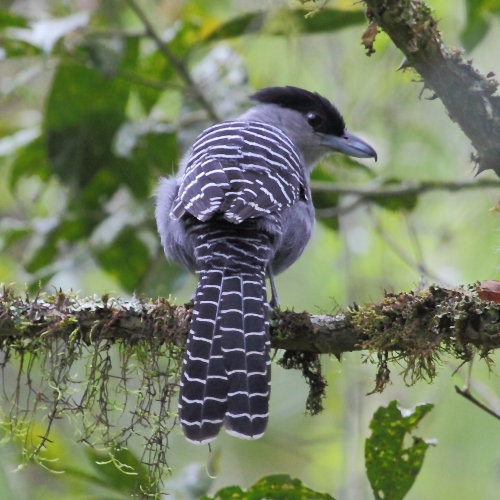
Collared Antshrike
Thamnophilus bernardi
Order: Passeriformes / Family: Thamnophilidae

Wikimedia Commons
About the Collared Antshrike
The Collared Antshrike (Thamnophilus bernardi) is a captivating species within the family Thamnophilidae, endemic to the dry forests and scrublands of South America. This bird is particularly significant due to its specialized habitat preferences, which include areas of dense underbrush and secondary growth in the lowlands and foothills of western Ecuador and northern Peru. Despite its relatively localized range, the Collared Antshrike plays a critical role in its ecosystem as an insect predator, which helps control insect populations and contributes to the biodiversity of its habitat.
This species is often found in the Tumbes-Chocó-Magdalena region, a biodiversity hotspot known for its high endemism. Here, the Collared Antshrike thrives in semi-deciduous forests and edge habitats, where it can be observed foraging for insects among the foliage. Its presence is an indicator of the health of these unique ecosystems, which are increasingly threatened by deforestation and habitat fragmentation.
The ecological role of the Collared Antshrike extends beyond mere insect control. By participating in the complex web of predation, it influences the population dynamics of other species and contributes to the overall stability of its environment. Seasonal behaviors of this species include slight altitudinal migrations in response to food availability, although it generally remains within its established range year-round. The Collared Antshrike's adaptability to different microhabitats within its range underscores its resilience, yet it also highlights the fragility of its preferred environments, which face ongoing ecological pressures.
The Collared Antshrike belongs to the family Thamnophilidae, within the order Passeriformes. These birds typically live average 4-5 years, with a maximum recorded of 7 years..
How to Identify a Collared Antshrike
Identifying the Collared Antshrike involves noting several distinct field marks. Adult males exhibit a striking black plumage contrasted by a prominent white collar around the neck. This collar is highly visible and serves as a key identification feature. Females, however, display a more subdued plumage with shades of brown and rufous, lacking the male's bold black and white contrast. Juveniles resemble females but may have even duller coloration and less defined markings.
The sexual dimorphism in Collared Antshrikes is pronounced, making gender identification straightforward in the field. In terms of size, this species is medium-sized for an antbird, with a length of about 15 to 17 cm and a weight ranging between 25 and 30 grams. Similar species that might cause confusion include other members of the Thamnophilus genus, such as the Barred Antshrike, but these typically lack the distinct white collar.
In flight, the Collared Antshrike exhibits a somewhat rounded silhouette, with short, rounded wings and a relatively long tail. When perching, it often holds its body in a horizontal position, with its tail slightly cocked upwards. This posture, along with its distinctive plumage, helps birders identify the species even when partially obscured by foliage.
Having trouble telling birds apart? Upload a photo to our bird identification tool for an instant species match.
Collared Antshrike Habitat and Range
Preferred Habitat
The Collared Antshrike predominantly inhabits dry forests and scrublands, favoring areas with dense understory vegetation. These habitats are typically found at low elevations, generally below 1,200 meters. In western Ecuador and northern Peru, this bird is a common sight in the Tumbes-Chocó-Magdalena region, where semi-deciduous forests provide ideal conditions for foraging and nesting.
Seasonal shifts in habitat use are minimal for this species, as it tends to remain within its established range throughout the year. However, slight altitudinal movements may occur in response to changes in food availability, particularly during dry seasons when insects become less abundant in lower areas.
The presence of the Collared Antshrike in urban areas is limited, as it prefers natural and semi-natural environments. However, it can occasionally be found at the edges of agricultural lands or in secondary growth near human settlements, where suitable habitat conditions are maintained. Its reliance on specific habitat types underscores the importance of conserving these ecosystems to ensure the species' continued survival.
Geographic Range
The Collared Antshrike is primarily found in the western regions of South America, with its range extending across western Ecuador and northern Peru. This species occupies a relatively restricted range compared to other members of the Thamnophilidae family, making it a species of interest for conservationists focused on the Tumbes-Chocó-Magdalena region, a recognized biodiversity hotspot.
The breeding range of the Collared Antshrike overlaps significantly with its overall range, as it tends to remain in the same areas year-round. Unlike migratory species, the Collared Antshrike does not undertake long-distance migrations, but it may exhibit localized movements in response to environmental conditions such as food availability or changes in habitat quality.
Population density hotspots for this species are typically found in areas where dense understory vegetation provides ample foraging opportunities and shelter. Conservation efforts in these regions are crucial, as habitat loss due to deforestation and land conversion poses significant threats to the species' long-term survival. Protecting these key areas can help maintain healthy populations of the Collared Antshrike across its range.
Want to know which birds visit your area? Browse our backyard birds by location guides for region-specific species lists.
What Does the Collared Antshrike Eat?
The diet of the Collared Antshrike primarily consists of insects and other small arthropods, which it skillfully captures using a variety of foraging techniques. This bird often employs a strategy known as 'gleaning,' where it picks prey items directly from leaves, branches, and other surfaces. It may also engage in 'sallying,' a behavior where it briefly takes to the air to snatch flying insects before returning to its perch.
Seasonal changes in the diet of the Collared Antshrike are relatively minimal, as it relies on a consistent supply of insects year-round. However, during the rainy season, when insect populations tend to increase, the bird may take advantage of the abundance by broadening its diet to include a wider array of prey species.
The size of prey captured by the Collared Antshrike varies, but it typically targets small to medium-sized insects such as beetles, ants, and caterpillars. Its keen eyesight and agile movements make it an effective predator within its habitat, contributing to the control of insect populations in the ecosystems it inhabits.
Collared Antshrike Behavior and Social Structure
The Collared Antshrike exhibits interesting social and territorial behaviors, often observed in pairs or small family groups. These birds are highly territorial, with both males and females actively participating in the defense of their nesting area. Territorial disputes can involve vocal displays and physical chases, although actual physical altercations are rare.
During the breeding season, the male Collared Antshrike engages in elaborate courtship displays to attract a mate. These displays may include singing, wing flicking, and presenting food items to the female. Once paired, the birds maintain a strong bond and cooperate in raising their young.
The daily activity pattern of the Collared Antshrike is primarily diurnal, with peak foraging activity occurring in the early morning and late afternoon. The species remains alert to predators such as raptors and snakes, often relying on dense vegetation for cover. In response to threats, the bird may emit alarm calls and engage in evasive maneuvers to avoid capture. The Collared Antshrike's social structure and behaviors underscore its adaptability and the complexity of its interactions within its environment.
Collared Antshrike Nesting and Reproduction
The Collared Antshrike constructs its nest with careful attention to detail, utilizing materials such as twigs, leaves, and fibers to create a cup-shaped structure. These nests are typically located in dense shrubbery or low trees, often between 1 to 3 meters above the ground, providing concealment from predators.
Clutch size for the Collared Antshrike generally consists of two to three eggs, which both parents take turns incubating over a period of approximately 14 to 16 days. The young hatch synchronously and are altricial, requiring significant care and feeding from both parents.
Fledging occurs around 12 to 14 days after hatching, at which point the young birds begin to explore their surroundings under the watchful eye of their parents. The species is known to produce one or two broods per year, depending on environmental conditions and food availability. Parental roles are shared, with both male and female contributing to feeding and protecting the young, ensuring their successful development into independent juveniles.
Collared Antshrike Sounds and Vocalizations
The primary song of the Collared Antshrike is a distinctive series of clear, whistled notes that rise and fall in a rhythmic pattern. This song serves both as a territorial call and a mating display, highlighting the bird's presence within its environment. In addition to its melodious song, the Collared Antshrike produces a variety of call notes, including sharp, metallic clicks and softer chirps used for communication between mates.
Alarm calls are more urgent in tone, typically consisting of rapid, repeated notes intended to alert other birds to potential danger. During the dawn chorus, the Collared Antshrike's song can often be heard resonating through the forest, contributing to the rich tapestry of sound that characterizes its habitat.
The vocalizations of the Collared Antshrike are crucial for maintaining social bonds and establishing territory, with each sound playing a specific role in the bird's communication repertoire.
Interesting Facts About the Collared Antshrike
- 1The Collared Antshrike, with its distinct white collar, is one of the few antbirds that exhibits such pronounced sexual dimorphism.
- 2Despite its name, the Collared Antshrike does not specialize in eating ants but rather a wide variety of insects.
- 3The Collared Antshrike's song has been described as one of the most melodious among the thamnophilids, making it a favorite among birdwatchers.
- 4This species can be quite shy, often remaining hidden in dense foliage, which makes it a rewarding challenge for birders to spot.
- 5The Collared Antshrike plays an important role in controlling insect populations, thus maintaining the balance in its ecosystem.
- 6In historical contexts, the Collared Antshrike's habitat has supported numerous other endemic species, highlighting the area's ecological richness.
- 7The bird's ability to adapt to secondary growth areas shows its resilience, although it still faces threats from habitat destruction.
Collared Antshrike Conservation Status
The Collared Antshrike is currently listed as Near Threatened on the IUCN Red List, with population trends indicating a decline due primarily to habitat loss and degradation. The primary threats to this species include deforestation for agriculture and urban development, which result in the fragmentation and destruction of its preferred habitats. Conservation efforts for the Collared Antshrike focus on protecting and restoring critical habitats within its range, particularly in the Tumbes-Chocó-Magdalena region. Initiatives such as establishing protected areas and promoting sustainable land use practices are essential for preserving the biodiversity of these ecosystems. Historically, the Collared Antshrike has faced challenges due to its limited range and specialized habitat requirements. However, ongoing conservation measures and increased awareness of its ecological significance offer hope for stabilizing and potentially increasing its populations in the future.