
Congo Moorchat
Myrmecocichla tholloni
Order: Passeriformes / Family: Muscicapidae

Wikimedia Commons
About the Congo Moorchat
The Congo Moorchat, or Myrmecocichla tholloni, is a captivating member of the Muscicapidae family, notable for its stark black and white plumage. This species is native to the central regions of Africa, particularly thriving in the Democratic Republic of the Congo and neighboring countries. The bird is often found in open woodlands and savanna landscapes, demonstrating a remarkable ability to adapt to various environmental conditions. Its presence in these ecosystems is significant as it plays a role in insect population control, thus contributing to ecological balance.
The Congo Moorchat occupies a niche within the avian community, often seen perched conspicuously on low branches or ground perches, scanning for its next meal. This bird is particularly important in controlling insect populations, as its diet primarily consists of various insects. It also plays a role in seed dispersal, aiding in the propagation of several plant species within its habitat.
Seasonally, the Congo Moorchat exhibits a range of behaviors, including territorial displays during the breeding season. These displays often involve vocalizations and physical posturing to deter rivals and attract mates. The bird's adaptability is further highlighted by its ability to maintain its territory throughout the year, showcasing its resilience in fluctuating environmental conditions. Such adaptability underscores its ecological importance and the intricate balance it maintains within its habitat.
The Congo Moorchat belongs to the family Muscicapidae, within the order Passeriformes. These birds typically live typically 5-7 years, with some reaching up to 10 years..
How to Identify a Congo Moorchat
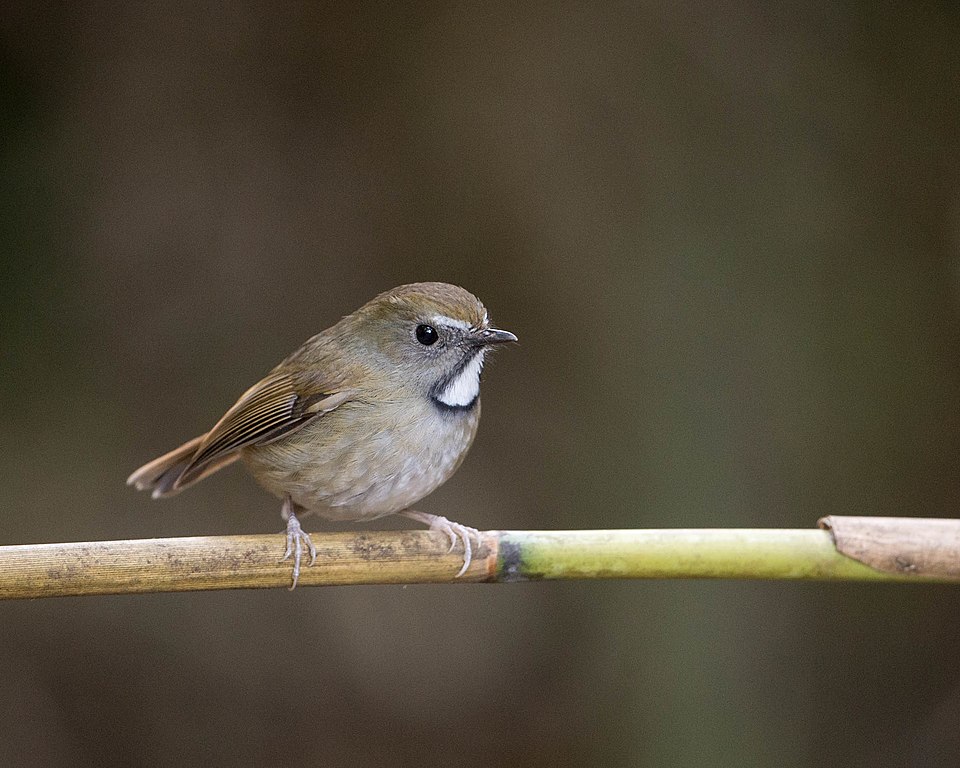
The Congo Moorchat is easily identified by its bold black and white coloration. Adult males and females share similar plumage, with a predominantly black body contrasted by white underparts and a distinctive white wing patch visible in flight. This wing patch is particularly useful for identification, as it flashes prominently against the darker body during flight maneuvers.
Juveniles display a slightly duller appearance, with a more muted black and less pronounced white patches. This difference in coloration provides them with a degree of camouflage against potential predators while they learn to navigate their environment.
In the field, the Congo Moorchat can be confused with other similar-sized birds, but its unique color pattern and behavior help distinguish it. Its flight silhouette is characterized by rapid wingbeats followed by short glides, a pattern that, combined with its distinct plumage, assists in quick identification. When perched, the bird maintains an upright posture, often appearing alert and ready to dart after passing insects.
Having trouble telling birds apart? Upload a photo to our bird identification tool for an instant species match.
Congo Moorchat Habitat and Range
Preferred Habitat
The Congo Moorchat primarily inhabits open woodlands and savannas, where it finds ample opportunities for foraging. These habitats are characterized by scattered trees and shrubs, providing both perching sites and cover from predators. The bird is typically found at elevations ranging from lowlands up to 1,500 meters, adapting well to the varying densities of vegetation present in these areas.
During different seasons, the Congo Moorchat may shift slightly within its habitat to take advantage of food availability or to find optimal nesting sites. While it is not commonly found in urban environments, the bird may occasionally venture into rural areas where human presence is minimal and natural landscapes dominate.
Its preference for open areas with scattered cover allows it to exploit a variety of ecological niches, making the Congo Moorchat a versatile and resilient species within its range.
Geographic Range
The breeding range of the Congo Moorchat is centered in Central Africa, with its presence most notable in the Democratic Republic of the Congo. The bird extends its range into neighboring countries such as Angola, Gabon, and the Republic of the Congo, where suitable habitats exist.
The species is largely sedentary, with limited migratory movements. It tends to remain within its established territories year-round, though some minor dispersal may occur in response to environmental pressures or changes in food availability. This sedentary nature means that population density hotspots are typically consistent across years, particularly in regions where insect prey is abundant.
The Congo Moorchat's preference for specific habitat types within its range influences its distribution and density, with higher concentrations found in areas that provide optimal foraging and nesting conditions.
Want to know which birds visit your area? Browse our backyard birds by location guides for region-specific species lists.
What Does the Congo Moorchat Eat?
The Congo Moorchat's diet predominantly consists of insects, including beetles, ants, and grasshoppers, which it actively hunts on the ground or catches in flight. This insectivorous diet not only supports the bird's energetic lifestyle but also plays a crucial role in maintaining ecological balance by controlling pest populations.
During the wet season, when insects are more abundant, the bird's diet shows little variation. However, in drier periods, the Congo Moorchat may supplement its diet with seeds and small fruits, demonstrating its dietary flexibility. The bird employs a sit-and-wait foraging technique, often observed perched on low branches or rocks, from which it swoops down to capture passing prey.
The Congo Moorchat typically feeds during daylight hours, with peak activity in the early morning and late afternoon. This schedule allows it to exploit the times when insects are most active, maximizing its foraging success.
Congo Moorchat Behavior and Social Structure
The Congo Moorchat exhibits a range of intriguing behaviors, particularly in its social interactions and territoriality. It is generally solitary or found in pairs, with pairs often maintaining and defending their territories vigorously. Territorial disputes involve vocalizations and physical displays, with males frequently engaging in song flights to announce their presence and ward off intruders.
During the breeding season, courtship displays become more pronounced, involving both vocal and visual elements to attract mates and strengthen pair bonds. The bird's response to predators is swift and calculated, often retreating to dense cover or employing distraction displays to lead threats away from nests or young.
Daily activity patterns are characterized by periods of intense foraging interspersed with rest and preening. The Congo Moorchat is primarily diurnal, with most activities occurring during daylight hours. This bird's behavior reflects its adaptability and resourcefulness, traits that have enabled it to thrive in its varied habitat.
Congo Moorchat Nesting and Reproduction
The nesting habits of the Congo Moorchat are closely tied to its choice of habitat. Nests are typically constructed in natural cavities or in crevices between rocks and tree roots, providing protection from predators and environmental elements. The bird uses a variety of materials to build its nest, including grasses, leaves, and feathers, creating a well-insulated environment for its eggs.
The typical clutch size ranges from two to four eggs, with incubation lasting approximately 14 days. Both parents share the responsibility of incubation and feeding the young, displaying a high level of parental investment. Once the chicks hatch, they remain in the nest for about two weeks before fledging.
The Congo Moorchat generally raises one or two broods per year, depending on environmental conditions and food availability. This reproductive strategy ensures that the offspring have the best chance of survival in their challenging environment.
Congo Moorchat Sounds and Vocalizations
The vocal repertoire of the Congo Moorchat includes a variety of sounds, the most prominent of which is its primary song. The song is a series of melodious whistles and sharp notes, delivered with a rhythmic cadence that carries well across its open habitat.
The bird also emits short, sharp call notes used for communication between mates or alerting others to potential threats. In the presence of predators, the Congo Moorchat may produce a series of rapid alarm calls to warn nearby individuals.
During the dawn chorus, its song is particularly resonant, adding to the symphony of sounds that characterize the African woodlands at first light. The Congo Moorchat’s vocalizations are integral to its social and territorial behaviors, providing insight into its interactions and environmental awareness.
Interesting Facts About the Congo Moorchat
- 1The Congo Moorchat is known for its distinctive white wing patch, which can be seen from a considerable distance.
- 2Despite being insectivorous, the Congo Moorchat occasionally consumes small fruits during periods of insect scarcity.
- 3The bird's song is a complex melody of whistles and chirps, often used in territorial displays.
- 4Congo Moorchats are adept at catching insects mid-flight, showcasing their agility and precision.
- 5While generally solitary, the Congo Moorchat forms lifelong pairs, emphasizing strong monogamous bonds.
- 6Juvenile Congo Moorchats have a muted plumage compared to adults, offering better camouflage against predators.
- 7The species plays a crucial role in controlling insect populations, aiding in the ecological balance of its habitat.
Congo Moorchat Conservation Status
The Congo Moorchat is currently listed as Least Concern by the IUCN, with stable population trends across its range. While specific population numbers are not well-documented, the bird appears to maintain adequate numbers throughout its habitat. Primary threats to the Congo Moorchat include habitat destruction due to agricultural expansion and deforestation. Conservation efforts focus on protecting natural habitats and promoting sustainable land-use practices. Monitoring programs are essential to ensure that population levels remain stable and that the species continues to thrive in its native range. Historically, the Congo Moorchat has demonstrated resilience in the face of environmental changes, but continued conservation attention is necessary to safeguard its future.
Other Muscicapidae Species


Birds Similar to the Congo Moorchat
These species are often confused with the Congo Moorchat due to similar appearance or overlapping range.
