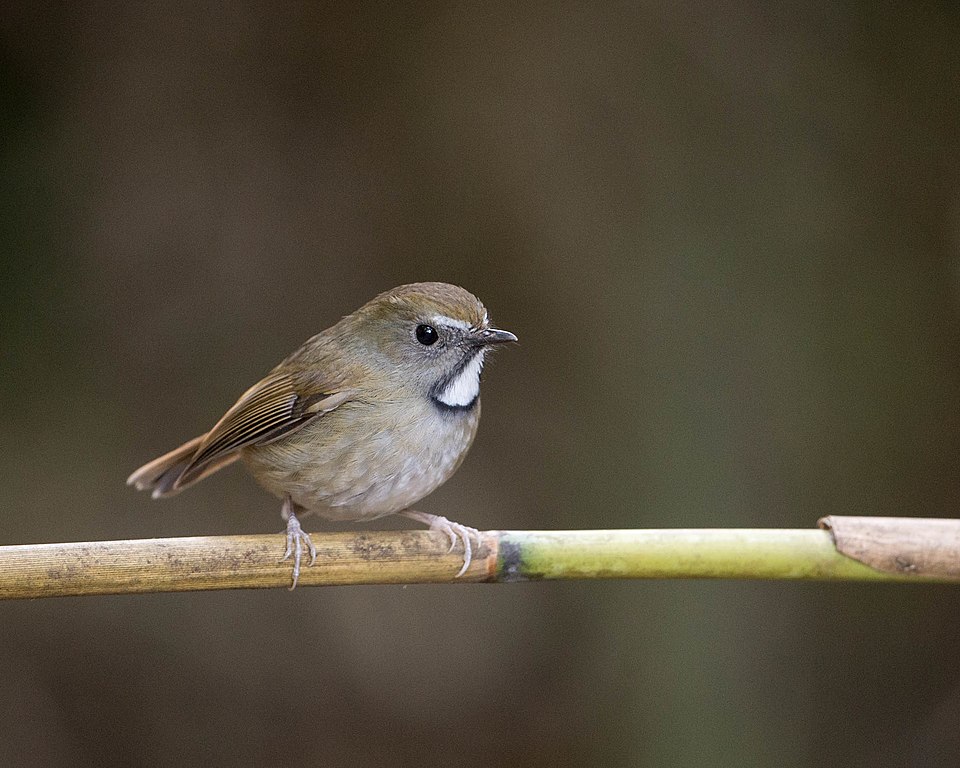
Cossypha fasciiventris
Cossypha fasciiventris
Order: Passeriformes / Family: Muscicapidae
About the Cossypha fasciiventris
The white-browed robin-chat, or Cossypha fasciiventris, is a captivating songbird endemic to the woodland and forested regions of central and western Africa. This species makes its home primarily in tropical and subtropical moist lowland forests, often found in areas with dense underbrush and near water sources. Its presence is significant in countries such as Cameroon, Ghana, and Uganda, where it contributes to the rich biodiversity of the region. As a member of the Muscicapidae family, the white-browed robin-chat plays an essential ecological role as both a predator of insects and a prey species for larger birds and mammals. Its melodious song can often be heard during the early mornings and late afternoons, adding a vibrant acoustic layer to its habitat. The white-browed robin-chat is a resident bird that does not undertake long migrations, though it may exhibit local movements in search of food or optimal breeding conditions. Seasonal behaviors include an increase in singing and territorial displays during the breeding season, which typically coincides with the onset of the rainy season in its native range. This bird's adaptability to various forested environments, including degraded forests and secondary growth, underscores its resilience and ecological importance. It serves as an important indicator species for the health of forest ecosystems, as its presence often correlates with a well-preserved habitat. Conservationists monitor its populations to ensure that these ecosystems remain vibrant and sustainable.
The Cossypha fasciiventris belongs to the family Muscicapidae, within the order Passeriformes. These birds typically live average 5-8 years, with a maximum recorded of 10 years..
How to Identify a Cossypha fasciiventris
The white-browed robin-chat is easily identifiable by its vivid orange underparts, contrasting sharply with its grayish-brown back. Adults exhibit a striking white eyebrow stripe above a dark eye, a feature that gives this bird its common name. The head and upperparts are predominantly a muted brown, while the tail is a deeper shade of rust-orange. Juveniles, on the other hand, display a mottled brown appearance with less distinct markings, lacking the pronounced eyebrow of the adults. There is little sexual dimorphism in this species, with males and females appearing similar. However, males tend to be slightly larger and more vocal, particularly during the breeding season. The white-browed robin-chat can be confounded with similar species such as the swamp flycatcher, but its distinct coloration and vocalizations help in proper identification. In flight, this bird presents a rounded silhouette with a short, broad tail and rapid wingbeats. When perched, it often adopts an upright posture, alert and poised, with its tail flicking expressively.
Having trouble telling birds apart? Upload a photo to our bird identification tool for an instant species match.
Cossypha fasciiventris Habitat and Range
Preferred Habitat
The white-browed robin-chat thrives in a variety of forested environments, ranging from dense tropical forests to riverine woodlands. It shows a preference for areas with thick undergrowth, often near water bodies such as streams or swampy areas. This species is typically found at elevations from sea level up to 1500 meters, although it may venture higher in some regions. During the breeding season, it may seek out less disturbed areas to establish territories. While primarily a forest dweller, the white-browed robin-chat can adapt to secondary growth and even gardens in suburban settings, showcasing a degree of flexibility. Its ability to inhabit both pristine and altered landscapes makes it a common sight in many parts of its range.
Geographic Range
The range of the white-browed robin-chat spans across several West and Central African countries. It is primarily found from Sierra Leone in the west, across Liberia and Côte d'Ivoire, reaching as far east as Uganda and western Kenya. This bird is a non-migratory resident, although it may engage in minor local movements related to seasonal food availability and breeding sites. In regions such as the Congo Basin, it maintains a stable presence, benefiting from the dense, continuous canopy. Population density tends to be higher in undisturbed forest areas, where food resources are abundant and predation pressures are manageable.
Want to know which birds visit your area? Browse our backyard birds by location guides for region-specific species lists.
What Does the Cossypha fasciiventris Eat?
The diet of the white-browed robin-chat consists largely of insects and other invertebrates, which it skillfully hunts in the leaf litter and low vegetation. Beetles, caterpillars, and spiders form the bulk of its diet, supplemented by the occasional small snail. Seasonally, when fruit becomes available, it may also feed on berries and small fruits, adding a frugivorous component to its diet. Foraging is typically done alone or in pairs, with the bird using a combination of visual cues and rapid movements to flush out prey from hiding. It tends to feed during the cooler parts of the day, such as early morning and late afternoon, when insect activity is heightened.
Cossypha fasciiventris Behavior and Social Structure
The white-browed robin-chat exhibits a range of intriguing behaviors, from its territorial displays to its courtship rituals. These birds are generally solitary or found in pairs, particularly during the breeding season when they establish and defend territories vigorously. The male often engages in elaborate singing bouts to attract a mate and deter rivals, showcasing its vocal prowess. During courtship, mutual preening and display flights are common, strengthening pair bonds. While not known for forming large flocks, these birds may sometimes gather loosely in areas with abundant food resources. In response to predators, such as snakes or raptors, the white-browed robin-chat employs a series of alarm calls and may engage in mobbing behavior to drive the threat away. Its daily activities include alternating periods of foraging, singing, and resting, with peak activity occurring at dawn and dusk.
Cossypha fasciiventris Nesting and Reproduction
The nesting habits of the white-browed robin-chat reflect its preference for secluded and secure locations. Nests are usually constructed within dense undergrowth or low in a tree fork, often near a stream or other water source. The nest itself is a cup-shaped structure, crafted from a mixture of twigs, leaves, and grasses, lined with softer materials like feathers or moss. A typical clutch consists of two to three eggs, which are incubated primarily by the female over a period of about 14 days. Once hatched, both parents participate in feeding and caring for the chicks, which fledge approximately two weeks after hatching. The species may produce two broods per year, depending on environmental conditions and food availability.
Cossypha fasciiventris Sounds and Vocalizations
The vocalizations of the white-browed robin-chat are a defining characteristic of the species. Its primary song is a melodious series of whistles and trills, often delivered from a concealed perch. This song is both complex and varied, with phrases repeated in regular patterns. Calls include a sharp, distinctive 'chack' used as an alarm or contact note. During the dawn chorus, the white-browed robin-chat is particularly vocal, contributing to the vibrant soundscape of its forest habitat. Comparatively, its song shares some similarities with the common nightingale, though it is generally more varied and less repetitive.
Interesting Facts About the Cossypha fasciiventris
- 1The white-browed robin-chat has a remarkably diverse song repertoire, with some individuals capable of mimicking other bird species.
- 2This bird's vocalizations are often used in studies of avian communication due to their complexity and variety.
- 3Despite its vivid coloration, the white-browed robin-chat can be surprisingly elusive due to its preference for dense cover.
- 4The species plays a crucial role in controlling insect populations, contributing to the ecological balance of its habitat.
- 5White-browed robin-chats are known to adapt rapidly to habitat changes, often inhabiting gardens and urban parks.
- 6The bird's song can travel long distances in the forest, allowing it to communicate over large areas.
- 7In traditional folklore, the song of the white-browed robin-chat is often associated with messages from the spirit world.
Cossypha fasciiventris Conservation Status
The white-browed robin-chat is currently listed as Least Concern by the IUCN, with stable population trends across much of its range. However, habitat destruction due to deforestation and agricultural expansion poses a potential threat to its populations. Conservation efforts focus on preserving forest habitats and maintaining the ecological integrity of regions where the species is prevalent. Historically, the bird has shown resilience in adapting to secondary growth and altered landscapes, but continuous monitoring is essential to ensure its long-term survival.