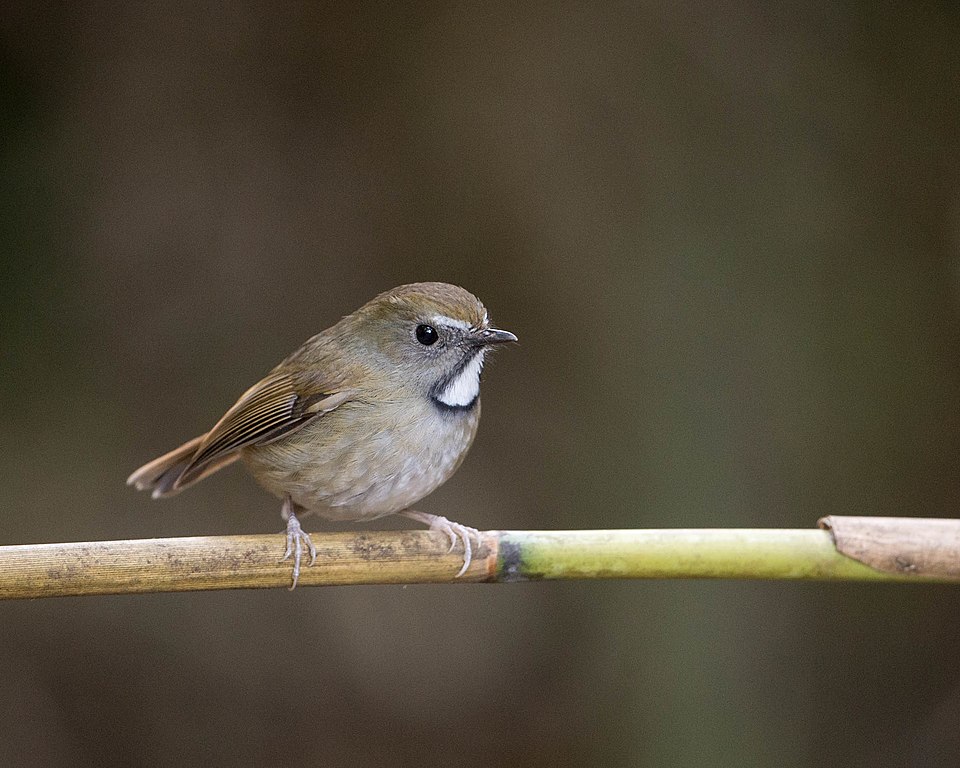
Cryptic Flycatcher
Ficedula crypta
Order: Passeriformes / Family: Muscicapidae

Wikimedia Commons
About the Cryptic Flycatcher
The Cryptic Flycatcher, scientifically named Ficedula crypta, belongs to the family Muscicapidae, a group renowned for its diverse and often elusive members. This small passerine bird inhabits the subtropical and tropical moist lowland forests of Southeast Asia, particularly thriving in countries like Indonesia and Malaysia. Its presence plays a significant role in the ecosystem, primarily through insect control, as it feeds on numerous forest-dwelling insects. The Cryptic Flycatcher's ability to blend seamlessly into its environment is a testament to its evolutionary adaptation, offering it protection from predators and making it a challenging subject for birdwatchers. The bird's muted brown and gray plumage serves as a perfect camouflage against the backdrop of dense foliage, allowing it to perch quietly and inconspicuously.
In its natural habitat, the Cryptic Flycatcher is crucial for maintaining balance within the ecosystem. By preying on insects, it helps regulate populations that could otherwise become pests. During the breeding season, which typically occurs in the spring and early summer months, the Cryptic Flycatcher becomes more visible as it engages in courtship displays and nest-building activities. These activities often reveal its presence in areas where it might otherwise go unnoticed. As the seasons change, the bird remains in its preferred forest habitats, though it may shift slightly in elevation or move to different parts of the forest in response to food availability.
The Cryptic Flycatcher, with its elusive nature, attracts birdwatchers and researchers interested in understanding the complexities of forest ecosystems. Its subtle behaviors and quiet demeanor contrast with the vibrant and often conspicuous nature of many other tropical birds, making it a fascinating subject for ornithologists. Despite its inconspicuousness, the flycatcher holds a key role in biodiversity, contributing to the intricate web of life within its forest home.
The Cryptic Flycatcher belongs to the family Muscicapidae, within the order Passeriformes. These birds typically live typically 5-7 years, with some individuals living up to 9 years..
How to Identify a Cryptic Flycatcher
The Cryptic Flycatcher is a small bird, measuring approximately 12-14 cm in length, with a wingspan of about 20 cm. Adults display a predominantly brown and gray plumage that allows them to blend effortlessly into the forest environment. The underside is typically lighter, with subtle variations of white and gray, while the upper parts are darker, with a mix of brown and gray hues. Males and females are similar in appearance, making gender differentiation challenging in the field.
Juvenile Cryptic Flycatchers closely resemble adults but may exhibit slightly duller plumage with more pronounced markings, such as faint streaks or spots that fade as they mature. This patterning aids in their concealment during the vulnerable early stages of life. The species can sometimes be confused with other flycatchers in its range, such as the Mugimaki Flycatcher, but it can be distinguished by its more muted coloration and less conspicuous wing bars.
In flight, the Cryptic Flycatcher maintains a swift and agile silhouette, characterized by rapid wingbeats and short gliding phases. When perched, it typically adopts an upright posture, often remaining still for extended periods. This behavior, combined with its cryptic coloration, makes spotting the bird a rewarding challenge for birdwatchers.
Having trouble telling birds apart? Upload a photo to our bird identification tool for an instant species match.
Cryptic Flycatcher Habitat and Range
Preferred Habitat
The Cryptic Flycatcher predominantly inhabits subtropical and tropical moist lowland forests, where it finds ample cover and food resources. These forests, often rich in biodiversity, provide an ideal environment for the flycatcher to thrive. It prefers areas with dense foliage and undergrowth, which offer protection and abundant insect prey. The bird is most commonly found at elevations up to 1500 meters, though it may occasionally venture into mid-elevation montane forests.
Unlike some species that adapt well to urban environments, the Cryptic Flycatcher remains primarily within pristine and undisturbed forest habitats. Its presence in secondary or degraded forests is rare, as it relies heavily on the dense canopy and complex structure of mature forests. Seasonal habitat shifts are minimal, though the flycatcher might move to different parts of the forest in response to food availability, particularly during breeding season when insect populations fluctuate.
Geographic Range
The Cryptic Flycatcher is primarily found in Southeast Asia, with its range extending across several countries in this biodiverse region. It is most commonly associated with Indonesia and Malaysia, where it resides year-round in suitable forest habitats. The bird's range also stretches into parts of Thailand, although sightings there are less frequent. Unlike many migratory birds, the Cryptic Flycatcher does not undertake extensive seasonal migrations, remaining within its established territories year-round.
This species' distribution is relatively confined compared to more widespread flycatchers, and its presence is often limited to specific forested areas within its range. Population density hotspots occur in regions where mature, undisturbed forests are extensive, providing the ideal conditions for the flycatcher's survival. Although its range is stable, habitat loss due to deforestation poses a significant threat to its continued presence in certain areas.
Want to know which birds visit your area? Browse our backyard birds by location guides for region-specific species lists.
What Does the Cryptic Flycatcher Eat?
The diet of the Cryptic Flycatcher primarily consists of insects, which it captures through agile and acrobatic flight maneuvers. It feeds on a variety of insects, including beetles, flies, and caterpillars, adapting its foraging techniques to the availability of prey in its environment. During the breeding season, the bird's diet may shift to include a higher proportion of protein-rich insects, which are crucial for the growth of its chicks.
The flycatcher employs a 'sit-and-wait' foraging strategy, perching quietly on a branch before darting out to snatch insects mid-air. This method requires minimal energy expenditure and allows the bird to exploit the rich insect life within its forest habitat. The size of prey varies but typically includes small to medium-sized insects. Feeding occurs primarily during the cooler parts of the day, with peak activity in the early morning and late afternoon, aligning with the times when insect activity is highest.
Cryptic Flycatcher Behavior and Social Structure
The Cryptic Flycatcher exhibits solitary or paired behavior, particularly during the breeding season. It establishes and defends a territory where it engages in courtship displays and nesting activities. Males often perform subtle visual displays, including wing flicking and tail spreading, to attract females. Once paired, the birds remain together throughout the breeding season, cooperating in nest building and chick rearing.
Outside of the breeding season, the flycatcher remains elusive, often seen alone or in loose associations rather than large flocks. It demonstrates a strong territorial instinct, frequently engaging in vocal displays to assert dominance over its chosen area. In the presence of predators, the Cryptic Flycatcher relies on its camouflage, often freezing rather than fleeing, to avoid detection. Its daily activity pattern includes periods of active foraging interspersed with rest, taking advantage of the forest's complex structure to remain concealed.
Cryptic Flycatcher Nesting and Reproduction
The Cryptic Flycatcher constructs a cup-shaped nest, typically located in the fork of a tree branch or concealed within dense vegetation. It uses a combination of moss, leaves, and fine twigs to build the nest, lining it with softer materials such as feathers or plant down. This careful construction provides insulation and protection for the eggs and chicks.
Clutch size ranges from two to four eggs, which are incubated primarily by the female. The incubation period lasts approximately 12-14 days, after which the chicks hatch blind and helpless. Both parents participate in feeding the young, supplying a steady diet of insects to support rapid growth. Fledging occurs around 14-16 days post-hatching, with the young remaining dependent on parental care for several weeks before achieving full independence. The species typically produces one brood per year, although favorable conditions may occasionally allow for a second.
Cryptic Flycatcher Sounds and Vocalizations
The song of the Cryptic Flycatcher is a soft, melodic series of whistles and trills, often delivered from a concealed perch within the forest canopy. Its call is subtle and easily overlooked, blending harmoniously with the ambient sounds of its habitat. The song's rhythm is steady, characterized by alternating high and low notes, creating a gentle and unobtrusive auditory experience.
In addition to its primary song, the Cryptic Flycatcher emits short, sharp call notes, used in territorial defense and communication between mates. Alarm calls are more abrupt and piercing, designed to alert nearby birds to potential threats. During the dawn chorus, the flycatcher's song contributes to the symphony of forest sounds, albeit as a subtle and understated element.
Interesting Facts About the Cryptic Flycatcher
- 1The Cryptic Flycatcher is named for its exceptional ability to blend into its surroundings, a trait that makes it difficult to spot even for experienced birdwatchers.
- 2Despite its name, the Cryptic Flycatcher is not entirely invisible; during the breeding season, its increased activity makes it more detectable.
- 3The species is part of the Muscicapidae family, which includes over 300 species of flycatchers, all known for their insect-catching prowess.
- 4The Cryptic Flycatcher's song, while soft and melodic, is an essential part of its territorial displays and mate attraction during the breeding season.
- 5Unlike many birds that migrate, the Cryptic Flycatcher remains within its forested habitat year-round, adapting to seasonal changes in food availability.
- 6Its preference for dense, mature forests makes the Cryptic Flycatcher an indicator species for forest health, as it thrives in biodiverse, undisturbed environments.
- 7The Cryptic Flycatcher's nesting strategy involves using natural materials to construct a well-camouflaged nest, ensuring the safety of its eggs and chicks.
Cryptic Flycatcher Conservation Status
The Cryptic Flycatcher currently holds a status of Least Concern on the IUCN Red List, indicating that its population is stable. However, ongoing habitat loss due to deforestation poses a significant long-term threat to its survival. As forests are cleared for agriculture and development, the flycatcher's habitat becomes increasingly fragmented, reducing available resources and breeding sites. Conservation efforts focus on preserving the remaining tracts of undisturbed forest, emphasizing the importance of sustainable land use practices. Historical data suggests that while the population has remained relatively stable, continued monitoring is essential to prevent future declines. Engagement with local communities to promote forest conservation and the establishment of protected areas are critical steps in ensuring the Cryptic Flycatcher's continued existence.