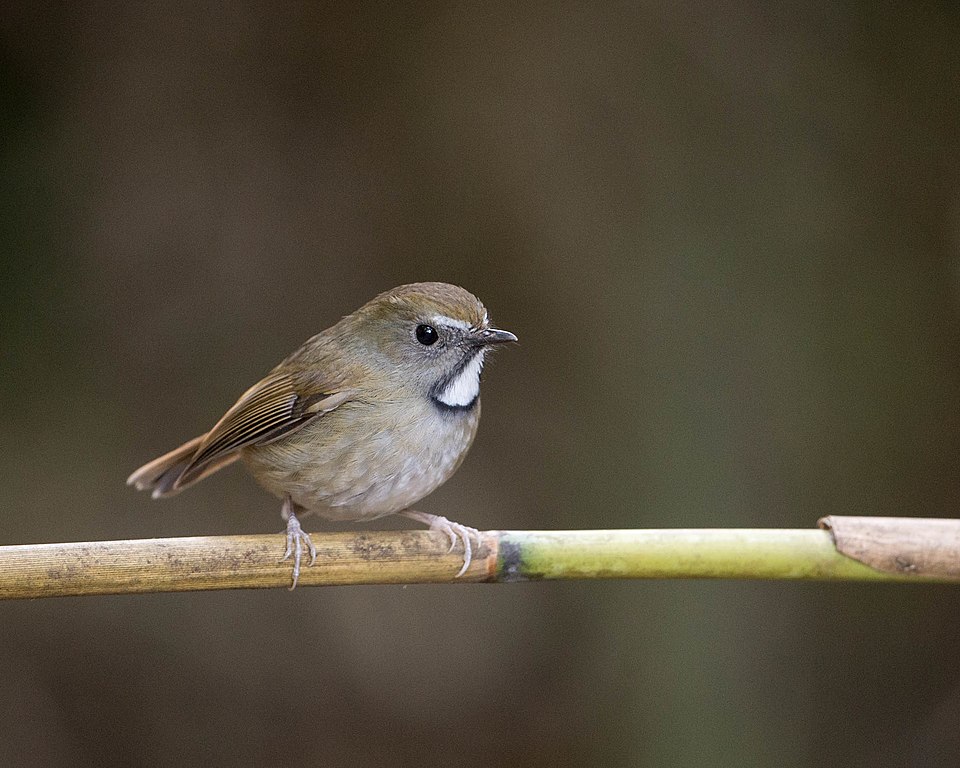
Cyanecula obscura
Cyanecula obscura
Order: Passeriformes / Family: Muscicapidae
About the Cyanecula obscura
The Cyanecula obscura, commonly known as the Bluethroat, belongs to the family Muscicapidae and order Passeriformes. This small, brightly colored bird holds a special place among European and Asian avifauna due to its vibrant throat patch, which varies in hue from deep blue to a more subdued grey, often bordered by a striking reddish-brown band. The Bluethroat primarily inhabits wetland areas, favoring marshes and reed beds where it finds ample cover and food. Its role in the ecosystem is crucial as it helps control insect populations and serves as prey for larger predators. During the breeding season, which occurs from late spring to early summer, the Bluethroat becomes particularly vocal, filling the air with its complex and melodious song. This period also marks the time when the bird is most visible, as it performs aerial displays to attract mates.
The ecological significance of the Cyanecula obscura extends beyond its immediate habitat. As a migratory species, it connects different biomes, traveling from breeding grounds in northern Europe and Asia to wintering areas in southern Europe, North Africa, and parts of the Middle East. This migration not only disperses seeds and nutrients but also influences the behavior and distribution of other species within these ecosystems. In regions such as the Netherlands, the proliferation of the Bluethroat is an indicator of healthy wetland ecosystems, reflecting successful conservation efforts aimed at preserving these critical habitats.
In winter, the Bluethroat adapts to a variety of environments ranging from arid scrublands to cultivated fields, showcasing its remarkable adaptability. This seasonal movement underscores the bird's resilience and ability to exploit different ecological niches. Despite facing challenges such as habitat destruction and climate change, the Bluethroat has maintained stable population levels due to its wide range and adaptability, making it less vulnerable compared to more specialized species.
The Cyanecula obscura belongs to the family Muscicapidae, within the order Passeriformes. These birds typically live average 3 years, with a maximum recorded of 5 years..
How to Identify a Cyanecula obscura
The Bluethroat, or Cyanecula obscura, is a medium-sized songbird easily recognized by its unique throat patch. Males boast a vibrant blue throat bordered by a rufous band, a feature less pronounced in females, who may display a lighter, more mottled version. Juveniles resemble females but lack the distinct blue coloration, which they acquire after their first molt. The upperparts of the Bluethroat are a mix of brown and grey, providing excellent camouflage against the reed beds and marshes it frequents. Its underparts are pale, often with a hint of buff or white around the belly.
In flight, the Bluethroat presents a compact silhouette with rounded wings and a slightly forked tail. Its perching posture is upright, often seen on reeds or low bushes, which it uses as vantage points to sing or survey its territory. The bird's tail features a striking pattern when fanned, displaying dark and light contrasts, which can be a useful identification mark.
Confusion with similar species, such as the Red-flanked Bluetail, can occur, but the Bluethroat's distinctive throat pattern and habitat preferences help distinguish it. Observers in the field should note the bird's behavior, as its characteristic tail-flicking and low, bounding flight pattern are also key identifiers.
Having trouble telling birds apart? Upload a photo to our bird identification tool for an instant species match.
Cyanecula obscura Habitat and Range
Preferred Habitat
The Bluethroat thrives in wetland habitats, particularly favoring marshes, fens, and reed beds. It often selects areas with abundant cover and standing water, which provide both food and protection from predators. During the breeding season, it is commonly found in lowland regions, though it can occur up to elevations of 2,000 meters in mountain valleys with suitable habitat. Seasonal shifts see the Bluethroat moving to a wider range of environments during winter, including scrublands and agricultural fields, demonstrating its adaptability to different conditions.
In urban areas, the Bluethroat is less frequent but may occasionally appear in parks or along watercourses where vegetation is dense. This flexibility in habitat preference enables the Bluethroat to exploit a range of ecological niches, though it primarily remains tied to wetter environments due to its feeding and nesting requirements.
Geographic Range
The breeding range of the Bluethroat spans across northern Europe and Asia, with significant populations in Scandinavia, the Baltic states, and Russia. It also breeds in isolated pockets in Central Europe, particularly in the Netherlands, Germany, and Poland, where suitable wetland habitats exist. During migration, the Bluethroat traverses a wide corridor, moving south to winter in southern Europe, North Africa, and parts of the Middle East, including countries like Spain, Morocco, and Israel.
Migration routes can vary, but the bird generally follows traditional flyways, utilizing stopover sites that provide abundant resources. Population density is highest in the breeding areas, with hotspots in countries like Sweden and Finland due to extensive wetland systems. In wintering areas, the bird becomes more dispersed, with individuals occupying a range of habitats from coastal marshes to inland agricultural lands.
Want to know which birds visit your area? Browse our backyard birds by location guides for region-specific species lists.
What Does the Cyanecula obscura Eat?
The Cyanecula obscura primarily feeds on insects and other invertebrates, making it an important control agent for pest populations. During the breeding season, its diet consists largely of beetles, spiders, and caterpillars, which it gleans from foliage and the ground. In late summer and autumn, the Bluethroat supplements its diet with berries and seeds, taking advantage of the seasonal abundance of fruiting plants.
Foraging techniques include a combination of ground-hopping and aerial sallying, where the bird catches insects on the wing. The Bluethroat displays remarkable agility in its pursuit of prey, often seen darting through reeds and shrubs in search of food. Feeding occurs throughout the day, with peak activity typically in the early morning and late afternoon when insects are most active.
Cyanecula obscura Behavior and Social Structure
The Bluethroat exhibits a complex social structure, particularly during the breeding season when males establish territories through song and display. Territorial disputes are common, with males engaging in aerial chases and vocal duels to assert dominance. Courtship involves a series of display flights where the male sings while flying in a slow, exaggerated manner to attract females.
Outside the breeding season, the Bluethroat becomes more social, often seen in loose flocks during migration and in wintering grounds. Its response to predators includes a variety of alarm calls and distraction displays designed to lead threats away from nests or young. Daily activity patterns are diurnal, with the bird most active during the day while retreating to dense cover at night for protection.
Cyanecula obscura Nesting and Reproduction
The nesting habits of the Bluethroat involve constructing cup-shaped nests close to the ground, often hidden within dense vegetation or under shrubs. Materials used include grass, leaves, and moss, lined with finer materials such as feathers for insulation. A typical clutch consists of 4 to 7 eggs, which the female incubates for about 12 to 14 days.
Both parents participate in feeding the young, which fledge after approximately 12 to 15 days. The Bluethroat may raise one or two broods per year, depending on environmental conditions and food availability. Parental roles are shared, though females typically undertake most of the incubation duties.
Cyanecula obscura Sounds and Vocalizations
The Bluethroat is renowned for its complex and melodious song, characterized by a series of clear, varied notes that include trills and whistles. Its song is often delivered from a prominent perch, especially during dawn and dusk when it is most active. Call notes include a sharp 'tak' sound used for communication between individuals, while its alarm call is a rapid series of chattering notes designed to alert others of danger.
The dawn chorus of the Bluethroat is a highlight for birders, as it showcases the bird's vocal range and creativity. Comparatively, its song shares similarities with the Nightingale, though it is generally softer and more varied in structure.
Interesting Facts About the Cyanecula obscura
- 1The Bluethroat can mimic the calls of other bird species, showcasing its impressive vocal abilities.
- 2During migration, Bluethroats can travel over 3,000 kilometers from breeding to wintering grounds.
- 3Bluethroats have been observed using their tail as a signaling device, fanning it to communicate with other birds.
- 4The species exhibits color morphs, with subspecies displaying variations in throat color from blue to white.
- 5Bluethroats are known to hybridize with closely related species, leading to interesting plumage variations.
- 6Despite their small size, Bluethroats are known for their bold behavior, often challenging larger birds that encroach on their territory.
Cyanecula obscura Conservation Status
The Bluethroat is currently listed as Least Concern by the IUCN, with stable population trends across most of its range. Its wide distribution and adaptability contribute to its resilience, though localized threats such as wetland drainage and habitat fragmentation pose ongoing challenges. Conservation efforts focus on preserving and restoring wetland habitats, which are critical for the bird's breeding success. Historically, populations have fluctuated with changes in land use and climate conditions, but proactive measures in several countries have helped maintain stable numbers. Continued monitoring and habitat management remain essential to ensure the long-term survival of the Bluethroat.