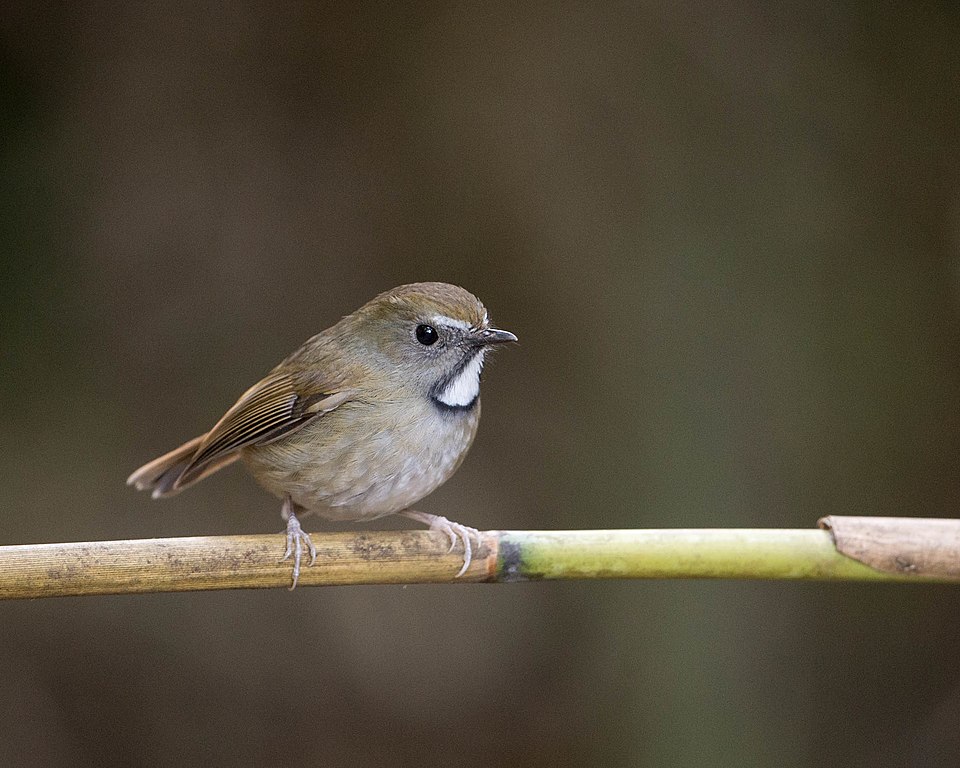
Cyornis infuscata
Cyornis infuscata
Order: Passeriformes / Family: Muscicapidae
About the Cyornis infuscata
The Cyornis infuscata, commonly known as the Brown-chested Jungle Flycatcher, is a remarkable bird species within the Muscicapidae family, renowned for its subtle beauty and elusive nature. This flycatcher predominantly inhabits the dense, humid forests of Southeast Asia. It plays a vital role in the ecosystem by controlling insect populations, thus maintaining the delicate balance within its habitat. Found primarily in countries such as Thailand, Malaysia, and Indonesia, the Brown-chested Jungle Flycatcher tends to favor lowland and submontane forests, where it can often be seen flitting through the undergrowth in search of prey. This bird's presence signifies a healthy, biodiverse environment, as it requires well-preserved habitats to thrive.
The Cyornis infuscata is a specialist species, preferring primary forests over secondary growth, which makes it vulnerable to deforestation and habitat fragmentation. Its preference for secluded, unspoiled areas makes it a species of interest for conservationists aiming to preserve Southeast Asia's dwindling forested regions. In these habitats, the bird is not just a predator; it also serves as a prey species for larger avian predators, creating a complex web of interactions that sustain the forest ecosystem.
Seasonally, the Brown-chested Jungle Flycatcher exhibits some altitudinal movement, retreating to higher elevations during the wetter months from April to October. These seasonal shifts help the bird exploit different insect populations, ensuring a consistent food supply throughout the year. The presence of this flycatcher can indicate the seasonal health of its habitat, as it relies on a stable climate and abundant insect life. As such, the Cyornis infuscata is more than just a bird; it is an indicator species for the forests it calls home, and its welfare is closely tied to the ecological integrity of the region.
The Cyornis infuscata belongs to the family Muscicapidae, within the order Passeriformes. These birds typically live average 4-7 years, with a maximum recorded of 10 years.
How to Identify a Cyornis infuscata
The Brown-chested Jungle Flycatcher, or Cyornis infuscata, is a small passerine bird measuring approximately 15 centimeters in length. Adult males and females share similar plumage, making sex differentiation difficult in the field. Both exhibit a distinctive brown chest that fades into a softer blue-gray plumage on the back and wings, with a slightly paler belly. The bird's eye-ring is faint, adding to its subtle appearance.
Juveniles, however, present a more mottled appearance, with additional streaks on their chest and a generally duller overall tone compared to adults. This mottled pattern gradually disappears as they mature into their adult plumage. While the sexes appear similar, the males may exhibit a marginally brighter hue on their upperparts, although this is subtle and requires keen observation.
In flight, the Brown-chested Jungle Flycatcher appears agile and quick, often darting through the forest in pursuit of insects. Its perching posture is typically upright on low branches or within dense foliage, where it remains alert to movements of potential prey. The bird can sometimes be confused with other flycatchers within the same habitat, such as the Asian Paradise Flycatcher, but its brown chest and overall muted coloring are distinguishing factors.
Having trouble telling birds apart? Upload a photo to our bird identification tool for an instant species match.
Cyornis infuscata Habitat and Range
Preferred Habitat
The Brown-chested Jungle Flycatcher thrives in the primary and secondary forests of Southeast Asia, with a particular affinity for humid, lowland rainforests and submontane regions. These forests, rich with dense undergrowth and ample canopy cover, provide the necessary resources and shelter for this species.
Typically found at elevations ranging from sea level up to about 1,500 meters, the Cyornis infuscata prefers undisturbed habitats. It can occasionally venture into forest edges or secondary growth if the primary habitat is intact nearby. Seasonal habitat shifts occur as the bird moves to higher elevations during wetter months to exploit different insect populations.
Despite its preference for forested areas, the Brown-chested Jungle Flycatcher rarely ventures into urban settings, maintaining its presence in more secluded, rural locales. Human encroachment and deforestation pose significant threats to its habitat, making conservation of forested areas crucial for its survival.
Geographic Range
The geographic range of the Brown-chested Jungle Flycatcher includes the tropical and subtropical forests of Southeast Asia. It primarily inhabits regions in Thailand, Malaysia, Sumatra, and Borneo, where it resides year-round, with some altitudinal movements rather than long migrations.
During the breeding season, the bird remains within these regions, taking advantage of the abundant food supply and suitable nesting sites provided by dense forest environments. It does not engage in long-distance migration, unlike some of its flycatcher relatives. Instead, it undertakes localized movements within its range, often ascending to slightly higher elevations in the wet season when food is plentiful in the cooler, higher altitudes.
Population density hotspots for the Cyornis infuscata often coincide with large tracts of well-preserved forest, particularly in protected areas such as national parks and reserves. Conservation efforts focus on maintaining these habitats to ensure the flycatcher's continued presence in the region.
Want to know which birds visit your area? Browse our backyard birds by location guides for region-specific species lists.
What Does the Cyornis infuscata Eat?
The Brown-chested Jungle Flycatcher primarily feeds on insects, making it an adept aerial hunter particularly skilled at capturing its prey mid-flight. Its diet consists mainly of small insects such as flies, beetles, and caterpillars, which it catches by sallying forth from a perch.
During the breeding season, when nutritional demands are higher, the flycatcher increases its foraging activity, often venturing into sunlit gaps within the forest to exploit the abundance of insects. In wetter months, the availability of insects can fluctuate, causing the bird to adapt by shifting its foraging range to areas with higher prey density.
Occasionally, it supplements its diet with small fruits or berries, particularly when insect prey is scarce. This dietary flexibility helps the Brown-chested Jungle Flycatcher maintain its energy reserves year-round, ensuring it can meet the demands of reproduction and territory defense.
Cyornis infuscata Behavior and Social Structure
The social structure of the Brown-chested Jungle Flycatcher is predominantly solitary, with individuals maintaining territories during the breeding season. Territorial behavior includes vocal displays and physical presence to deter intruders. Males in particular use their song to establish and defend territory boundaries, often from elevated perches.
Courtship displays are subtle, involving a combination of vocalizations and visual cues such as wing flicking and tail fanning to attract potential mates. Once paired, the flycatcher remains monogamous throughout the breeding season, with both parents participating in nest building and chick rearing.
Daily activity patterns include active foraging during the cooler morning and late afternoon hours, with periods of rest or preening during the midday heat. The bird exhibits a strong response to predators, often sounding alarm calls and using evasive flight to avoid capture.
While not typically prone to flocking, the Brown-chested Jungle Flycatcher may be found in mixed-species feeding flocks outside the breeding season, which can provide safety in numbers and increased foraging efficiency.
Cyornis infuscata Nesting and Reproduction
The nesting habits of the Brown-chested Jungle Flycatcher involve constructing a cup-shaped nest, typically situated in a forked branch or within the dense underbrush. The nest is crafted from a variety of materials including twigs, leaves, and moss, providing camouflage and structural integrity.
Clutch size usually consists of two to three eggs, which are incubated by both parents for about 12 to 15 days. The incubation period requires vigilance, as the nest is vulnerable to predation by snakes and other arboreal threats.
Once hatched, the fledglings remain in the nest for another two weeks, during which time both parents engage in feeding and protection. The parental roles are well-defined, with both male and female sharing responsibilities, ensuring the young receive ample care and nourishment.
Typically, the species raises one brood per year, although in areas with an extended breeding season, a second brood might be attempted if conditions are favorable.
Cyornis infuscata Sounds and Vocalizations
The primary song of the Brown-chested Jungle Flycatcher is a soft, melodious series of whistles, often described as liquid and flowing. This song serves both as a mating call and a territorial signal, particularly during the breeding season.
Call notes are short and sharp, used for communication between mates and as alerts to potential threats. Alarm calls, triggered by the presence of predators, are more abrupt and higher-pitched, serving to warn nearby flycatchers of danger.
During the dawn chorus, the flycatcher's song is more frequent and pronounced, taking advantage of the morning stillness to carry sound over greater distances. The song's rhythm and pitch are reminiscent of other forest-dwelling flycatchers, although its softer tone distinguishes it from louder, more aggressive species.
Interesting Facts About the Cyornis infuscata
- 1The Brown-chested Jungle Flycatcher is one of the few birds that can execute a backward somersault mid-flight to catch elusive prey.
- 2Despite its muted colors, the Brown-chested Jungle Flycatcher is often spotted thanks to its distinctive song, which can carry over 100 meters in dense forest.
- 3The species’ scientific name, Cyornis infuscata, derives from Latin, with 'infuscata' referring to its dusky, shadowed chest.
- 4This flycatcher exhibits remarkable territorial fidelity, often returning to the same spot year after year to breed.
- 5The Brown-chested Jungle Flycatcher can adapt its diet depending on prey availability, showcasing its resilience in changing environments.
- 6Historically, the species' range has contracted due to deforestation, leading to its Near Threatened status on the IUCN Red List.
- 7Unlike many flycatchers, the Brown-chested Jungle Flycatcher is largely sedentary, with only minor altitudinal movements throughout the year.
Cyornis infuscata Conservation Status
Currently, the IUCN lists the Brown-chested Jungle Flycatcher as Near Threatened, with its population trend showing a gradual decline. The primary threat to its survival is habitat loss due to deforestation and land conversion for agriculture. Conservation efforts focus on protecting remaining forest habitats in Southeast Asia, with emphasis on establishing and managing protected areas to preserve ecosystems that support the flycatcher. Reforestation projects and sustainable land-use practices also contribute to mitigating habitat loss. Historically, population numbers have fluctuated in response to environmental changes and human activities. While some local populations remain stable, others have experienced declines due to increased habitat fragmentation. Continued conservation efforts are crucial to ensure the long-term survival of the species, requiring collaboration between governments, NGOs, and local communities to address the challenges posed by habitat destruction.