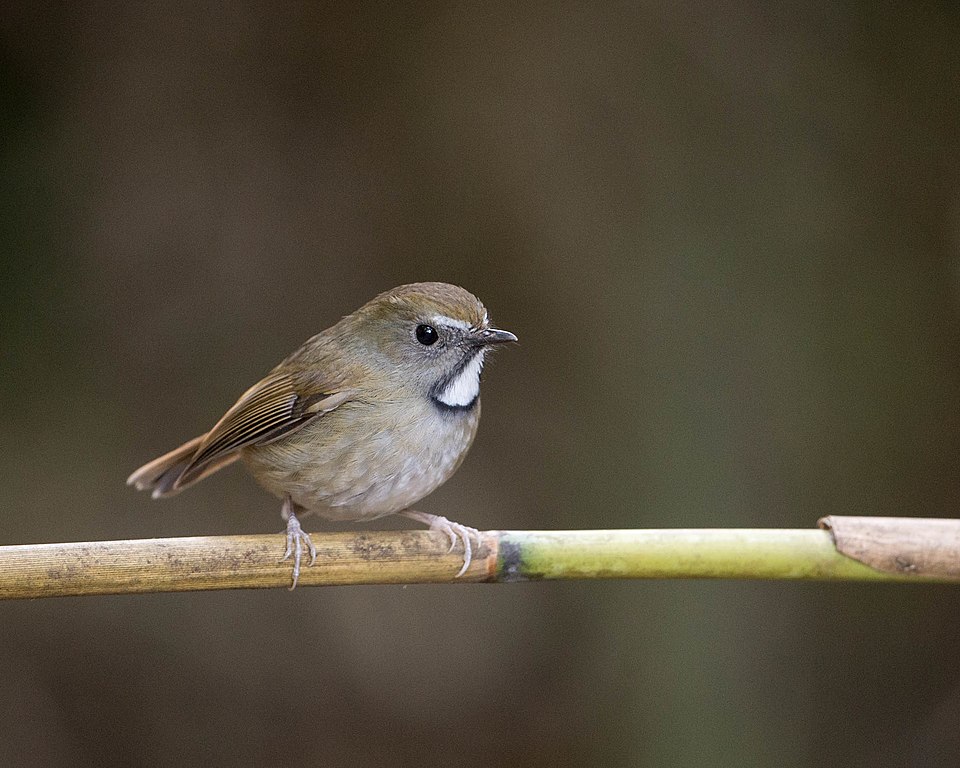
Dayak Blue Flycatcher
Cyornis montanus
Order: Passeriformes / Family: Muscicapidae

Wikimedia Commons
About the Dayak Blue Flycatcher
The Dayak Blue Flycatcher (Cyornis montanus) is a captivating songbird belonging to the Muscicapidae family, predominantly found in the rich, biodiverse forests of Borneo. This flycatcher thrives in the humid tropical climate, where it plays a crucial role in the ecosystem as both a predator of insects and a prey species for larger birds. The Dayak Blue Flycatcher is well-adapted to its environment, exhibiting behaviors and physical characteristics that ensure its survival in these dense forests. Its presence is a marker of forest health and biodiversity, making it a species of interest for conservationists studying the impacts of deforestation and habitat fragmentation.
The Dayak Blue Flycatcher is an integral part of Borneo's avian community. This island, known for its extensive rainforests, provides an ideal habitat for this species, which prefers the cover and resources offered by mature forest canopies. Typically found at elevations ranging from lowland areas to montane forests, the Dayak Blue Flycatcher demonstrates a degree of adaptability, although it is predominantly associated with undisturbed primary forests. During the breeding season, which coincides with the rainy season in Borneo, this flycatcher becomes particularly vocal, filling the air with its melodious songs as it establishes territories and attracts mates.
In its ecological role, the Dayak Blue Flycatcher serves as both a predator and prey, maintaining insect populations in check while providing sustenance for higher trophic level predators. As an insectivore, it consumes a variety of arthropods, helping to balance the complex web of interactions in its tropical habitat. Additionally, by inhabiting such a specific ecological niche, the Dayak Blue Flycatcher aids in illustrating the broader dynamics of forest ecosystems in Southeast Asia. Conservation efforts aimed at preserving the habitats of the Dayak Blue Flycatcher can contribute to the protection of this rich biodiversity hotspot, ensuring the survival of countless other species that share its home.
The Dayak Blue Flycatcher belongs to the family Muscicapidae, within the order Passeriformes. These birds typically live average 4-6 years with a maximum recorded of 8 years..
How to Identify a Dayak Blue Flycatcher
The Dayak Blue Flycatcher is easily identifiable by its vivid cobalt blue plumage, which covers the upperparts of the male. The intense blue contrasts sharply with its white underparts and a slightly darker blue tail. Females, in comparison, exhibit a more subdued coloration, with olive-brown tones on their upperparts and a paler blue wash on the wings and tail, making sexual dimorphism apparent. Juveniles resemble females but typically show more speckling and have a duller overall appearance.
This species is often confused with similar blue flycatchers, such as the Bornean Blue Flycatcher, but can be distinguished by its distinctive song and specific habitat preference. In comparison, the Dayak Blue Flycatcher prefers higher elevations and denser forest habitats, where it tends to perch silently, making only brief, sallying flights to capture insects.
In flight, the Dayak Blue Flycatcher exhibits rapid wing beats and agility, often seen flitting through the mid-canopy. When perched, it maintains an upright posture, scanning its surroundings for potential prey. Its petite size, approximately 15 cm in length, combined with its distinct coloration, makes this species a delightful sight for birdwatchers familiar with the forests of Borneo.
Having trouble telling birds apart? Upload a photo to our bird identification tool for an instant species match.
Dayak Blue Flycatcher Habitat and Range
Preferred Habitat
The Dayak Blue Flycatcher thrives in Borneo's primary tropical rainforests, particularly favoring undisturbed forest areas with abundant foliage and insect life. It inhabits both lowland and montane forests, typically found at elevations ranging from 300 to 1800 meters. The species shows a preference for dense canopy cover, which offers abundant foraging opportunities and protection from predators.
Seasonal shifts in habitat use are not prominent in the Dayak Blue Flycatcher, as it remains a resident species throughout its range. However, it may shift slightly in altitude in response to climatic conditions, seeking cooler, wetter environments during dryer periods. Unlike some other flycatchers, the Dayak Blue Flycatcher avoids urban and suburban areas, which makes its presence a reliable indicator of healthy, intact forest ecosystems.
Geographic Range
The Dayak Blue Flycatcher's range is restricted to the island of Borneo, where it occupies a variety of forested habitats. It is considered a resident species, with no significant migratory patterns, although some altitudinal movement might occur seasonally. Throughout Borneo, its distribution is patchy, with population densities higher in regions of dense, primary forest.
Although the species is widespread across the island, it is absent from heavily deforested areas and regions extensively altered by human activities. Key areas of population density include the central highlands and protected forest reserves. Conservation areas like the Heart of Borneo initiative provide critical refuges for this and other endemic species, emphasizing the importance of habitat preservation.
Want to know which birds visit your area? Browse our backyard birds by location guides for region-specific species lists.
What Does the Dayak Blue Flycatcher Eat?
The Dayak Blue Flycatcher primarily feeds on insects, playing a vital role in controlling insect populations within its forest habitat. Its diet consists mainly of beetles, ants, and caterpillars, which it captures through a combination of sallying flights and gleaning from foliage.
During the breeding season, the flycatcher may adjust its diet to include a higher proportion of protein-rich prey, supporting the nutritional needs of its young. This seasonal dietary shift highlights the species' adaptability in nutrient acquisition. Although primarily insectivorous, the Dayak Blue Flycatcher may occasionally consume small fruits and seeds, supplementing its diet when insect availability decreases.
Foraging occurs throughout the day, with peak activity during the morning and late afternoon, corresponding with periods of heightened insect activity. The flycatcher's adept hunting skills and acute vision allow it to effectively exploit its forest environment, maintaining its role as a key predator in these ecosystems.
Dayak Blue Flycatcher Behavior and Social Structure
The Dayak Blue Flycatcher exhibits a largely solitary lifestyle, with individuals maintaining defined territories. During the breeding season, males become particularly territorial, engaging in vocal displays and occasional aggressive encounters to assert dominance and secure nesting sites.
Courtship involves a series of elaborate displays, where the male showcases its vibrant plumage and singing ability to attract a mate. Pairs form monogamous bonds for the breeding season, collaborating closely in nesting and rearing young. Outside of the breeding season, the Dayak Blue Flycatcher remains relatively inconspicuous, blending into its forest environment and focusing on foraging.
This species responds to predators with alarm calls and evasive flight patterns, utilizing its agility to navigate the complex forest canopy. While not typically a flocking species, small groups may occasionally form in areas of abundant food resources. The Dayak Blue Flycatcher exhibits a diurnal activity pattern, becoming most active during cooler parts of the day, which coincides with peak insect activity.
Dayak Blue Flycatcher Nesting and Reproduction
The Dayak Blue Flycatcher constructs its nest in well-concealed locations, favoring dense foliage or crevices in tree branches to protect against predators. Nests are cup-shaped and crafted from a variety of natural materials, including twigs, moss, and leaves, bound together with spider webs and plant fibers.
A typical clutch consists of two to four eggs, which the female incubates for approximately 14 to 16 days. During this period, the male plays a crucial support role, defending the territory and providing food for the incubating female. Once hatched, both parents engage in feeding and caring for the fledglings.
The fledging period lasts around 18 to 20 days, after which the young birds leave the nest but remain under parental supervision as they learn to forage independently. The Dayak Blue Flycatcher typically raises one or two broods per year, depending on environmental conditions and food availability.
Dayak Blue Flycatcher Sounds and Vocalizations
The Dayak Blue Flycatcher's song is a melodious series of clear, whistling notes, often described as a musical phrase that rises and falls in pitch. These songs serve both to attract mates and to establish territory during the breeding season.
In addition to its primary song, the Dayak Blue Flycatcher produces a variety of call notes, including soft chirps and sharp, short alarm calls. These vocalizations play a crucial role in communication between individuals, particularly in dense forest environments where visual contact is limited.
The dawn chorus, a collective vocal display of many bird species, is when the Dayak Blue Flycatcher's song is most prominent, contributing to the rich soundscape of the Bornean forests. Its vocalizations are reminiscent of other flycatcher species but can be distinguished by their unique rhythm and quality.
Interesting Facts About the Dayak Blue Flycatcher
- 1The Dayak Blue Flycatcher, despite its vibrant appearance, often goes unnoticed due to its secretive nature and preference for dense forest habitats.
- 2This flycatcher species primarily inhabits Borneo, making it an island endemic with a highly specialized habitat niche.
- 3The vivid blue coloration of the male Dayak Blue Flycatcher is due to structural coloration, not pigments, which scatters light to produce its signature hue.
- 4During the breeding season, the Dayak Blue Flycatcher's song becomes more complex and frequent, helping to establish territories and attract mates.
- 5Despite being a relatively small bird, the Dayak Blue Flycatcher plays a significant role in controlling insect populations, highlighting its ecological importance.
Dayak Blue Flycatcher Conservation Status
The Dayak Blue Flycatcher is currently listed as a species of Least Concern by the IUCN, but it faces potential threats from habitat loss due to deforestation and land conversion for agriculture. Its population trend is stable, although localized declines may occur in heavily disturbed areas. Conservation efforts focus on preserving the extensive forest habitats of Borneo, with initiatives such as the Heart of Borneo project aiming to protect large swaths of forest from deforestation. By securing habitats for the Dayak Blue Flycatcher, these efforts also benefit numerous other species reliant on the same ecosystems. Historical population data is limited, but the species is believed to have maintained relatively stable numbers due to its adaptability to various forest types. Continued habitat protection and sustainable land-use practices are crucial for the long-term conservation of this and other forest-dependent species.