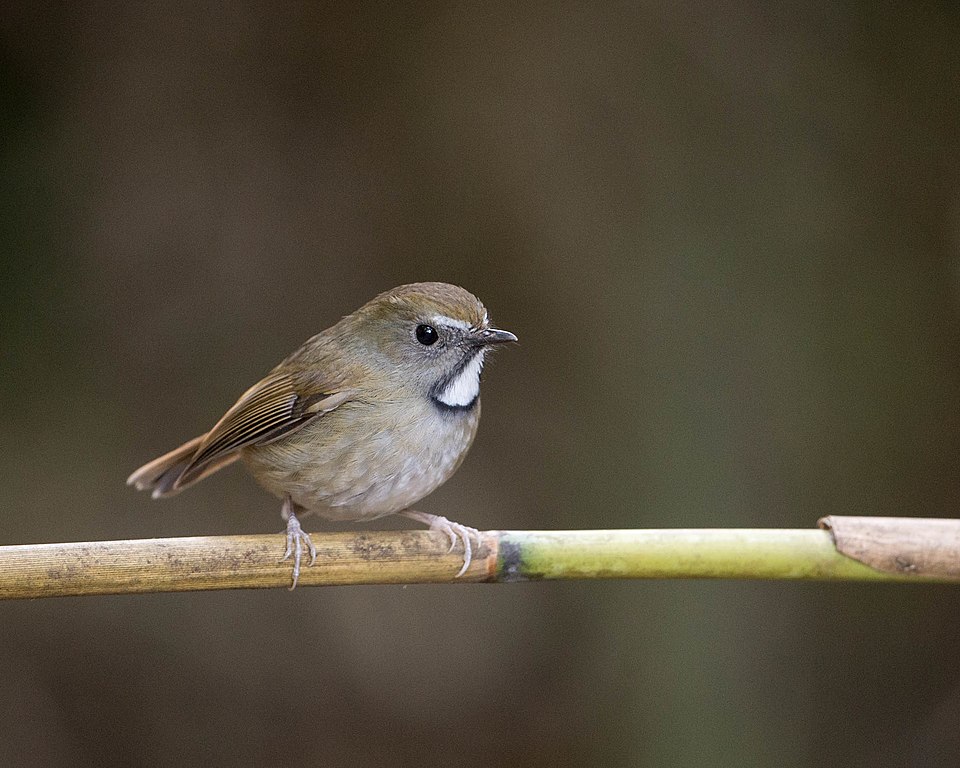
Desert Wheatear
Oenanthe deserti
Order: Passeriformes / Family: Muscicapidae

Wikimedia Commons
About the Desert Wheatear
The Desert Wheatear, Oenanthe deserti, is a small passerine bird belonging to the family Muscicapidae. Renowned for its adaptability to arid environments, the Desert Wheatear thrives in the barren landscapes of North Africa, the Middle East, and parts of Central Asia. This bird's presence in such inhospitable regions highlights its ecological niche as a species well-suited to extreme desert conditions. Its ability to survive in these areas underscores its role in the ecosystem as both a predator of insects and a prey item for larger raptors.
Desert Wheatears are particularly significant in the context of ecological balance. They act as insect population controllers, feeding primarily on a variety of small invertebrates and thus limiting pest outbreaks. The presence of Desert Wheatears in a given habitat can indicate healthy insect populations and, by extension, a balanced ecosystem. During the breeding season, these birds play a crucial role in the food web, providing sustenance for larger avian predators.
Seasonally, Desert Wheatears exhibit interesting behaviors. During the breeding season, they prefer lowland deserts and semi-deserts with sparse vegetation, where they can find ample food and nesting sites. Post-breeding, some populations migrate to slightly different areas, although others remain as residents if conditions remain favorable. This flexibility in habitat choice across seasons reflects their adaptability and resilience, allowing the species to cope with varying environmental stresses. The ability of the Desert Wheatear to thrive in diverse desert landscapes highlights its ecological importance and adaptability to climate variations.
The Desert Wheatear belongs to the family Muscicapidae, within the order Passeriformes. These birds typically live average 3-5 years with max recorded 6 years..
How to Identify a Desert Wheatear
Identifying the Desert Wheatear involves observing several key field marks. Adult males feature striking plumage, with a black throat and face mask that contrasts sharply with their pale sandy-buff body. The black tail, with a distinctive white rump, is a particularly defining characteristic. Females and juveniles, while less vibrant, still exhibit the hallmark black tail and pale body, although their overall coloration is more subdued, often leaning towards a grayish-brown hue.
In terms of size, the Desert Wheatear is relatively small, approximately 14-15 cm in length. When observing their flight, one notes a rapid and bounding flight pattern, which can be quite similar to that of other wheatear species. However, the Desert Wheatear's tail pattern remains a reliable distinguishing feature, especially at a distance.
While perched, the Desert Wheatear often adopts an upright posture, frequently flicking its tail. This behavior, along with its characteristic coloring, aids in differentiating it from similar species like the Northern Wheatear. Careful observation of these field marks ensures accurate identification, even in mixed-species environments.
Having trouble telling birds apart? Upload a photo to our bird identification tool for an instant species match.
Desert Wheatear Habitat and Range
Preferred Habitat
The Desert Wheatear predominantly inhabits arid and semi-arid regions. It favors open, barren landscapes such as deserts, rocky plains, and semi-deserts with sparse vegetation. In areas like the Sahara Desert and the Arabian Peninsula, these birds are commonly found at elevations ranging from sea level to about 2000 meters. They prefer areas with scattered shrubs and rocks, which provide both foraging opportunities and nesting sites.
While primarily a bird of open desert, the Desert Wheatear can sometimes be spotted in marginal habitats like steppe regions, particularly during migration or in areas where its typical habitat overlaps with grasslands. In winter, some populations may move to areas with slightly denser vegetation or proximity to water sources, although true urban presence is rare.
The Desert Wheatear's adaptability to different desert habitats, combined with its ability to exploit a range of arid environments, underscores its status as a true desert specialist.
Geographic Range
The breeding range of the Desert Wheatear extends across North Africa, the Middle East, and Central Asia. Countries like Morocco, Algeria, and Egypt in North Africa, and parts of the Arabian Peninsula, including Saudi Arabia and Oman, serve as breeding grounds. In Central Asia, they breed in regions of Iran, Afghanistan, and Pakistan.
During the non-breeding season, many Desert Wheatears migrate to slightly warmer areas, although some remain year-round residents in their breeding range if conditions permit. Wintering areas include parts of the Indian subcontinent and Northeast Africa, where they can find suitable foraging conditions.
Migration corridors for the Desert Wheatear often follow desert and semi-desert pathways, taking advantage of the sparse but critical resources available in these habitats. Population density varies, with some areas like the steppes of Kazakhstan experiencing higher densities during migration.
Want to know which birds visit your area? Browse our backyard birds by location guides for region-specific species lists.
What Does the Desert Wheatear Eat?
The Desert Wheatear's diet primarily consists of insects, which it hunts with remarkable agility. Ground-dwelling insects, such as beetles and ants, form the bulk of their diet, although they will also consume small spiders and other arthropods when available. During the breeding season, their diet may also include small amounts of plant matter and seeds, supplementing their nutritional intake.
Seasonal changes in diet occur, with increased insect activity during the warmer months allowing Desert Wheatears to consume a wider variety of prey. In cooler months, when insect availability decreases, they may rely more heavily on seeds or migrate to areas with more abundant food sources.
Foraging behavior typically involves short flights from a perch to capture prey on the ground, a technique known as "flycatching." This method showcases their skill in adapting to the sparse resources of their arid habitats. They often forage during the cooler parts of the day, such as early morning and late afternoon, to avoid the harsh midday heat.
Desert Wheatear Behavior and Social Structure
Desert Wheatears exhibit fascinating behaviors that are well-suited to their arid habitats. They generally maintain a solitary or paired lifestyle, especially during the breeding season, when males establish and defend territories through song and visual displays. These territories serve as both nesting sites and foraging grounds.
Courtship displays involve the male performing aerial acrobatics and singing to attract a mate. Song and display intensity often increase as the breeding season progresses, underscoring the competitive nature of these interactions. Once paired, the birds often remain monogamous throughout the breeding season.
In response to predators, the Desert Wheatear employs a variety of tactics. Alarm calls serve to alert mates and nearby individuals, while evasive maneuvers and the use of camouflage help in avoiding detection. Daily activity patterns revolve around foraging, with peak activity during the cooler parts of the day. During migration, some Desert Wheatears may form loose flocks, although such gatherings are usually temporary and dissolve upon reaching suitable habitats.
Desert Wheatear Nesting and Reproduction
Desert Wheatears prefer to nest in well-hidden locations, often selecting crevices in rocks or small burrows in banks for added protection from predators and the harsh desert environment. The nest itself is a shallow cup constructed from grasses, feathers, and other fine materials, offering both comfort and insulation.
Clutch size typically ranges from 3 to 5 eggs, which are incubated primarily by the female for about 13-15 days. During this period, the male plays a supportive role, often providing food for the incubating female. Once hatched, the chicks remain in the nest for approximately 14-16 days, during which both parents participate in feeding and caring for the young.
Desert Wheatears generally raise one brood per year, although in favorable conditions, a second brood may be attempted. The fledging of the chicks marks the end of the nesting phase, after which the family may remain together for a short period before dispersing.
Desert Wheatear Sounds and Vocalizations
The song of the Desert Wheatear is a melodic combination of trills and warbles, often delivered from a prominent perch. The rhythm is rapid, with a series of high-pitched notes that rise and fall in a fluid sequence. These vocalizations serve both to establish territory and attract mates.
In addition to their primary song, Desert Wheatears produce a variety of call notes, including soft chirps used in communication between mates and harsher alarm calls designed to warn of potential threats. During the dawn chorus, their song can be heard resonating across the desert, adding to the acoustic tapestry of their habitat.
The distinct vocalizations of the Desert Wheatear, while not as complex as some other songbirds, are nonetheless an integral part of their behavioral repertoire. Their calls, though softer, are crucial for maintaining pair bonds and alerting to danger.
Interesting Facts About the Desert Wheatear
- 1The Desert Wheatear can survive in extreme temperatures, showcasing its adaptability to desert climates.
- 2During migration, Desert Wheatears can cover thousands of kilometers to reach their wintering grounds.
- 3The black tail and contrasting body color of the Desert Wheatear make it one of the most visually distinctive wheatears.
- 4Desert Wheatears are known to mimic the calls of other bird species, adding complexity to their vocal repertoire.
- 5The Desert Wheatear's ability to find water in arid environments is crucial for its survival in harsh conditions.
- 6Their nests are often lined with feathers and soft materials, providing insulation against temperature extremes.
- 7The Desert Wheatear has been observed using man-made structures, like fences, as perches in its habitat.
Desert Wheatear Conservation Status
The Desert Wheatear is currently listed as Least Concern by the IUCN, with a stable population trend across its range. However, habitat degradation due to human activities, such as overgrazing and land conversion, poses potential threats. Conservation efforts focus on habitat preservation, particularly in regions where desert habitats are under stress. Monitoring population trends through regular surveys helps in assessing the impact of environmental changes. Historically, the Desert Wheatear has maintained a stable population, largely due to its adaptability to arid environments. Protecting these habitats ensures the continued survival of this resilient species.