
Eastern Crombec
Sylvietta leucopsis
Order: Passeriformes / Family: Macrosphenidae

Wikimedia Commons
About the Eastern Crombec
The Eastern Crombec, scientifically known as Sylvietta leucopsis, is a small bird endemic to the woodlands and thickets of eastern Africa. This species thrives in countries like Kenya, Tanzania, and Uganda, inhabiting areas where dense foliage provides cover and ample foraging opportunities. The Eastern Crombec plays a significant role in controlling insect populations, contributing to the ecological balance in its habitat. Its preference for dense vegetation makes it a crucial component of these ecosystems, where it aids in seed dispersion and pest control. During the breeding season, typically aligned with the rainy months, these birds become more vocal and active as they establish territories and search for mates. The Eastern Crombec's ecological role extends to being a prey species for various raptors, thus integrating itself into the food web. In the dry season, its behaviors shift slightly as it may wander slightly out of its typical range in search of food, although it remains largely sedentary. The bird's adaptability to different woodland types, from miombo woodlands to riverine forests, underscores its resilience and ecological importance. Its interactions with other species, both as predator and prey, depict a complex web of ecological relationships that sustain biodiversity in its regions. The bird's significance extends beyond ecology, as its presence serves as an indicator of habitat health, making it a focal point for conservation efforts in regions it inhabits.
The Eastern Crombec belongs to the family Macrosphenidae, within the order Passeriformes. These birds typically live typically lives around 5 years, with some individuals reaching up to 8 years..
How to Identify a Eastern Crombec
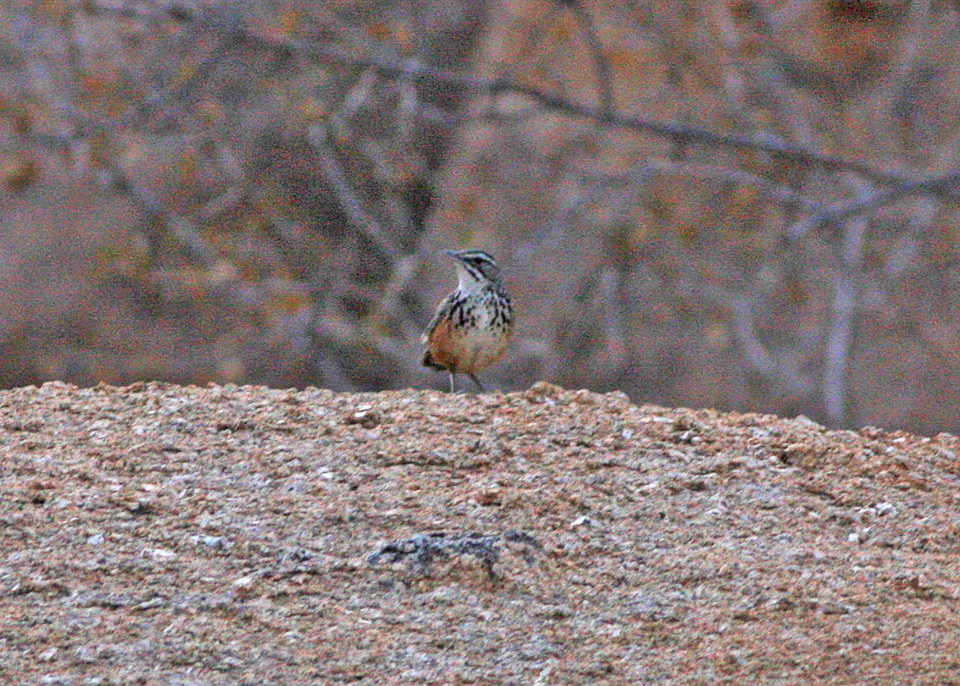
The Eastern Crombec is easily identified by its diminutive size, measuring approximately 9-11 cm in length, with a notably short tail that almost seems absent. Its plumage is characterized by a grayish-brown upper body and stark white underparts, a combination that provides excellent camouflage among the branches and leaves. The bird's head sports a subtle white eyebrow stripe, enhancing its distinct appearance. Adult males and females are similar in plumage, although males might exhibit slightly brighter tones during the breeding season. Juveniles resemble adults but have duller, less defined markings. Confusion may arise with similar Crombec species, yet the Eastern Crombec's distinct white underparts and habitat preference are key differentiators. In flight, this bird exhibits a rapid, flitting movement, often staying low within the vegetation. When perched, the Eastern Crombec's posture is upright, with its short tail flicking occasionally, a behavior that can aid in identification.
Having trouble telling birds apart? Upload a photo to our bird identification tool for an instant species match.
Eastern Crombec Habitat and Range
Preferred Habitat
The Eastern Crombec inhabits a variety of woodland environments, including miombo woodlands, dense thickets, and riverine forests. These habitats provide the necessary cover and food resources critical for its survival. Typically found at elevations ranging from sea level up to 2,000 meters, the Eastern Crombec shows a preference for areas with abundant undergrowth. Seasonal habitat shifts are minimal due to its largely sedentary nature, although slight movements may occur in response to food availability during dry periods. While it primarily resides in rural areas, the bird can occasionally be found in peri-urban settings where suitable habitat patches exist.
Geographic Range
The Eastern Crombec is primarily distributed across eastern Africa, with its range extending through countries such as Kenya, Tanzania, Uganda, and parts of Ethiopia. It is generally a non-migratory species, residing year-round within its established range. The densest populations are found in areas like the Kenyan highlands and the woodlands of northern Tanzania. Migration corridors are virtually nonexistent for this species due to its sedentary lifestyle. However, local movements in response to seasonal food availability might occur, especially during periods of drought or scarcity.
Want to know which birds visit your area? Browse our backyard birds by location guides for region-specific species lists.
What Does the Eastern Crombec Eat?
The diet of the Eastern Crombec consists predominantly of insects, which it gleans from leaves and branches. The bird's foraging technique involves meticulous inspection of foliage, where it uses its slender bill to extract small arthropods and larvae. Occasionally, the diet includes seeds and fruits, particularly during times when insect prey is less abundant. The Eastern Crombec is a diurnal feeder, with peak feeding activity occurring during the early morning and late afternoon when insects are most active. The bird's ability to adapt its diet based on seasonal availability is crucial for its survival in varying environmental conditions.
Eastern Crombec Behavior and Social Structure
Eastern Crombecs exhibit a solitary or paired lifestyle, rarely forming large flocks. Territorial behavior is pronounced, especially during the breeding season when males become more vocal and assertive. Courtship displays involve vocalizations and subtle movements within the territory to attract a mate. These birds are generally non-aggressive but will defend their territory from intruders. Flocking patterns are limited, with occasional loose associations during non-breeding months. In response to predators, the Eastern Crombec employs its excellent camouflage and silent demeanor, often remaining motionless until the threat passes. Daily activity patterns include foraging in the early hours and resting during the hottest part of the day.
Eastern Crombec Nesting and Reproduction
The Eastern Crombec constructs a dome-shaped nest, camouflaged among dense foliage, typically using grasses and spider webs. Nests are strategically positioned in low shrubs or small trees, providing protection from predators. The typical clutch size ranges from two to four eggs, with an incubation period of approximately 14 days. Both parents share responsibilities, from incubation to feeding fledglings. The fledging period lasts around 15-17 days, during which time the young are closely monitored and fed by the adults. Generally, the Eastern Crombec has one to two broods per year, depending on environmental conditions and food availability.
Eastern Crombec Sounds and Vocalizations
The Eastern Crombec's primary song is a series of soft, melodious whistles, often described as sweet and rhythmic, with a moderate pitch. Call notes include sharp, quick chips used in communication between mates or alerting others to danger. The bird also emits alarm calls, though these are less frequent, reserved for immediate threats. During the dawn chorus, the Eastern Crombec's voice blends with other woodland species, contributing to the rich acoustic tapestry of its habitat. Its song and calls serve as key identifiers, distinguishing it from other similar-sounding species.
Interesting Facts About the Eastern Crombec
- 1The Eastern Crombec's tail is so short it appears almost tailless, aiding in its agile movement through dense vegetation.
- 2Despite its small size, the Eastern Crombec plays a pivotal role in controlling insect populations within its habitat.
- 3Unlike many passerines, the Eastern Crombec does not migrate, making it a consistent resident of its home range year-round.
- 4Eastern Crombecs use spider webs to bind their nests together, demonstrating resourcefulness in nest construction.
- 5The Eastern Crombec's song is often one of the first sounds heard in the morning, signaling the start of the woodland's activity.
- 6This bird is highly adaptable, thriving in both miombo woodlands and riverine forests, highlighting its ecological versatility.
- 7The Eastern Crombec has a specialized bill shape that allows it to extract insects from narrow crevices, showcasing its unique foraging adaptation.
Eastern Crombec Conservation Status
Currently, the Eastern Crombec holds a status of 'Least Concern' on the IUCN Red List, reflecting a stable population trend. The primary threats to its habitat include deforestation and habitat fragmentation due to agricultural expansion. Conservation efforts focus on preserving woodland habitats and maintaining ecological integrity in its range. Historical population changes have been minimal, owing to the bird's adaptability and the relatively stable environments it inhabits. Continued habitat protection and reforestation initiatives are critical to ensuring the Eastern Crombec's long-term survival.
Other Macrosphenidae Species


Birds Similar to the Eastern Crombec
These species are often confused with the Eastern Crombec due to similar appearance or overlapping range.

