
Yellow Longbill
Macrosphenus flavicans
Order: Passeriformes / Family: Macrosphenidae

Wikimedia Commons
About the Yellow Longbill
The Yellow Longbill, Macrosphenus flavicans, captivates birders with its vivid appearance and intriguing behavior. Belonging to the family Macrosphenidae, this small songbird is native to the dense lowland forests of West and Central Africa. Its presence is most pronounced in countries such as Nigeria, Cameroon, Gabon, and the Democratic Republic of the Congo. These regions provide the bird with its preferred environment of humid, lush, tropical forests, where it thrives.
The significance of the Yellow Longbill extends beyond its aesthetic appeal. It plays a crucial ecological role as both predator and prey within its ecosystem. By consuming various insects, it helps to control pest populations, thereby maintaining a balanced environment. In turn, the Yellow Longbill serves as prey for larger avian predators, contributing to the food chain.
Ecologically, this bird is a vital component of its habitat. During the rainy season, the Yellow Longbill becomes more active, taking advantage of the increased insect population to feed its young. Observers note its agile movements and adept foraging techniques, which involve gleaning insects from leaves and branches. This behavior not only showcases its adaptability but also highlights the dynamic nature of tropical forest ecosystems.
The Yellow Longbill's seasonal behaviors are closely tied to the climatic patterns of its environment. In the wet season, it engages in breeding activities, while the dry season often sees reduced activity as food becomes scarcer. These patterns demonstrate the bird's remarkable ability to adapt to the cyclical changes within its habitat, ensuring its continued survival and reproductive success.
The Yellow Longbill belongs to the family Macrosphenidae, within the order Passeriformes. These birds typically live averages around 4-5 years in the wild..
How to Identify a Yellow Longbill
Identifying the Yellow Longbill involves observing several key characteristics. Adult Yellow Longbills exhibit a striking yellow plumage, which is most prominent on their underparts, contrasted by olive-green upperparts. The bird's head is adorned with a subtle, greyish wash, and its namesake long bill is slightly downcurved, aiding in its insectivorous diet.
Juvenile Yellow Longbills resemble adults but possess duller coloration, which gradually intensifies as they mature. In terms of sexual dimorphism, both males and females look similar, making visual differentiation challenging in the field. However, slight variations in bill length and body size may provide clues, with males typically exhibiting slightly elongated bills.
Confusion with similar species could occur, particularly with other small, yellowish birds inhabiting the same regions, such as the Little Greenbul. However, the Yellow Longbill's elongated bill and distinct vocalizations serve as reliable distinguishing features. In flight, the Yellow Longbill displays a rapid, fluttering pattern, while its perching posture is characterized by frequent tail flicking and agile movements along branches.
Having trouble telling birds apart? Upload a photo to our bird identification tool for an instant species match.
Yellow Longbill Habitat and Range
Preferred Habitat
The Yellow Longbill is predominantly found in the tropical lowland forests of West and Central Africa. These dense, humid environments offer the bird a rich supply of insects and ample cover for nesting and foraging. Within these forests, the Yellow Longbill prefers areas with thick canopy cover and abundant undergrowth.
While primarily a forest dweller, the Yellow Longbill occasionally ventures into more open areas, such as forest edges and clearings, particularly when food resources in the core forest become scarce. The bird generally inhabits low to mid-elevation regions, typically below 1,500 meters, where the climatic conditions remain favorable year-round.
There is little evidence to suggest significant seasonal habitat shifts for the Yellow Longbill, as its tropical environment provides a relatively consistent climate throughout the year. Urban presence is minimal, as the species thrives in undisturbed, natural habitats where human activity is limited.
Geographic Range
The range of the Yellow Longbill spans several countries in West and Central Africa, where it is a resident species. It is commonly found in Nigeria, Cameroon, Gabon, the Central African Republic, and the Democratic Republic of the Congo. These regions offer the extensive tropical forests that the Yellow Longbill requires for survival.
There are no significant migration patterns associated with this bird, as it tends to remain within its established range throughout the year. The absence of migratory behavior is typical of many tropical species, which benefit from stable environmental conditions that negate the need for seasonal movements.
Within its range, population density varies. The Yellow Longbill is generally more abundant in undisturbed forest areas, where human activity has not fragmented the habitat. In these locations, its presence can be quite noticeable, especially during the breeding season when vocal activity increases.
Want to know which birds visit your area? Browse our backyard birds by location guides for region-specific species lists.
What Does the Yellow Longbill Eat?
The diet of the Yellow Longbill primarily consists of insects, which it expertly extracts from foliage using its long, slender bill. Common prey items include caterpillars, beetles, and small spiders. This insectivorous diet plays a crucial role in controlling insect populations within its habitat.
Seasonal changes influence the bird's diet, with a noticeable increase in insect consumption during the wet season when prey availability peaks. During drier periods, the Yellow Longbill may supplement its diet with small fruits or seeds, although such plant matter constitutes a minor portion of its overall intake.
The Yellow Longbill employs an active foraging strategy, often seen hopping along branches and examining leaves for hidden insects. Its feeding schedule is diurnal, with peak activity occurring in the early morning and late afternoon when insects are most active. The bird's agile movements and keen eyesight enhance its foraging efficiency, allowing it to thrive in its insect-rich environment.
Yellow Longbill Behavior and Social Structure
The Yellow Longbill exhibits a range of intriguing behaviors that reflect its adaptability and social nature. Typically a solitary or paired bird, it occasionally joins mixed-species foraging flocks, an adaptive strategy that enhances feeding efficiency and predator detection.
Territorial behavior is evident during the breeding season, with males actively defending their chosen areas through vocal displays and physical presence. The Yellow Longbill's song, a series of high-pitched whistles, serves both as a territorial marker and an attractant for potential mates.
Courtship displays are subtle yet significant, involving mutual preening and synchronized movements between pairs. Once paired, these birds demonstrate strong bonds, often observed foraging together and sharing parental duties.
In response to predators, the Yellow Longbill relies on its cryptic plumage and quick, evasive flight to escape detection. Its daily activity pattern is largely diurnal, with peak activity during cooler parts of the day. This behavior not only aids in thermoregulation but also maximizes foraging success when insect prey is most accessible.
Yellow Longbill Nesting and Reproduction
The Yellow Longbill constructs its nest with great care, selecting sites that offer protection from predators and harsh weather. Nests are typically located in dense foliage or low shrubs, which provide adequate concealment.
The nest itself is a cup-shaped structure made from twigs, grasses, and leaves, intricately woven to ensure stability. Female Yellow Longbills lay a clutch of two to three eggs, which they incubate for approximately 12 to 14 days.
Both parents share in the feeding of the chicks, demonstrating a cooperative approach to rearing their young. Fledging occurs around 14 to 16 days post-hatching, at which point juvenile birds leave the nest but remain under parental care for several additional weeks.
The Yellow Longbill typically raises one or two broods per year, depending on environmental conditions and food availability. This reproductive strategy ensures the survival of offspring in the dynamic and often unpredictable tropical forest ecosystem.
Yellow Longbill Sounds and Vocalizations
The Yellow Longbill's primary song consists of a series of high-pitched, melodious whistles that form a rhythmic sequence. This song, often heard during the early morning hours, serves as both a territorial call and a means of attracting mates.
In addition to its song, the Yellow Longbill produces a variety of call notes, including sharp, repeated 'chip' sounds used for communication between paired birds or within mixed-species flocks. Alarm calls are distinct and rapid, designed to alert other birds of potential threats.
During the dawn chorus, the Yellow Longbill's song contributes to the vibrant acoustic environment of the tropical forest, blending seamlessly with the vocalizations of other avian species. Its song, while not as complex as that of some other songbirds, is nevertheless a key component of its communication repertoire, reflecting its role as an active participant in the forest's soundscape.
Interesting Facts About the Yellow Longbill
- 1The Yellow Longbill's elongated bill is highly specialized, enabling it to extract insects from deep within tree bark.
- 2Despite its bright appearance, the Yellow Longbill blends seamlessly into its environment, thanks to its olive-green back.
- 3The Yellow Longbill is named for its vibrant yellow underparts, which are particularly visible during courtship displays.
- 4This bird's song, though simple, plays a critical role in territory establishment and mate attraction.
- 5Unlike many birds, the Yellow Longbill does not migrate, remaining in its tropical forest home year-round.
- 6The Yellow Longbill often participates in mixed-species flocks, benefiting from increased foraging success and predator detection.
- 7Parental care in Yellow Longbills is highly cooperative, with both parents equally involved in chick rearing and protection.
Yellow Longbill Conservation Status
The Yellow Longbill currently holds a status of Least Concern according to the IUCN Red List. Its population appears stable, although precise numbers remain unknown due to the bird's elusive nature and the vastness of its forested habitat. Primary threats to the Yellow Longbill include habitat destruction and fragmentation caused by logging and agricultural expansion. These activities reduce the availability of suitable nesting and foraging sites, posing a risk to the species' long-term survival. Conservation efforts focus on preserving large tracts of tropical forest and implementing sustainable land-use practices. These measures aim to mitigate habitat loss and ensure the continued existence of the Yellow Longbill and other forest-dependent species. While historical population trends are not well-documented, ongoing conservation initiatives are crucial for monitoring the species' status and addressing emerging threats. Collaborative efforts involving local communities and international organizations remain essential for the successful conservation of this vibrant bird.
Other Macrosphenidae Species
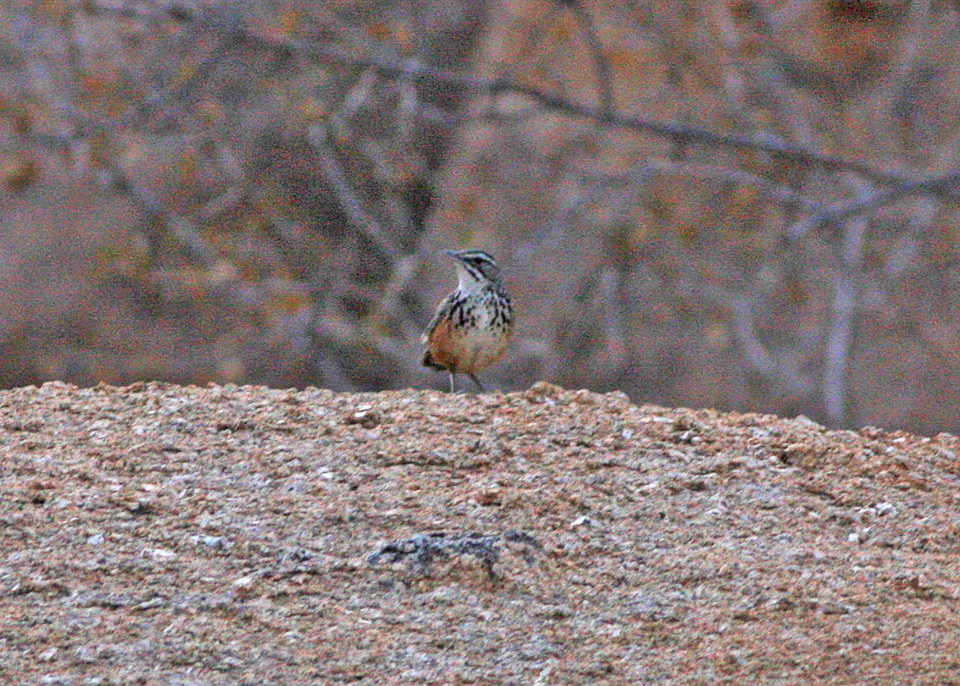


Birds Similar to the Yellow Longbill
These species are often confused with the Yellow Longbill due to similar appearance or overlapping range.