
Kemp's Longbill
Macrosphenus kempi
Order: Passeriformes / Family: Macrosphenidae

Wikimedia Commons
About the Kemp's Longbill
The Kemp's Longbill (Macrosphenus kempi) is a small passerine bird belonging to the family Macrosphenidae, a group known for its diversity in morphology and habitat preference. This species inhabits the dense, humid lowland forests of West Africa, extending from Sierra Leone to Nigeria. Its presence is often highlighted by its melodious song, which echoes through the forest understory. The Kemp's Longbill plays a crucial role in its ecosystem by controlling insect populations and dispersing seeds through its diet. Its ecological significance lies in its adaptability to various forest types, including both primary and secondary growth, where it thrives by exploiting the rich abundance of insects and fruit. The bird is particularly active during the wet season, when insect abundance peaks, providing ample food supply for breeding. Its breeding season often coincides with this period, ensuring optimal conditions for raising its young. During the dry season, the Kemp's Longbill may exhibit more solitary behavior, as food resources become scarce and competition intensifies. In addition to its role in pest control, the Kemp's Longbill contributes to the forest's acoustic landscape, often forming mixed-species foraging flocks with other insectivorous birds. This behavior not only aids in locating food but also enhances predator detection, illustrating a complex web of interspecies interactions. Despite its small size, the Kemp's Longbill demonstrates remarkable resilience to habitat changes, although deforestation remains a significant threat. Conservation efforts focused on preserving West Africa's forested areas are crucial for maintaining the population stability of this and other forest-dependent species.
The Kemp's Longbill belongs to the family Macrosphenidae, within the order Passeriformes. These birds typically live typically up to 3-4 years in the wild..
How to Identify a Kemp's Longbill
The adult Kemp's Longbill measures approximately 11 to 12 cm in length, making it a rather small bird. Its plumage is primarily olive-brown on the upperparts, with a subtly lighter underbelly, providing excellent camouflage among foliage. The bill is notably long and slender, a characteristic feature that aids in foraging for insects deep within bark and leaves. Juveniles resemble adults but tend to have slightly duller plumage, which brightens as they mature. There is little sexual dimorphism in this species, making it difficult to distinguish males from females based solely on appearance. However, during the breeding season, males may be more vocal and display brighter plumage due to hormonal changes. When comparing the Kemp's Longbill to similar species, its elongated bill and specific vocalizations are distinguishing factors. For instance, the Yellow Longbill, which shares part of its range, has a shorter bill and more yellow-toned plumage. In flight, the Kemp's Longbill exhibits a rapid, undulating pattern typical of small songbirds. When perched, it often assumes a horizontal posture, keeping low within the dense undergrowth, which aids in its concealment from predators.
Having trouble telling birds apart? Upload a photo to our bird identification tool for an instant species match.
Kemp's Longbill Habitat and Range
Preferred Habitat
The Kemp's Longbill thrives in the lush, humid lowland forests of West Africa. Its preferred habitats include both primary and secondary forests, where it can navigate the dense understory with ease. These forests offer a rich diversity of insects and fruits, crucial for the bird’s diet. The Kemp's Longbill often inhabits areas at elevations ranging from sea level to around 900 meters. Seasonal habitat shifts are minimal, but during the wetter months, the bird may venture into more open areas with abundant insect life. While the Kemp's Longbill is primarily a forest dweller, it can occasionally be found in forest edge habitats where it benefits from the increased insect activity. Its presence in urban areas is rare, as the bird prefers the seclusion and complexity of natural forest environments. Conservation of these forested areas is vital, as deforestation poses a significant threat to its habitat.
Geographic Range
The Kemp's Longbill is endemic to West Africa, with its range spanning from Sierra Leone in the west to Nigeria in the east. It is a resident species, meaning it does not migrate over long distances. However, local movements within its range are common, particularly in response to seasonal changes in food availability. The highest population densities occur in regions with extensive forest cover, such as the Gola Rainforest in Sierra Leone and the Cross River National Park in Nigeria. These areas provide the dense understory and abundant food resources vital for the bird's survival. Although the Kemp's Longbill's range does not include long migration corridors or wintering grounds, its presence is closely tied to the availability of suitable forest habitats. Conservation efforts focused on protecting these key areas are essential for maintaining the species' population stability.
Want to know which birds visit your area? Browse our backyard birds by location guides for region-specific species lists.
What Does the Kemp's Longbill Eat?
The diet of the Kemp's Longbill primarily consists of insects, which it skillfully extracts from the forest understory. This bird is an adept forager, using its long bill to probe bark crevices and foliage for hidden prey such as beetles, caterpillars, and spiders. During the wet season, when insects are most abundant, the Kemp's Longbill's diet is almost exclusively insectivorous. However, in drier periods, it supplements its diet with fruits and berries, which provide necessary nutrients and moisture. The Kemp's Longbill typically forages alone or in pairs, although it occasionally joins mixed-species flocks to capitalize on the collective foraging efforts. Its feeding schedule is diurnal, with peak activity observed during the early morning and late afternoon when temperature and humidity levels are optimal for insect activity. The bird's foraging technique is characterized by quick, deliberate movements as it navigates through dense foliage, often hanging upside down to access difficult-to-reach areas.
Kemp's Longbill Behavior and Social Structure
Kemp's Longbill exhibits a complex social structure primarily centered around its breeding and foraging activities. This species is generally monogamous, with pairs forming strong bonds during the breeding season. Territorial behavior is pronounced, with males often engaging in vocal displays to defend their territory from rivals. These displays include a series of melodious songs and aggressive posturing. During non-breeding periods, the Kemp's Longbill may become more solitary, although it often joins mixed-species flocks to enhance foraging efficiency and predator awareness. Courtship displays are subtle, involving mutual preening and the presentation of food items by the male to the female. The Kemp's Longbill responds to predators with alarm calls and evasive flight patterns, staying close to cover to avoid detection. Daily activity patterns include bursts of foraging interspersed with periods of rest and preening. The bird is most active during the cooler parts of the day, reducing activity during the midday heat.
Kemp's Longbill Nesting and Reproduction
Kemp's Longbill constructs its nest in the dense undergrowth of West African forests, using a variety of materials such as leaves, grasses, and twigs. The nest is usually cup-shaped and carefully concealed among thick vegetation to protect it from predators. Nesting sites are often located at heights of 1 to 3 meters above the ground. The typical clutch size ranges from two to three eggs, which the female incubates for approximately 14 days. During this period, the male plays a supportive role by providing food and defending the nesting territory. Once hatched, the chicks remain in the nest for about 12 to 15 days before fledging. Both parents share the responsibilities of feeding the chicks and keeping the nest clean. The Kemp's Longbill typically raises one to two broods per year, depending on food availability and environmental conditions. Parental care continues for several weeks after the young have fledged, ensuring their survival as they learn to forage independently.
Kemp's Longbill Sounds and Vocalizations
The primary song of the Kemp's Longbill is a series of melodious, fluting notes that rise and fall in pitch, creating a distinctive cadence often echoing through the forest. This song serves as both a territorial marker and a means of attracting mates. In addition to its primary song, the Kemp's Longbill produces a variety of call notes, including sharp 'chip' sounds used for communication between mates or alerting to the presence of predators. During the early morning, the bird joins the dawn chorus, contributing to the rich tapestry of forest sounds. The alarm calls are harsher and more staccato, signaling imminent danger. Comparatively, these sounds bear a slight resemblance to the calls of the closely related Yellow Longbill but are generally more musical and varied.
Interesting Facts About the Kemp's Longbill
- 1Kemp's Longbill uses its specialized bill to extract insects from crevices, a skill few other birds possess.
- 2This species often participates in mixed-species flocks, benefiting from shared foraging insights.
- 3Despite its small size, the Kemp's Longbill's song carries over long distances in the dense forest.
- 4The bird's dull plumage is an adaptation for camouflage in the shadowy understory of the rainforest.
- 5Kemp's Longbill can adapt to secondary forests, making it somewhat resilient to habitat changes.
- 6The Kemp's Longbill's territory often overlaps with other insectivorous birds, showcasing its non-aggressive nature.
- 7Its breeding season aligns with peak insect abundance, ensuring optimal conditions for chick rearing.
Kemp's Longbill Conservation Status
According to the IUCN, the Kemp's Longbill is currently listed as Least Concern, though its population shows a declining trend due to habitat loss. The primary threat facing this species is deforestation, driven by logging, agriculture, and urban expansion. Efforts to conserve the Kemp's Longbill focus on protecting and restoring its forest habitat, particularly in areas of high biodiversity such as national parks and reserves. Historical population data suggest that the species was once more widespread, with fragmentation of suitable habitats contributing to its current distribution. Conservation initiatives include reforestation projects and creating protected areas to ensure the survival of this and other forest-dependent species.
Other Macrosphenidae Species
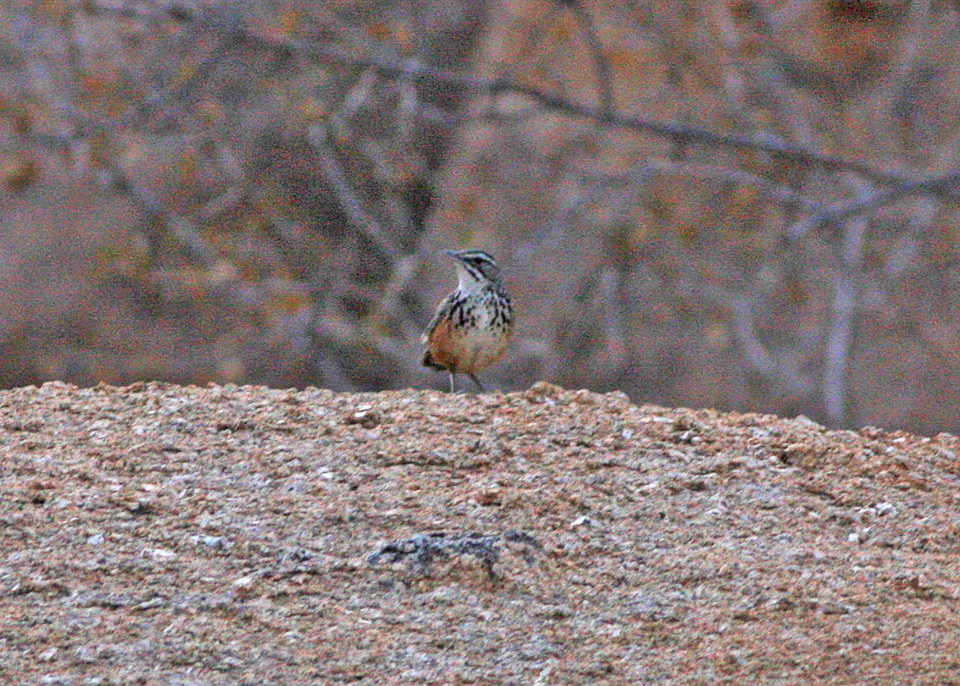


Birds Similar to the Kemp's Longbill
These species are often confused with the Kemp's Longbill due to similar appearance or overlapping range.