
Victorin's Warbler
Cryptillas victorini
Order: Passeriformes / Family: Macrosphenidae

Wikimedia Commons
About the Victorin's Warbler
Victorin's Warbler, known scientifically as Cryptillas victorini, is a fascinating songbird endemic to the southern regions of Africa, primarily found in South Africa's fynbos biome. This species plays a vital role in the ecosystem, acting as both a predator of insects and a prey item for larger birds and mammals. Its presence in the fynbos, a unique and biodiversity-rich shrubland, highlights its ecological significance. This warbler is particularly associated with dense, shrubby vegetation, which offers both food and protection. Its preference for such habitats makes it an important indicator species for the health of these ecosystems.
The bird's life revolves around its intricate interactions with the fynbos environment, especially during the breeding season. In spring and early summer, Victorin's Warbler becomes more vocal and conspicuous, as males sing to establish territories and attract mates. This period sees an increase in their activity, as they shuttle through the underbrush, foraging for insects and other small invertebrates. The warbler's role in controlling insect populations underscores its ecological importance.
Outside the breeding season, Victorin's Warbler remains within its home range, maintaining a relatively sedentary lifestyle. Its consistent presence throughout the year ensures its continuous contribution to the local biodiversity. The bird's survival is closely tied to the conservation of the fynbos, which faces threats from urban expansion, invasive species, and climate change. As such, Victorin's Warbler serves as a symbol for the preservation of this unique habitat. Its resilience and adaptability to the challenges presented by its environment make it a focal species for ecological studies and conservation efforts.
The Victorin's Warbler belongs to the family Macrosphenidae, within the order Passeriformes. These birds typically live around 3-5 years in the wild..
How to Identify a Victorin's Warbler
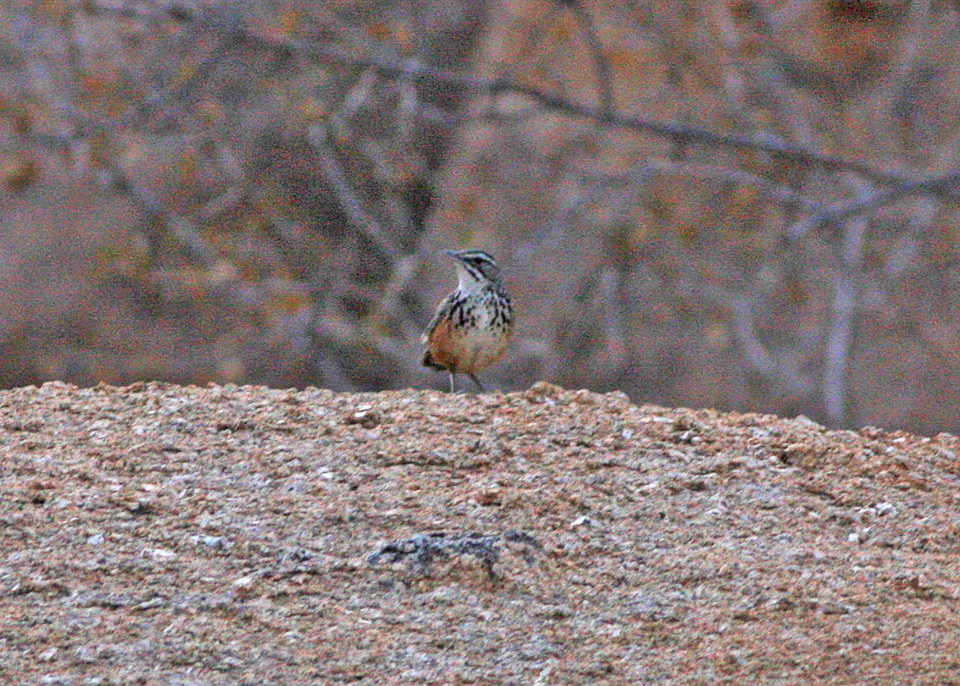
Victorin's Warbler is a small, elusive bird, typically measuring around 14 centimeters in length. Its plumage is predominantly cinnamon-rufous on the upperparts, with a subtle blend of brown and olive tones. The underparts are paler, featuring a creamy to buff color that contrasts with the richer hues of the upperparts. The bird's head showcases a distinctive facial pattern, highlighted by a pale eyebrow stripe that enhances its alert appearance.
Juvenile Victorin's Warblers are similar in appearance to adults but exhibit slightly duller plumage. This difference makes it challenging for novice birders to distinguish between the age groups in the field. Males and females are alike in plumage, making sex identification based on visual cues difficult.
In comparison to other warblers, Victorin's Warbler can be confused with the Cape Grassbird, which shares its habitat. However, the grassbird is larger and has a longer tail. Additionally, Victorin's Warbler's flight is typically short and direct, often taking place low to the ground, which differs from the more undulating flight of the Cape Grassbird. When perched, Victorin's Warbler maintains a horizontal posture, often flicking its tail as it moves through dense vegetation.
Having trouble telling birds apart? Upload a photo to our bird identification tool for an instant species match.
Victorin's Warbler Habitat and Range
Preferred Habitat
Victorin's Warbler thrives in the fynbos biome, a Mediterranean-type shrubland found in the Western and Eastern Cape of South Africa. This habitat is characterized by dense, sclerophyllous shrubs, which provide ample cover and foraging opportunities. The warbler is commonly found at elevations ranging from sea level to about 1,500 meters, favoring areas with well-established shrub growth.
While primarily associated with natural shrublands, Victorin's Warbler can also be found in montane forests and dense riparian thickets, especially where its primary habitat is fragmented. However, it tends to avoid urban areas and highly disturbed landscapes, preferring instead the relative seclusion of the fynbos.
Throughout the year, Victorin's Warbler remains largely sedentary, showing little movement between habitats. This fidelity to its preferred environment highlights the importance of preserving these unique landscapes to ensure the species' survival.
Geographic Range
Victorin's Warbler is endemic to South Africa, with its range primarily confined to the Western and Eastern Cape provinces. This bird inhabits the coastal and montane regions of the fynbos biome, extending from the Cape Peninsula in the west to the Tsitsikamma Mountains in the east.
The species occupies a relatively stable range and does not undertake long-distance migrations. Instead, it exhibits localized movements within its home range, especially in response to changes in food availability or habitat conditions. Consequently, Victorin's Warbler is considered a resident species, maintaining its presence in the same general area throughout the year.
While the bird's population density varies across its range, hotspots include areas like the Cape of Good Hope Nature Reserve and the Cederberg Mountains, where the fynbos habitat remains largely intact and supports a rich array of flora and fauna.
Want to know which birds visit your area? Browse our backyard birds by location guides for region-specific species lists.
What Does the Victorin's Warbler Eat?
Victorin's Warbler primarily feeds on a diet of insects and other small invertebrates, which it gleans from the foliage of shrubs and low vegetation. This insectivorous diet includes beetles, caterpillars, spiders, and ants, which provide essential nutrients for the bird's growth and reproduction.
During the breeding season, the warbler's dietary needs increase, prompting it to intensify its foraging efforts. It employs a methodical technique, moving systematically through the underbrush, probing leaves and crevices with its bill to locate hidden prey. This behavior not only helps control insect populations but also influences the structure and health of the fynbos ecosystem.
In the non-breeding season, the warbler's diet remains consistent, though it may occasionally shift to include small seeds or berries, especially during periods of food scarcity. Despite these occasional dietary shifts, insects remain the primary food source year-round, reflecting the bird's specialized feeding habits and its role as a key insectivore in its habitat.
Victorin's Warbler Behavior and Social Structure
Victorin's Warbler exhibits solitary behavior, often seen alone or in pairs rather than in large flocks. It maintains a strong territorial instinct, particularly during the breeding season when males vigorously defend their territories through song and physical displays.
Courtship displays involve males performing a series of song flights and visual displays to attract females. These displays are integral to mate selection and territory establishment, ensuring that each breeding pair has adequate resources to raise their young.
The warbler exhibits a pattern of daily activity that begins at dawn when it is most vocal and active. It forages throughout the day, with peak activity occurring during the cooler morning and late afternoon hours. In response to predators, Victorin's Warbler employs a strategy of stealth and concealment, utilizing its cryptic plumage to blend into the dense vegetation and avoid detection. This cautious behavior, combined with its ability to navigate complex habitats, aids in its survival.
Victorin's Warbler Nesting and Reproduction
Victorin's Warbler constructs its nest in dense shrubbery, choosing locations that provide both concealment and protection from predators. The nest itself is a neat, cup-shaped structure, woven from fine grasses, rootlets, and lined with soft materials such as feathers or plant down.
The female typically lays a clutch of two to three eggs, which she incubates for about 14 to 16 days. During this period, the male assists by providing food and guarding the territory. Once the eggs hatch, both parents share the responsibility of feeding the chicks, bringing a steady supply of insects to the nest.
Fledging occurs approximately 14 days after hatching, with the young birds leaving the nest to explore their surroundings. Despite fledging, the juveniles remain dependent on their parents for several weeks as they learn essential survival skills. Victorin's Warbler usually raises one brood per year, although favorable conditions may lead to a second brood.
Victorin's Warbler Sounds and Vocalizations
The primary song of Victorin's Warbler is a series of rich, melodious phrases, delivered with a clear, ringing quality. Its rhythm is typically slow and deliberate, with each note carefully enunciated, making it a delightful sound to the attentive listener.
In addition to its song, the warbler emits a variety of call notes, including sharp 'chip' or 'tick' sounds used in communication between mates and as alarm calls when potential threats are nearby. During the dawn chorus, Victorin's Warbler's song stands out, contributing to the vibrant soundscape of the fynbos.
The bird's vocalizations play a crucial role in territory establishment and mate attraction, with males singing more frequently during the breeding season. The clarity and consistency of its song make it a key feature for identification in the field.
Interesting Facts About the Victorin's Warbler
- 1Victorin's Warbler can be found only in South Africa, making it a true endemic species of the region.
- 2Despite its rich plumage, Victorin's Warbler is often heard before it is seen, thanks to its melodious song.
- 3The fynbos biome, home to Victorin's Warbler, is one of the world's most biodiverse ecosystems.
- 4Unlike many warblers, Victorin's Warbler does not migrate, remaining in its preferred habitat year-round.
- 5Its nest is cleverly concealed in dense shrubs, providing excellent camouflage against predators.
- 6The bird's diet consists almost entirely of insects, showcasing its role as a crucial insectivore.
- 7With a length of 14 centimeters, Victorin's Warbler is considered small among songbirds.
Victorin's Warbler Conservation Status
Victorin's Warbler is currently listed as Least Concern by the IUCN, with a stable population trend. However, its specialized habitat requirements make it vulnerable to habitat loss caused by urban expansion, agricultural development, and invasive plant species. Conservation efforts focus on protecting the fynbos biome through the establishment of nature reserves and habitat restoration projects. These initiatives aim to maintain the ecological integrity of this unique landscape, ensuring a sustainable future for Victorin's Warbler and other endemic species. Historically, the warbler's population has shown resilience, adapting to habitat changes when suitable corridors and patches of native vegetation are preserved. Ongoing research and monitoring are crucial to understanding the long-term impacts of environmental changes on this species.
Other Macrosphenidae Species


Birds Similar to the Victorin's Warbler
These species are often confused with the Victorin's Warbler due to similar appearance or overlapping range.