
Elliot's Storm-Petrel
Oceanites gracilis
Order: Procellariiformes / Family: Hydrobatidae

Wikimedia Commons
About the Elliot's Storm-Petrel
Elliot's Storm-Petrel (Oceanites gracilis) epitomizes the grace and endurance of seabirds, inhabiting the open oceans of the southeastern Pacific. It holds a special place among the Procellariiformes, a group revered for their remarkable adaptations to pelagic life. These small, agile birds are adept at skimming the ocean surface, a behavior facilitated by their long wings and light bodies. Elliot's Storm-Petrel is predominantly found along the coasts of Peru and Chile, where it thrives in the nutrient-rich waters of the Humboldt Current. This current supports a bounty of marine life, making it a crucial feeding ground for the species. The storm-petrel's ecological role as a pelagic predator helps maintain the balance of its marine ecosystem by preying on small fish and plankton. During the breeding season, Elliot's Storm-Petrel exhibits a fascinating shift in behavior, coming ashore to nest in isolated colonies on rocky islands. The selection of these remote nesting sites reduces the risk of predation, a critical strategy for the bird's survival. Nesting primarily occurs on offshore islands of Chile, such as Isla Mocha and the Juan Fernández Archipelago. The breeding season sees these birds engaging in nocturnal activity, reducing the chances of predation by diurnal birds. As the breeding season concludes, Elliot's Storm-Petrel returns to its solitary oceanic life. The species' reliance on the marine environment for both feeding and breeding underscores its vulnerability to changes in ocean conditions. Human activities, such as overfishing and pollution, pose significant threats to the storm-petrel's habitat. Conservation efforts focus on monitoring population trends and protecting vital breeding and foraging areas. Elliot's Storm-Petrel's presence serves as an indicator of ocean health, emphasizing the interconnectedness of marine ecosystems. Its life driven by the rhythms of the ocean exemplifies the intricate tapestry of avian life adapted to the harsh, yet bountiful, marine environment.
The Elliot's Storm-Petrel belongs to the family Hydrobatidae, within the order Procellariiformes. These birds typically live average 15 years with max recorded at 20 years.
How to Identify a Elliot's Storm-Petrel
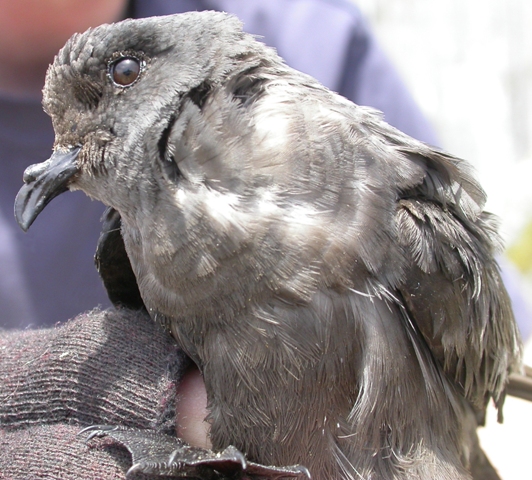
Elliot's Storm-Petrel presents a striking silhouette with long, pointed wings and a square tail. Adults showcase a dark brown to black plumage contrasting with a prominent white rump patch, a key identifying feature in flight. Juveniles resemble adults but may show slightly duller plumage. There is little sexual dimorphism; males and females appear similar, making field identification based solely on size or plumage challenging. When compared to similar species like Wilson's Storm-Petrel, Elliot's Storm-Petrel can be distinguished by its more elongated wings and the absence of toe projection beyond the tail. Its flight pattern is buoyant and erratic, characterized by rapid wingbeats interspersed with glides. This distinctive flight style aids in differentiating it from other storm-petrels. When perched, it often appears hunched, further emphasizing its compact size. The species' small stature, typically measuring around 15-17 centimeters in length, places it among the smaller members of the storm-petrel family.
Having trouble telling birds apart? Upload a photo to our bird identification tool for an instant species match.
Elliot's Storm-Petrel Habitat and Range
Preferred Habitat
Elliot's Storm-Petrel thrives in pelagic zones, predominantly within the southeastern Pacific Ocean. It finds optimal conditions in the cold, nutrient-rich waters of the Humboldt Current. This current, flowing along the western coast of South America, supports abundant marine biodiversity. The bird's habitat is characterized by open ocean expanses where it feeds far from land. During the breeding season, Elliot's Storm-Petrel seeks out isolated rocky islands, such as those off the coast of Chile, for nesting. These islands offer safety from terrestrial predators. The species does not typically venture into urban or suburban environments, remaining closely tied to its oceanic roots. Its presence in coastal waters is mainly seasonal, associated with breeding activities.
Geographic Range
Elliot's Storm-Petrel's range spans the southeastern Pacific, from the coasts of Ecuador to southern Chile. It breeds on islands off Chile, including Isla Mocha and the Juan Fernández Archipelago. While it remains largely non-migratory, individuals may disperse following the breeding season, exploring a broader swath of the Pacific. The species is not known for long-distance migration, instead exhibiting local movements driven by oceanographic conditions. Population densities are highest near productive waters of the Humboldt Current, where food availability is consistent. Unlike some seabirds, Elliot's Storm-Petrel does not typically enter the Atlantic Ocean, confining its range to the Pacific region.
Want to know which birds visit your area? Browse our backyard birds by location guides for region-specific species lists.
What Does the Elliot's Storm-Petrel Eat?
Elliot's Storm-Petrel primarily feeds on small fish, plankton, and crustaceans. Its diet reflects the rich marine life supported by the Humboldt Current. The bird employs a unique foraging technique, 'pattering' on the water surface with its feet while picking prey with its slender bill. This method allows it to exploit surface swarms of zooplankton and small fish efficiently. Seasonal diet shifts occur as prey availability changes, with a preference for fish larvae and copepods during certain months. Feeding activity peaks during early morning and late afternoon, coinciding with the vertical migration of prey species.
Elliot's Storm-Petrel Behavior and Social Structure
Elliot's Storm-Petrel exhibits solitary to loosely social behavior, often seen alone or in small groups. Its feeding strategy involves dynamic surface foraging, where it utilizes its agility to capture prey. The species displays little territorial aggression, instead focusing on resource availability. During the breeding season, it forms loose colonies on remote islands, where courtship involves aerial displays and vocalizations. Both males and females engage in these displays, strengthening pair bonds. Flocking patterns are more pronounced outside the breeding season, as individuals congregate in areas with abundant food. In response to predators, Elliot's Storm-Petrel relies on its erratic flight to evade capture. Daily activity patterns show a preference for crepuscular and nocturnal activity, particularly during breeding.
Elliot's Storm-Petrel Nesting and Reproduction
Elliot's Storm-Petrel nests in crevices or burrows on rocky islands, using minimal materials like feathers and plant debris. Nest sites are chosen for their inaccessibility to predators. The typical clutch size is a single egg, which both parents incubate for approximately 40 days. After hatching, parents alternate feeding duties, supplying regurgitated marine prey. Fledging occurs around 60-70 days post-hatching. The fledgling period involves parental guidance as young learn to forage. The species typically produces only one brood per year, reflecting the energy demands of its oceanic lifestyle.
Elliot's Storm-Petrel Sounds and Vocalizations
Elliot's Storm-Petrel emits a series of high-pitched, chattering calls, often described as a repetitive 'twittering.' These vocalizations serve primarily in courtship and colony communication. Alarm calls are sharper, alerting conspecifics to potential danger. The species does not engage in elaborate song patterns but relies on simple calls for interaction. During the dawn chorus, its calls may blend with those of other seabird species, creating a cacophony typical of marine bird colonies.
Interesting Facts About the Elliot's Storm-Petrel
- 1Elliot's Storm-Petrel can travel vast distances over open ocean without landing, showcasing incredible endurance.
- 2The bird's 'pattering' foraging technique is unique among seabirds and allows efficient surface prey capture.
- 3Despite its small size, Elliot's Storm-Petrel can withstand harsh oceanic conditions, thriving in the pelagic zone.
- 4The species nests in remote colonies on isolated islands, reducing predation risk significantly.
- 5Elliot's Storm-Petrel is named after Daniel Giraud Elliot, a noted 19th-century American ornithologist.
- 6Researchers study the storm-petrel to understand ocean health due to its sensitivity to environmental changes.
- 7The white rump patch of Elliot's Storm-Petrel is a key field mark, helping distinguish it from similar species.
Elliot's Storm-Petrel Conservation Status
The IUCN currently lists Elliot's Storm-Petrel as Least Concern, though specific population trends remain poorly documented. Primary threats include habitat disturbance from human activity and climate change impacts on ocean conditions. Conservation efforts focus on protecting breeding sites and monitoring population health. Historically, the population appears stable, yet ongoing monitoring is essential to address potential threats from environmental changes.
Other Hydrobatidae Species



Birds Similar to the Elliot's Storm-Petrel
These species are often confused with the Elliot's Storm-Petrel due to similar appearance or overlapping range.

