
New Zealand Storm Petrel
Oceanites maorianus
Order: Procellariiformes / Family: Hydrobatidae

Wikimedia Commons
About the New Zealand Storm Petrel
The New Zealand Storm Petrel, or Oceanites maorianus, is a small seabird that has captured the fascination of ornithologists and bird watchers alike due to its dramatic rediscovery in the early 2000s. Originally thought to be extinct, this bird was first sighted again in 2003 near New Zealand's Hauraki Gulf. It belongs to the family Hydrobatidae, which includes the storm petrels, a group known for their oceanic lifestyles and remarkable adaptability to marine environments.
These birds are significant not only because of their mysterious history but also due to their role in the marine ecosystem. As part of the storm petrel family, they contribute to the control of marine invertebrate populations, feeding on plankton and small fish. Their presence indicates a healthy oceanic environment, as they rely on clean waters to forage effectively.
Endemic to New Zealand, the New Zealand Storm Petrel has a limited range, largely confined to the waters off the North Island. They prefer open sea habitats and are often observed in the choppy waters of the Hauraki Gulf, a region known for its rich marine biodiversity. Seasonal behaviors of the New Zealand Storm Petrel include their breeding activities, which are suspected to occur on predator-free islands. These islands provide safe nesting sites away from the threats of introduced predators, allowing the species to maintain its population despite its limited distribution.
The ecological role of the New Zealand Storm Petrel extends beyond its foraging habits. As a part of the maritime food web, they serve as prey for larger marine predators and are indicators of ocean health. The birds' elusive nature and limited sightings make them a subject of ongoing research, with ornithologists striving to understand their life cycle, migration patterns, and population dynamics.
The New Zealand Storm Petrel belongs to the family Hydrobatidae, within the order Procellariiformes. These birds typically live average 12 years with max recorded at 15 years.
How to Identify a New Zealand Storm Petrel
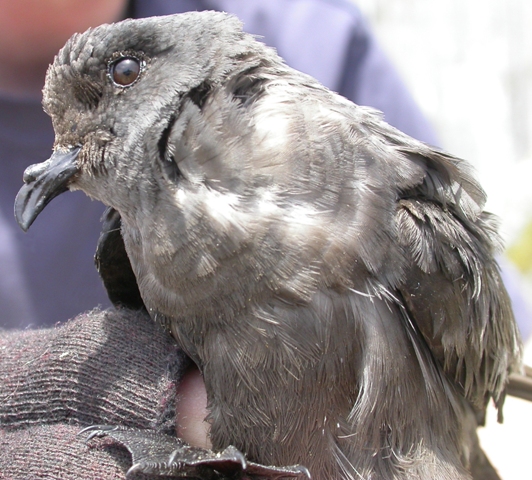
The New Zealand Storm Petrel is a small seabird, measuring around 16 centimeters in length, with a wingspan of approximately 38 centimeters. One of its most striking features is its contrasting black-and-white plumage. The upperparts are predominantly black, while the underparts are mostly white, with a distinctive dark streak running down the belly. This bold patterning sets it apart from many other petrel species, aiding in its identification at sea.
Juvenile birds resemble adults, although they may exhibit slightly duller plumage. There is little to no sexual dimorphism in this species, meaning males and females look alike, which can make identifying individuals challenging during field observations.
In flight, the New Zealand Storm Petrel shows a characteristic fluttering pattern, with quick, erratic wingbeats interspersed with brief glides. Its silhouette is marked by long, slender wings and a notched tail. When perched, these birds often appear to sit atop the water, maintaining a buoyant position. Confusion may occur with similar species such as the Black-bellied Storm Petrel, but the distinct belly streak of the New Zealand Storm Petrel serves as a reliable differentiator.
Having trouble telling birds apart? Upload a photo to our bird identification tool for an instant species match.
New Zealand Storm Petrel Habitat and Range
Preferred Habitat
The New Zealand Storm Petrel favors open ocean environments, particularly the waters surrounding the Hauraki Gulf and the broader North Island region. These areas provide the bird with ample foraging opportunities, thanks to nutrient-rich currents and diverse marine life. The petrel's preference for remote oceanic waters keeps it largely out of sight from land-based observers, contributing to its elusive reputation.
Little is known about its specific nesting habitats, but it is believed to breed on predator-free offshore islands. These locations offer the isolation necessary to protect nests from introduced predators such as rats and cats, which are absent from these islands. The bird's range does not show significant seasonal shifts, as it remains largely within New Zealand waters year-round, though specific breeding sites remain largely unidentified.
Geographic Range
The breeding range of the New Zealand Storm Petrel, Oceanites maorianus, is thought to be limited to predator-free islands off the northern coast of New Zealand, with sightings primarily around the Hauraki Gulf. While the exact breeding sites remain uncertain, the islands within this region are prime candidates due to their isolation and lack of land predators.
During non-breeding periods, these birds continue to inhabit the same general region, as they are not known to undergo long migrations like some other seabird species. The limited range and specificity of their habitat contribute to their classification as a rare species, with sightings concentrated in the northern waters of New Zealand.
Population density hotspots are largely in the Hauraki Gulf, where birders and researchers frequently observe them. The restricted range and small population make the New Zealand Storm Petrel one of the most sought-after birds for ornithologists visiting New Zealand, eager to catch a glimpse of this elusive species.
Want to know which birds visit your area? Browse our backyard birds by location guides for region-specific species lists.
What Does the New Zealand Storm Petrel Eat?
The diet of the New Zealand Storm Petrel primarily consists of small marine organisms, including plankton and tiny fish. These birds are surface feeders, skimming the ocean's surface to snatch up prey items. Their foraging technique involves a distinctive 'pattering' behavior, where they hover above the water, using their feet to touch the surface lightly as they feed.
Seasonal changes in diet are minimal, given the relatively stable oceanic environment they occupy. However, they may exploit temporary increases in prey availability, such as plankton blooms. The small size of their prey dictates frequent feeding throughout the day, aligning with the ebbs and flows of oceanic productivity.
The New Zealand Storm Petrel's feeding schedule is largely dictated by the availability of prey, often aligning with tides and currents that concentrate plankton and small fish near the water's surface, facilitating easier access for these agile seabirds.
New Zealand Storm Petrel Behavior and Social Structure
New Zealand Storm Petrels exhibit a highly social behavior, often seen in small flocks when foraging over the open ocean. Their social structure lacks significant territorial aggression, as they are primarily oceanic and do not establish fixed territories like many land birds.
Courtship displays remain largely undocumented due to the scarcity of observations in breeding contexts. However, like many seabirds, they likely engage in aerial displays and vocalizations to attract mates. Their flocking patterns are loose, with individuals maintaining personal space even when feeding collectively.
In response to predators, these birds rely on their agile flight and open sea environments to evade threats. They are most active during daylight hours, synchronizing their activity with the availability of their prey. The New Zealand Storm Petrel's daily patterns are largely dictated by the oceanic environment, resulting in a lifestyle adapted to constant movement and vigilance.
New Zealand Storm Petrel Nesting and Reproduction
The nesting habits of the New Zealand Storm Petrel remain largely a mystery, as breeding sites have not been definitively identified. It is presumed that they nest in burrows or among rock crevices on predator-free offshore islands. These locations provide essential protection from introduced predators like rats and cats.
The clutch size is believed to be small, likely a single egg per breeding attempt, a common trait among seabirds that invest heavily in individual offspring. The incubation period and fledging timelines are not well-documented, but it is assumed that, like other storm petrels, both parents participate in incubation and chick-rearing duties.
The number of broods per year is likely limited to one, aligning with their long-lived, low-reproductive strategy typical of seabirds, focusing on survival and longevity over rapid population increases.
New Zealand Storm Petrel Sounds and Vocalizations
The vocalizations of the New Zealand Storm Petrel are seldom heard due to their pelagic nature and elusive breeding grounds. However, they are known to produce a series of high-pitched calls, which are used primarily during social interactions at sea and possibly during courtship.
These calls consist of rapid, twittering notes with a rhythmic quality that resembles the sounds of other storm petrel species. They likely use these vocalizations to maintain flock cohesion and communicate with potential mates. Alarm calls have not been well-documented, reflecting the challenges of studying these birds in their natural environment.
The lack of a dawn chorus or other terrestrial vocal displays further underscores their oceanic lifestyle, where visual cues and flight behaviors often take precedence over vocal communication.
Interesting Facts About the New Zealand Storm Petrel
- 1The New Zealand Storm Petrel was thought extinct for over 100 years before being rediscovered in 2003.
- 2This bird is one of the smallest storm petrels, measuring just 16 cm in length, with a wingspan of 38 cm.
- 3Its distinct black-and-white plumage pattern resembles a miniature penguin, aiding in identification.
- 4The New Zealand Storm Petrel is a master of hover-feeding, using its feet to patter on the water's surface.
- 5This species is endemic to New Zealand, with sightings primarily in the Hauraki Gulf region.
- 6Despite its small size, it plays a crucial role in the marine ecosystem as a predator of plankton and small fish.
- 7The rediscovery of the New Zealand Storm Petrel has spurred significant interest in seabird conservation efforts.
New Zealand Storm Petrel Conservation Status
The New Zealand Storm Petrel is classified as Critically Endangered on the IUCN Red List, reflecting its extremely limited range and small population size. After being presumed extinct for over a century, the rediscovery of this species in 2003 marked a significant conservation milestone. The primary threats to this species include habitat degradation and potential predation by invasive species on breeding islands. Conservation efforts focus on habitat protection, particularly maintaining predator-free islands where they might breed. Researchers are also working to locate and protect their nesting sites to aid in population recovery. Despite the challenges, the population trend appears stable, with ongoing research and monitoring efforts aimed at ensuring the survival of this enigmatic seabird. Historical population changes remain unclear, given the lack of comprehensive data prior to their rediscovery.
Other Hydrobatidae Species



Birds Similar to the New Zealand Storm Petrel
These species are often confused with the New Zealand Storm Petrel due to similar appearance or overlapping range.

