
Pincoya Storm-Petrel
Oceanites pincoyae
Order: Procellariiformes / Family: Hydrobatidae

Wikimedia Commons
About the Pincoya Storm-Petrel
The Pincoya Storm-Petrel, scientifically named Oceanites pincoyae, is a relatively recent discovery in the ornithological world, having been identified as a distinct species only in 2011. This small seabird has quickly piqued the interest of birders and researchers due to its specialized habitat and intriguing behavior. Found primarily in the fjords of southern Chile, the Pincoya Storm-Petrel is an emblematic species of the Hydrobatidae family, which includes storm-petrels known for their oceanic lifestyles. The species holds significant ecological importance as an indicator of marine health in its native region. It inhabits the waters around Chiloé Island and the Gulf of Corcovado, an area characterized by strong tides and nutrient-rich waters. These turbulent waters provide the bird with abundant feeding opportunities, making it an integral part of the marine ecosystem. The Pincoya Storm-Petrel's presence in these regions underscores the significance of preserving its unique habitat, as these coastal and marine environments are threatened by human activities such as fishing and pollution. Seasonally, the Pincoya Storm-Petrel exhibits some variability in its behavior. During the breeding season, which typically coincides with the southern hemisphere's summer months, the bird remains close to shore, utilizing the coastal waters for feeding and nesting. Outside the breeding season, its movements are less understood, though it is believed to venture slightly farther offshore. Yet, it remains within the rich waters of its native region, reinforcing the idea that the Pincoya Storm-Petrel is a crucial resident within its limited geographic range. Conservationists and ornithologists continue to study this bird to better understand its ecological role and ensure its survival in the face of environmental changes.
The Pincoya Storm-Petrel belongs to the family Hydrobatidae, within the order Procellariiformes. These birds typically live average 10 years with max recorded at 14 years.
How to Identify a Pincoya Storm-Petrel
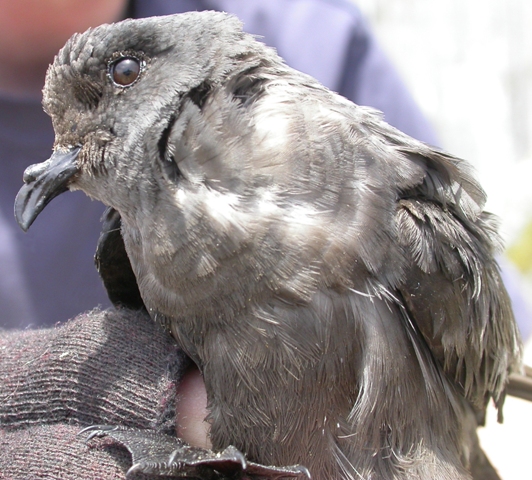
The Pincoya Storm-Petrel can be readily identified by its striking black and white plumage. Adults display a predominantly black upper body with contrasting white underparts that aid in recognition during flight. A key feature is the bird's distinctive white rump, which is visible as it flies low over the ocean. Juvenile Pincoya Storm-Petrels resemble adults but may exhibit slightly duller plumage. Males and females appear similar, with no significant sexual dimorphism in coloration or size. Confusion with similar species, such as the Wilson's Storm-Petrel, may occur, but the Pincoya Storm-Petrel can be distinguished by its slightly larger size and more pronounced contrast between its black and white plumage. The bird's flight silhouette is characterized by rapid, erratic wingbeats interspersed with gliding, giving it a fluttering appearance above the waves. When perching, the Pincoya Storm-Petrel exhibits a hunched posture, often resting on rocky coastal outcrops between feeding forays.
Having trouble telling birds apart? Upload a photo to our bird identification tool for an instant species match.
Pincoya Storm-Petrel Habitat and Range
Preferred Habitat
The Pincoya Storm-Petrel inhabits the coastal and marine environments of southern Chile, particularly around Chiloé Island and the Gulf of Corcovado. These areas are known for their rocky coastlines, fjords, and nutrient-rich waters, which provide ideal conditions for the storm-petrel's feeding and nesting activities. The bird thrives in these temperate to subpolar marine habitats, which are characterized by strong tidal currents and abundant marine life. While primarily associated with coastal areas, the Pincoya Storm-Petrel may occasionally venture into more open ocean environments, especially outside the breeding season. It does not typically inhabit urban areas, instead preferring the remote and rugged coastal landscapes that offer seclusion and resources.
Geographic Range
The Pincoya Storm-Petrel's range is primarily restricted to the coastal waters of southern Chile. Its breeding grounds are concentrated around Chiloé Island and the Gulf of Corcovado, where it takes advantage of the area's abundant marine resources. The species is largely non-migratory, although some seasonal movements may occur as individuals adjust their proximity to shore based on food availability and breeding needs. The bird is considered a resident species in this region, with no significant dispersal or migration to other countries or continents. Population density hotspots are found near the nutrient-rich fjords and channels that characterize the coastline of southern Chile, making these areas critical for its survival and conservation.
Want to know which birds visit your area? Browse our backyard birds by location guides for region-specific species lists.
What Does the Pincoya Storm-Petrel Eat?
The Pincoya Storm-Petrel primarily feeds on small marine organisms, including crustaceans, fish larvae, and zooplankton. Its diet is heavily influenced by the seasons, with availability of prey fluctuating throughout the year. During the breeding season, the bird often forages closer to shore, taking advantage of the rich upwellings that occur in the fjords and channels of southern Chile. Outside the breeding season, its diet may shift slightly as it ventures further offshore, although specific details of these changes remain under study. The Pincoya Storm-Petrel employs a unique foraging technique known as surface seizing, where it skims the water's surface with its bill while in flight, capturing prey items with precision. It is a diurnal feeder, with peak activity occurring during daylight hours when prey is most accessible near the ocean surface.
Pincoya Storm-Petrel Behavior and Social Structure
The Pincoya Storm-Petrel exhibits fascinating social and behavioral patterns. It is typically found in small groups, often in association with other seabird species. The bird's social structure is characterized by loose colonies during the breeding season, where individuals congregate on isolated rocky islets to nest and rear young. Territorial behavior is minimal, as the species relies on the safety of numbers to deter predators. Courtship displays involve aerial maneuvers and vocalizations, which play a crucial role in pair bonding. Flocking patterns vary with the availability of food, and the bird is known to join mixed-species feeding frenzies when prey is abundant. In response to predators, the Pincoya Storm-Petrel relies on its agile flight and cryptic coloration to evade capture. It is most active during the day, spending nights perched on rocky outcrops or floating on the water's surface when at sea.
Pincoya Storm-Petrel Nesting and Reproduction
The Pincoya Storm-Petrel constructs its nest in crevices or small burrows on isolated rocky islets within its coastal range. Nests are composed of a simple arrangement of plant material and feathers, providing insulation and protection for the eggs. The typical clutch size is one egg, which both parents incubate over approximately 40 days. After hatching, the chick remains in the nest for about two months, during which both parents participate in feeding and caring for the young. Fledging occurs when the chick is ready to take its first flight and join the adults at sea. The Pincoya Storm-Petrel generally raises one brood per year, with breeding closely tied to the availability of food and suitable nesting sites.
Pincoya Storm-Petrel Sounds and Vocalizations
The vocalizations of the Pincoya Storm-Petrel are subtle yet distinctive. Its primary call consists of a series of soft, high-pitched whistles that carry over the sound of ocean waves. These calls are often used during courtship and social interactions within colonies. The alarm call is a sharper, more urgent note that alerts other birds to potential threats. While the Pincoya Storm-Petrel does not typically participate in a dawn chorus, its vocalizations are most frequently heard during the early morning and late afternoon when social activity peaks. The bird's calls bear a resemblance to the soft whistling of wind through coastal vegetation, blending harmoniously with its environment.
Interesting Facts About the Pincoya Storm-Petrel
- 1The Pincoya Storm-Petrel was only recognized as a distinct species in 2011, making it one of the newest additions to seabird taxonomy.
- 2This storm-petrel's name, 'Pincoya', is inspired by a mythical mermaid from Chilote folklore, symbolizing the rich marine life of the region.
- 3The Pincoya Storm-Petrel's breeding colonies are often located on remote islets, making them challenging to study but offering protection from land predators.
- 4Despite its elusive nature, the Pincoya Storm-Petrel is a key indicator species for marine health in its native Chilean waters.
- 5The bird's white rump patch is a distinctive feature that aids in species identification during pelagic birdwatching tours.
Pincoya Storm-Petrel Conservation Status
The Pincoya Storm-Petrel is currently listed as Near Threatened on the IUCN Red List. Its population trend is considered stable but vulnerable due to its restricted range and specific habitat requirements. Primary threats include habitat degradation from human activities such as fishing, pollution, and climate change, which affect the delicate balance of its coastal ecosystem. Conservation efforts focus on protecting key breeding and feeding sites, as well as conducting further research to monitor population trends and understand ecological needs. Historical population changes remain largely undocumented, underscoring the importance of continued study and conservation action to safeguard this unique species.
Other Hydrobatidae Species



Birds Similar to the Pincoya Storm-Petrel
These species are often confused with the Pincoya Storm-Petrel due to similar appearance or overlapping range.
