
Fairy Flycatcher
Stenostira scita
Order: Passeriformes / Family: Stenostiridae

Wikimedia Commons
About the Fairy Flycatcher
The Fairy Flycatcher, scientifically known as Stenostira scita, is a small and active songbird that belongs to the family Stenostiridae. This bird is endemic to southern Africa, where it predominantly inhabits the temperate regions of South Africa, Namibia, and Botswana. The Fairy Flycatcher plays an essential role in the ecosystem as an insectivore, helping to control insect populations across its range. Its presence is most notable in montane and semi-arid shrublands, where it adeptly navigates through foliage in search of prey.
The Fairy Flycatcher is particularly significant to birdwatchers and ornithologists due to its engaging and lively behavior. Its penchant for flicking its tail and its agile movements make it a delightful sight in its native habitat. The bird typically frequents high-altitude regions, often above 1,500 meters, where it thrives in both natural and modified landscapes. This adaptability highlights its resilience and capacity to coexist with human-altered environments.
Ecologically, the Fairy Flycatcher contributes to maintaining insect balance, acting as a natural pest controller. During the breeding season, which coincides with the austral summer, the bird's behavior shifts to become more territorial and vocal. The Fairy Flycatcher is a monogamous species, with pairs often defending their chosen territory aggressively against intruders. Outside of the breeding season, these birds become more social, sometimes forming small flocks as they move through their habitat in search of food.
Throughout the year, the Fairy Flycatcher exhibits distinct seasonal behaviors, such as altitudinal movements in search of favorable conditions. In winter, it may descend to lower elevations or move to more sheltered areas to escape harsh weather conditions. This seasonal migration plays a crucial role in its survival, allowing it to exploit different habitats as food availability fluctuates.
The Fairy Flycatcher belongs to the family Stenostiridae, within the order Passeriformes. These birds typically live average 4 years, with a maximum recorded of 7 years..
How to Identify a Fairy Flycatcher
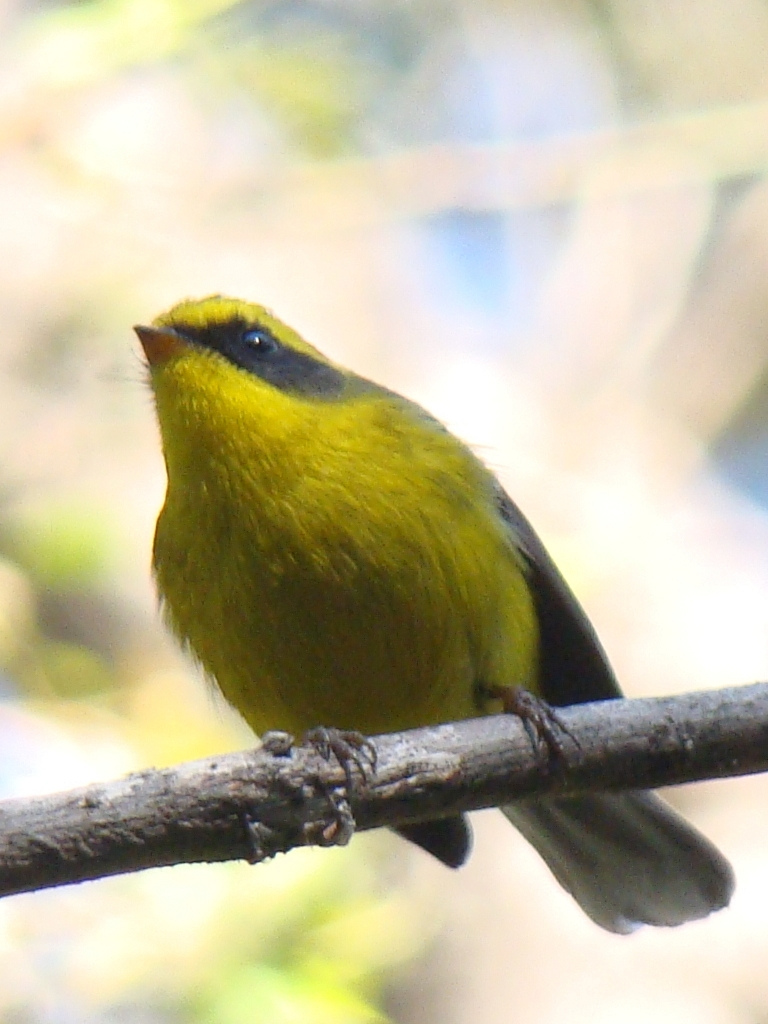
The Fairy Flycatcher is a diminutive bird, measuring between 11 to 13 centimeters in length. Its plumage is predominantly pale gray with a distinctive white eyebrow that contrasts sharply with its blackish crown and mask. This facial pattern is one of its key identifying features. The back is a soft bluish-gray, while the underparts are lighter, often appearing almost white. The wings and tail are darker, providing a striking contrast to the bird's overall pale appearance.
Juvenile Fairy Flycatchers resemble adults but with somewhat duller plumage. They lack the pronounced contrast seen in adults and may have more brownish tones. Male and female Fairy Flycatchers are similar in appearance, making it challenging to distinguish between the sexes in the field. However, their behavior during the breeding season can offer clues, as males are often more vocal and display more prominently.
In flight, the Fairy Flycatcher exhibits a distinctive silhouette with its long, slender tail often fanned out. This tail flicking is a common behavior, serving as a visual cue for identification. When perched, the bird maintains an upright posture, often moving restlessly between perches as it forages. Confusion with other small insectivorous birds is possible, but the Fairy Flycatcher's unique combination of facial markings and tail behavior aids in its recognition.
Having trouble telling birds apart? Upload a photo to our bird identification tool for an instant species match.
Fairy Flycatcher Habitat and Range
Preferred Habitat
The Fairy Flycatcher primarily inhabits montane and semi-arid shrublands across its range in southern Africa. It is most frequently found at elevations ranging from 1,500 to 2,500 meters, thriving in regions with dense scrub and bushveld. Within these habitats, it prefers areas with a mix of open spaces and dense foliage, which provide both feeding opportunities and shelter.
During the breeding season, the Fairy Flycatcher seeks out habitats with ample insect availability, often selecting territories that offer a combination of open and sheltered environments. In winter, it may descend to lower elevations or move to more protected areas, such as riverine thickets, to escape colder conditions.
While less common in urban settings, the Fairy Flycatcher can occasionally be found in suburban gardens, particularly those with native vegetation that mimics its natural habitat. Its presence in such areas highlights its adaptability and willingness to exploit a range of environments, though it remains predominantly associated with more rural and natural settings.
Geographic Range
The Fairy Flycatcher is endemic to southern Africa, with its range extending across South Africa, Namibia, Botswana, and parts of Zimbabwe. It is a resident breeder in these regions, with its population concentrated in the temperate zones. The bird is commonly observed in South Africa's Eastern and Western Cape provinces, where it frequents montane shrublands and fynbos.
During the breeding season, the Fairy Flycatcher occupies higher elevations, often in areas where insect abundance supports their dietary needs. Outside of the breeding season, these birds may undertake altitudinal migrations, moving to lower elevations or more sheltered environments to escape harsh winter conditions. This seasonal movement is not extensive but is essential for their survival in varying climatic conditions.
Population density hotspots for the Fairy Flycatcher include the Drakensberg Mountains and the highland areas of Lesotho, where the species is relatively abundant. Despite its limited range, the Fairy Flycatcher maintains a stable population, benefiting from its adaptability to different altitudinal zones and habitat types within its range.
Want to know which birds visit your area? Browse our backyard birds by location guides for region-specific species lists.
What Does the Fairy Flycatcher Eat?
The primary diet of the Fairy Flycatcher consists of small insects and other arthropods, which it catches through agile and acrobatic foraging techniques. During the breeding season, the bird becomes particularly active in hunting for insects, which form the bulk of its food intake. It employs a variety of foraging methods, including aerial hawking and gleaning from foliage.
The Fairy Flycatcher typically targets small insects such as beetles, flies, and caterpillars, which are abundant in its montane and shrubland habitats. Seasonal changes in insect availability influence its diet, with the bird adapting its foraging strategy to exploit the most abundant prey during different times of the year.
Feeding occurs throughout the day, with peak activity often observed in the early morning and late afternoon. This schedule allows the Fairy Flycatcher to take advantage of the cooler parts of the day when insect activity is highest. The bird's foraging behavior is characterized by quick, darting movements, often accompanied by its signature tail flicking.
Fairy Flycatcher Behavior and Social Structure
The Fairy Flycatcher exhibits a fascinating array of behaviors that reflect its adaptability and survival strategies in its environment. Socially, this species is generally solitary or found in pairs, particularly during the breeding season. The bird's territorial nature becomes prominent during this time, with pairs aggressively defending their chosen nesting sites.
Courtship displays include a combination of vocalizations and physical displays, such as tail flicking and wing quivering, performed by the male to attract a mate. Once paired, the Fairy Flycatcher remains monogamous, with both members of the pair contributing to nest building and chick rearing. Outside of the breeding season, the bird displays more social behavior, occasionally forming small groups as they forage.
In response to predators, the Fairy Flycatcher relies on its agility and quick movements to evade capture. It often emits an alarm call to alert other birds of nearby threats. Daily activity patterns are characterized by periods of intense foraging interspersed with rest and preening. The Fairy Flycatcher remains active throughout the day, adjusting its behavior in response to environmental conditions and food availability.
Fairy Flycatcher Nesting and Reproduction
The Fairy Flycatcher constructs a delicate cup-shaped nest, often situated in the fork of a shrub or small tree. The nest is crafted from fine grasses, twigs, and spider silk, providing a secure and camouflaged environment for the eggs. Nesting sites are typically chosen for their concealment and proximity to food sources, ensuring the parents can efficiently feed their young.
A typical clutch consists of two to three eggs, which the female incubates for approximately 14 days. During this period, the male plays a crucial role in providing food for the incubating female. Once hatched, the chicks remain in the nest for about 14 to 16 days, during which both parents actively participate in feeding and caring for them.
The Fairy Flycatcher usually raises one brood per year, though in favorable conditions, a second brood may occasionally occur. Parental roles are shared, with both adults contributing to feeding and protecting the young until they fledge and become independent.
Fairy Flycatcher Sounds and Vocalizations
The Fairy Flycatcher's primary song is a series of sweet, high-pitched notes delivered in a rapid sequence. This melodic call serves both as a territorial proclamation and a mating signal during the breeding season. The song is often described as a series of tinkling or chirruping sounds, reminiscent of a small bell.
In addition to its song, the Fairy Flycatcher produces various call notes, including a sharp 'chip' used to maintain contact with other birds or warn of potential danger. Its alarm calls are more urgent and serve to alert nearby birds to the presence of predators.
During the dawn chorus, the Fairy Flycatcher is an active participant, contributing its song to the symphony of early morning bird calls. This behavior is particularly prominent during the breeding season, when vocal activity peaks.
Interesting Facts About the Fairy Flycatcher
- 1The Fairy Flycatcher is one of the few bird species endemic to southern Africa, highlighting its unique ecological niche.
- 2Despite its small size, the Fairy Flycatcher has a remarkably powerful voice, easily audible over long distances.
- 3The Fairy Flycatcher can consume up to 50% of its body weight in insects each day during peak feeding periods.
- 4This bird's tail flicking behavior is not just for show; it helps to flush insects from hiding, making them easier to catch.
- 5The Fairy Flycatcher is known for its agility, capable of making rapid, darting movements to catch airborne insects.
- 6The use of spider silk in nest construction adds strength and flexibility, ensuring the nest can withstand environmental pressures.
- 7Although primarily insectivorous, the Fairy Flycatcher occasionally supplements its diet with small berries or seeds.
Fairy Flycatcher Conservation Status
The International Union for Conservation of Nature (IUCN) currently lists the Fairy Flycatcher as a species of Least Concern, reflecting its stable population trend. The bird's adaptability to various habitats, including human-modified landscapes, has contributed to its resilience. However, habitat loss due to agricultural expansion and urban development poses potential threats to its natural environments. Conservation efforts focus on preserving key habitats and promoting sustainable land-use practices that support biodiversity. Monitoring population trends and protecting montane and shrubland areas are crucial strategies for ensuring the long-term survival of the Fairy Flycatcher. Historically, the population of the Fairy Flycatcher has remained fairly stable, with no significant declines reported. Continued vigilance and habitat protection remain essential to safeguard this charming species for future generations.
Other Stenostiridae Species


Birds Similar to the Fairy Flycatcher
These species are often confused with the Fairy Flycatcher due to similar appearance or overlapping range.

