
Familiar Chat
Oenanthe familiaris
Order: Passeriformes / Family: Muscicapidae

Wikimedia Commons
About the Familiar Chat
The Familiar Chat, scientifically named Oenanthe familiaris, is a small passerine bird belonging to the family Muscicapidae. This bird is predominantly found in sub-Saharan Africa, where it frequents dry, open habitats ranging from savannas to rocky hillsides. The Familiar Chat plays a significant role in its ecosystem as an insectivore, helping control insect populations. Its presence in both rural and urban settings makes it a versatile species, able to adapt to human-altered landscapes.
This bird's adaptability is not just limited to its habitat choices; it also displays a variety of seasonal behaviors. During the breeding season, which occurs primarily in spring and early summer, the Familiar Chat becomes highly territorial. Outside of this period, it is more social, often seen in loose flocks. Its ecological role extends to being an indicator species for environmental health, particularly in semi-arid regions.
The Familiar Chat is also significant for birdwatchers and naturalists due to its unique behaviors and vocalizations, which make it relatively easy to spot and study. Its ability to thrive in various environments, coupled with a stable population trend, highlights its resilience amid changing climates and landscapes. Understanding the Familiar Chat's habits and distribution can provide insights into the broader ecological dynamics of the regions it inhabits.
The Familiar Chat belongs to the family Muscicapidae, within the order Passeriformes. These birds typically live average 3-5 years with a maximum recorded of 7 years..
How to Identify a Familiar Chat
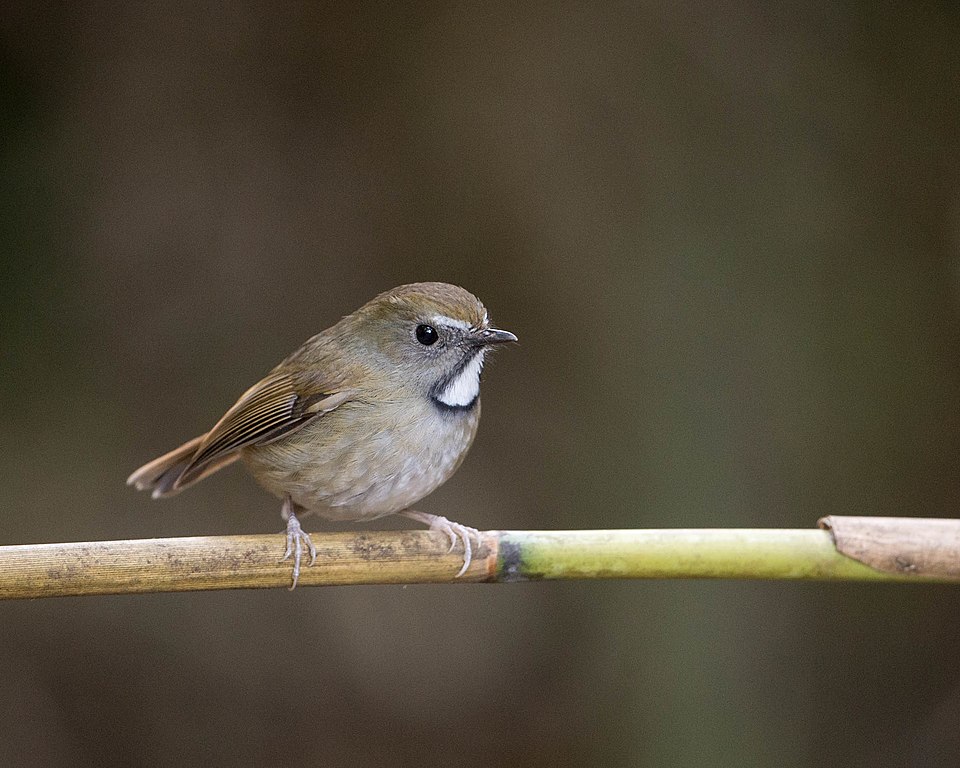
The Familiar Chat is a small, robust bird with a length of approximately 14 centimeters and a wingspan reaching up to 25 centimeters. Adult males and females share similar plumage, which is primarily gray with a characteristic white stripe above the eye, giving it a distinctive appearance. The underparts are a lighter gray, almost white, while the wings and tail exhibit darker tones.
Juveniles can be distinguished from adults by their more muted coloration and somewhat streaked appearance on the back and wings. This can create confusion with the similar-looking Mountain Wheatear, but the Familiar Chat's smaller size and less contrasting plumage provide key identification points.
In flight, the Familiar Chat exhibits a low, undulating flight pattern. When perched, it often adopts an upright posture, frequently flicking its tail upwards. These behaviors are helpful for distinguishing it from other birds in the same habitat.
Having trouble telling birds apart? Upload a photo to our bird identification tool for an instant species match.
Familiar Chat Habitat and Range
Preferred Habitat
The Familiar Chat thrives in a variety of habitats, including dry savannas, rocky hillsides, and open woodlands. It is commonly found at elevations ranging from sea level to around 2,000 meters. This bird also adapts well to urban environments, often seen foraging in gardens and parks.
Seasonal habitat shifts are minimal for the Familiar Chat, as it tends to remain in its preferred areas year-round. However, during periods of extreme drought, it may move to areas with more reliable water sources. Its ability to inhabit both rural and urban settings speaks to its adaptability, making it a common sight across many landscapes in sub-Saharan Africa.
Geographic Range
The Familiar Chat's range is primarily concentrated in sub-Saharan Africa, where it is a resident species. It is found in countries such as South Africa, Namibia, Botswana, Zimbabwe, and Mozambique, among others. This bird does not undergo long migrations but may exhibit local movements in response to environmental conditions.
Within its range, population densities can vary, with higher concentrations often found in areas that offer a mix of open ground for foraging and cover for nesting. Regions with rocky outcrops or sparse vegetation are particularly favored by this species, making it a common inhabitant in such locales.
Want to know which birds visit your area? Browse our backyard birds by location guides for region-specific species lists.
What Does the Familiar Chat Eat?
The primary diet of the Familiar Chat consists of insects and other small invertebrates. It forages on the ground, using a combination of short hops and quick dashes to catch prey. Ants, beetles, and caterpillars form the bulk of its diet, but it will also consume spiders and small snails when available.
Seasonal changes in diet are minimal, although the availability of different prey types can vary with the weather. During wetter periods, when insect activity increases, the Familiar Chat may expand its dietary range to include more diverse insect species. It typically feeds throughout the day, with peak activity occurring in the cooler hours of the morning and late afternoon.
Familiar Chat Behavior and Social Structure
The Familiar Chat is generally solitary or found in pairs, especially during the breeding season when it becomes territorial. During this time, males can be observed performing display flights to assert their territory and attract mates. These displays involve short flights with exaggerated wing beats and tail flicking.
Outside of the breeding season, the Familiar Chat is more social, often joining mixed-species flocks. It exhibits a curious and bold nature, frequently approaching human habitations in search of food. This adaptability to human presence is one of its defining behaviors.
Its alertness is evident in its quick response to predators. The Familiar Chat often uses alarm calls to warn others of potential threats. Daily activity patterns include periods of active foraging interspersed with rest during the hottest parts of the day.
Familiar Chat Nesting and Reproduction
The Familiar Chat nests in cavities, typically selecting sites in rocky crevices, abandoned burrows, or even man-made structures. The nest is constructed from grass, leaves, and other plant materials, lined with softer substances such as feathers or hair.
A typical clutch consists of 2 to 4 eggs, which are pale blue or greenish and speckled with brown. The female incubates the eggs for about 14 to 16 days, while the male assists by bringing food. Once hatched, the chicks fledge in approximately 16 to 18 days. The pair may raise two to three broods in a single season, depending on environmental conditions.
Familiar Chat Sounds and Vocalizations
The Familiar Chat's primary song is a series of melodious, whistled notes that vary in pitch and rhythm. This song is often delivered from a prominent perch and serves to establish territory and attract mates. Its call notes are shorter, often described as a 'chack' or 'tchick' sound, used for communication between individuals.
Alarm calls are sharper and more urgent, typically triggered by the presence of predators. During the dawn chorus, the Familiar Chat's song contributes to the symphony of sounds in its habitat, although it is not the most dominant voice among other bird species.
Interesting Facts About the Familiar Chat
- 1The Familiar Chat can mimic other bird species, adding variety to its own song repertoire.
- 2This bird often uses its tail flicking as a form of communication, particularly during territorial disputes.
- 3Despite its small size, the Familiar Chat exhibits bold behavior, often approaching humans closely.
- 4The Familiar Chat has been observed using tools, such as small sticks, to extract insects from crevices.
- 5In urban areas, the Familiar Chat frequently nests in unusual spots, including mailboxes and building eaves.
- 6The Familiar Chat's adaptability allows it to exploit a wide range of food sources, even in harsh conditions.
- 7Its name 'familiaris' reflects its common presence and approachable nature around human settlements.
Familiar Chat Conservation Status
The Familiar Chat is currently listed as Least Concern by the IUCN, with a stable population trend. It faces few major threats due to its adaptability to various environments. However, habitat destruction and pollution pose potential risks in specific areas. Conservation efforts focus on habitat preservation and monitoring population trends to ensure long-term stability. Historically, the population of the Familiar Chat has remained stable, benefiting from its ability to thrive in diverse habitats, including urban landscapes.
Other Muscicapidae Species


Birds Similar to the Familiar Chat
These species are often confused with the Familiar Chat due to similar appearance or overlapping range.

