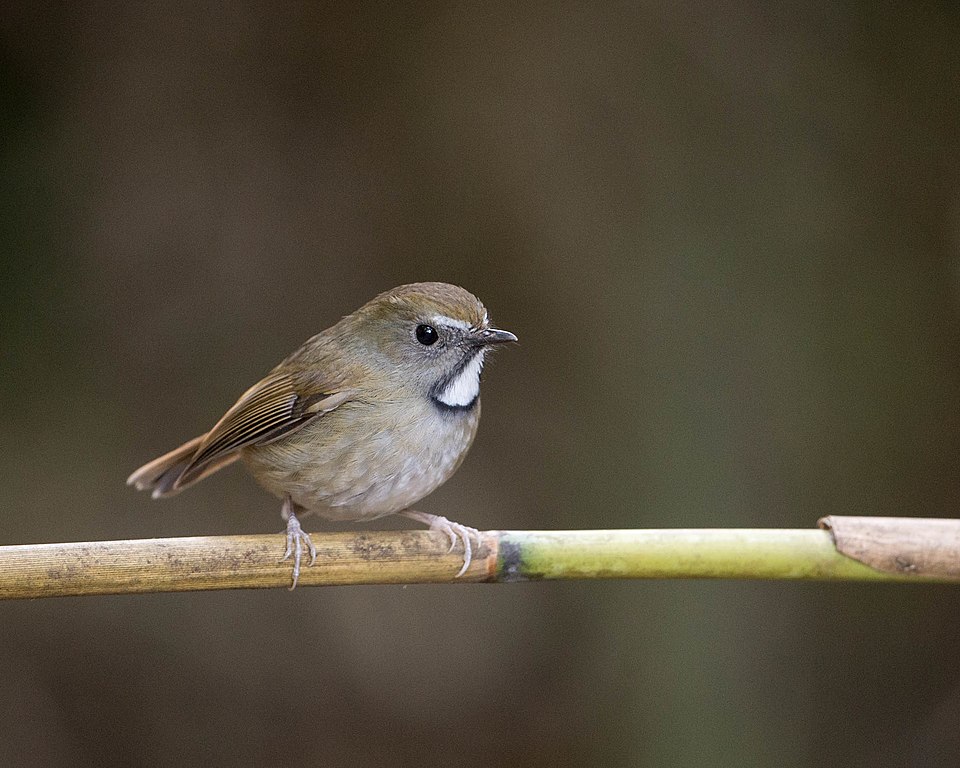
Ferruginous Flycatcher
Muscicapa ferruginea
Order: Passeriformes / Family: Muscicapidae

Wikimedia Commons
About the Ferruginous Flycatcher
The Ferruginous Flycatcher (Muscicapa ferruginea) is an enchanting bird, often admired by birdwatchers and ornithologists for its striking rust-colored plumage. This small passerine belongs to the Muscicapidae family and inhabits the lush woodlands of Asia, stretching from the Himalayas to Southeast Asia. Its presence is a hallmark of healthy forest ecosystems, where it plays a crucial role in insect population control.
The Ferruginous Flycatcher primarily resides in subtropical and temperate forests, thriving in regions with abundant foliage and high insect activity. These birds are often seen perching quietly on branches, their rufous feathers blending seamlessly with the forest backdrop. During the breeding season, typically from April to July, they become more vocal and active, establishing territories and attracting mates with their melodious songs.
In winter, the Ferruginous Flycatcher migrates to warmer climates, moving southward to countries like Thailand and Malaysia. This seasonal migration is vital for their survival, allowing them to exploit different ecological niches and maintain their role in pest control across diverse habitats. Their ecological significance is underscored by their role as insectivores, helping to regulate insect populations and maintain the balance of forest ecosystems. As such, the presence of the Ferruginous Flycatcher in a region can be an indicator of environmental health.
The Ferruginous Flycatcher belongs to the family Muscicapidae, within the order Passeriformes. These birds typically live 4-7 years, with a maximum recorded of 9 years..
How to Identify a Ferruginous Flycatcher
The Ferruginous Flycatcher is easily recognized by its rich rust-colored plumage, which distinguishes it from many other flycatchers. Adult birds exhibit a distinctive rufous hue on their upperparts, complemented by a paler, buffy underbelly. The head is adorned with subtle streaks that add to its overall elegant appearance. Juveniles, while similar in coloration, tend to have more pronounced streaking on their underparts, providing a hint of their age.
Male and female Ferruginous Flycatchers are similar in appearance, making gender identification in the field challenging. However, during the breeding season, males may exhibit slightly brighter plumage as they seek to attract mates. In flight, their short, broad wings and slightly notched tail are characteristic, offering a silhouette that is compact and agile, well-suited for their insect-hawking lifestyle.
When perched, the Ferruginous Flycatcher maintains an upright posture, often flicking its tail in a rhythmic fashion. This behavior, combined with its unique coloration, helps distinguish it from other small birds in its range. While some may confuse it with the Asian Brown Flycatcher, the latter lacks the vivid rust coloration that defines the Ferruginous Flycatcher.
Having trouble telling birds apart? Upload a photo to our bird identification tool for an instant species match.
Ferruginous Flycatcher Habitat and Range
Preferred Habitat
The Ferruginous Flycatcher favors subtropical and temperate forests, particularly those with dense vegetation and abundant insect life. These habitats are typically found in regions such as the lower Himalayas, the forests of eastern China, and the woodlands of Southeast Asia. The bird thrives at elevations ranging from 500 to 2500 meters, where it can take advantage of the diverse insect populations found in these environments.
Seasonal shifts in habitat are common for the Ferruginous Flycatcher. During the breeding season, it prefers higher altitudes with cooler temperatures, while in winter, it migrates to warmer, lowland forests. Unlike some other flycatchers, it does not commonly inhabit urban areas, preferring the quieter, undisturbed stretches of forest where it can forage efficiently.
In terms of habitat preference, the Ferruginous Flycatcher is adaptable within its forest environment, being equally at home in mixed deciduous forests and evergreen forests. This flexibility allows it to occupy a range of forest types across its geographic range.
Geographic Range
The Ferruginous Flycatcher has a widespread range across Asia, predominantly occupying the eastern Himalayas, southern China, Taiwan, and northern Viet Nam during the breeding season. Its breeding range extends from the foothills of the Himalayas, across to eastern regions of China, and into Taiwan, where it finds suitable habitats in lush forests.
During the non-breeding season, typically from November to March, the Ferruginous Flycatcher migrates southward. It winters in countries such as Thailand, Laos, Cambodia, and parts of Malaysia and Indonesia. These regions offer the milder climates and abundant food resources necessary for their survival during the winter months.
The migration paths of the Ferruginous Flycatcher are primarily overland, utilizing forested corridors that provide cover and food along the way. Although it is not considered abundant in any part of its range, it remains relatively common within suitable habitats, particularly in areas where pristine forests are still intact.
Want to know which birds visit your area? Browse our backyard birds by location guides for region-specific species lists.
What Does the Ferruginous Flycatcher Eat?
The diet of the Ferruginous Flycatcher is predominantly insectivorous, relying heavily on a variety of flying and ground-dwelling insects. During the breeding season, their primary food sources include flies, beetles, and moths, which are abundant in their forest habitats. This diet choice plays a significant role in controlling insect populations, thus benefiting the ecosystem.
In winter, as they migrate to warmer climates, the Ferruginous Flycatcher's diet may shift slightly to include a broader range of insects and occasionally small arthropods. Their foraging technique is characterized by agile, aerial hawking, where they adeptly catch insects mid-flight. They also employ a sit-and-wait strategy, perching quietly before darting out to snatch prey with precision.
The size of prey varies, but the Ferruginous Flycatcher typically targets small to medium-sized insects, maximizing their energy intake while minimizing foraging effort. Feeding activity peaks during the early morning and late afternoon, coinciding with high insect activity, ensuring an efficient foraging strategy.
Ferruginous Flycatcher Behavior and Social Structure
The Ferruginous Flycatcher exhibits intriguing behaviors that reflect its adaptability and survival strategies. Socially, these birds are primarily solitary or found in pairs, particularly during the breeding season. Territorial behavior is pronounced, with males establishing and defending their territories with frequent vocalizations.
Courtship displays involve males showcasing their vibrant plumage and engaging in aerial displays to attract females. Once paired, the Ferruginous Flycatcher becomes more discreet, focusing on nesting and rearing young. Unlike some other birds, they do not form large flocks, maintaining their independence or pair bonds throughout the year.
Their response to predators is primarily evasive; they rely on their agile flight to escape threats. During the day, they are most active in the morning and late afternoon, aligning their activity with insect availability. The Ferruginous Flycatcher's daily routine involves periods of active foraging interspersed with rest and preening. These behaviors underscore their adaptability to the dynamic environments they inhabit.
Ferruginous Flycatcher Nesting and Reproduction
The nesting behavior of the Ferruginous Flycatcher is a fascinating aspect of its life cycle. These birds prefer to build their nests in the forks of tree branches, often selecting sites that provide ample cover from predators. The nest itself is an open cup, meticulously constructed from twigs, moss, and leaves, bound together with spider silk for added stability.
A typical clutch consists of three to four eggs, which are pale in color with subtle markings. The incubation period lasts about 14 days, during which time the female takes the primary role of incubating the eggs, while the male remains nearby to guard the territory and help with feeding.
Once hatched, the chicks are altricial, requiring extensive parental care. Both parents participate in feeding the young and ensuring their safety. Fledging occurs approximately 15 days after hatching, although the young birds remain dependent on their parents for several weeks thereafter. The Ferruginous Flycatcher typically raises one to two broods per year, depending on environmental conditions and food availability.
Ferruginous Flycatcher Sounds and Vocalizations
The Ferruginous Flycatcher is known for its distinctive song, which is a series of melodious whistles and chirps, often delivered in a rhythmic pattern. The song consists of a series of clear, rising and falling notes that can be heard echoing through the forest during the breeding season. In addition to its primary song, the Ferruginous Flycatcher has a variety of call notes that serve different purposes.
Alarm calls are sharp and quick, designed to alert other birds and deter potential predators. These calls are more frequent during the nesting period when the need to protect offspring is heightened. The dawn chorus, a common behavior in many songbirds, is also observed in the Ferruginous Flycatcher, with males singing to establish their presence and attract mates.
Their vocalizations, while not as complex as some other birds, are characteristic of the species and play a crucial role in communication and social interaction within their forest habitats.
Interesting Facts About the Ferruginous Flycatcher
- 1The Ferruginous Flycatcher can catch insects mid-air with remarkable agility, showcasing its exceptional hunting skills.
- 2During migration, the Ferruginous Flycatcher may travel thousands of kilometers to reach its wintering grounds in Southeast Asia.
- 3Despite its small size, the Ferruginous Flycatcher displays fierce territorial behavior, especially during the breeding season.
- 4The rust-colored plumage of the Ferruginous Flycatcher provides excellent camouflage among the forest foliage.
- 5The Ferruginous Flycatcher uses spider silk to bind its nest materials, adding strength and flexibility to its construction.
Ferruginous Flycatcher Conservation Status
The Ferruginous Flycatcher is currently listed as Least Concern on the IUCN Red List, indicating that it is not immediately threatened. However, like many forest-dwelling species, it faces challenges due to habitat loss and fragmentation. Deforestation, driven by logging and agricultural expansion, poses significant threats to its habitat across its range. Population trends are generally stable, but localized declines have been noted in areas where forest degradation is most severe. Conservation efforts focus on preserving critical habitats and promoting sustainable forestry practices. Protected areas within its range, such as national parks and nature reserves, play a vital role in safeguarding its populations. Historically, the Ferruginous Flycatcher's range has remained relatively stable, although ongoing environmental pressures necessitate continued monitoring and conservation action to ensure its long-term survival.