Forest Robin
Stiphrornis erythrothorax
Order: Passeriformes / Family: Muscicapidae

Wikimedia Commons
About the Forest Robin
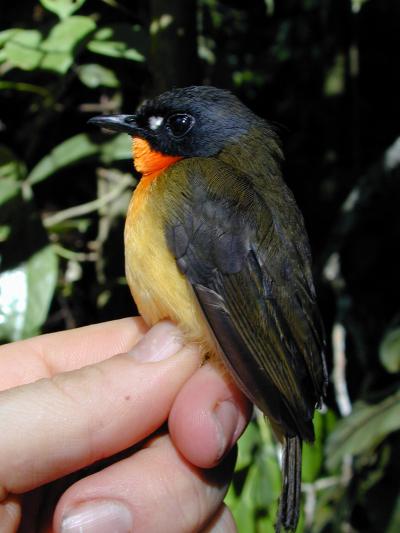
The Forest Robin, scientifically known as Stiphrornis erythrothorax, is a small but charismatic member of the Muscicapidae family. This songbird is renowned for its vibrant orange throat, which contrasts strikingly with its otherwise subdued plumage. Found primarily in the dense, humid forests of West and Central Africa, the Forest Robin thrives in environments ranging from coastal lowlands to montane forests, adapting to a variety of ecological niches within its range. Its presence is a reliable indicator of healthy forest ecosystems, as it prefers undisturbed habitats with dense undergrowth.
The ecological role of the Forest Robin is significant. As an insectivore, it helps control insect populations, thus maintaining a balanced ecosystem. Its foraging behavior, which involves gleaning insects from leaves and twigs, also contributes to the health of the forest by promoting plant growth and nutrient cycling. This robin's diet shifts seasonally, with a preference for ants, beetles, and other small invertebrates during the wetter months. The Forest Robin exhibits a degree of flexibility in habitat choice, occasionally venturing into secondary forests and plantations, but it is primarily associated with primary forest areas where it finds ample cover and food.
Seasonally, the Forest Robin engages in breeding activities coinciding with the rainy season, a period when food is abundant. During this time, its melodious song becomes a prominent feature of the forest soundscape, serving both to attract mates and to establish territory. Unlike many migratory songbirds, the Forest Robin is largely sedentary, although local movements may occur in response to food availability or environmental pressures. This bird's adaptability to varying forest conditions makes it a fascinating subject for ornithologists and bird watchers alike, offering insights into the biodiversity of African forest ecosystems.
The Forest Robin belongs to the family Muscicapidae, within the order Passeriformes. These birds typically live typically 5-7 years, with a maximum recorded of 9 years..
How to Identify a Forest Robin
Adult Forest Robins are small, measuring about 14 cm in length, with a wingspan of approximately 20 cm. The most distinctive feature is the bright orange throat, which stands out against its olive-green back and wings. The underparts are a paler yellowish to whitish tone, offering a subtle yet effective camouflage among the foliage. Juvenile Forest Robins differ by having a more muted color palette, with a less pronounced orange throat and more brownish tones on the back, aiding in their concealment from predators.
Sexual dimorphism is not pronounced in Forest Robins, as males and females appear largely similar to the casual observer. However, during the breeding season, males may exhibit slightly brighter plumage, an adaptation believed to enhance their attractiveness to potential mates. In the field, the Forest Robin's perching posture is typically upright, often observed on low branches or within dense undergrowth where it forages. Its flight is characterized by short, fluttering bursts that allow it to navigate the tangled forest understory with ease.
While similar species, such as the Red-bellied Paradise Flycatcher, may be found in overlapping habitats, the Forest Robin's unique combination of orange throat and olive-green back is a reliable distinguishing feature. Observers should also note its distinctive song, which differs markedly from that of other sympatric species.
Having trouble telling birds apart? Upload a photo to our bird identification tool for an instant species match.
Forest Robin Habitat and Range
Preferred Habitat
The Forest Robin inhabits a diverse range of forest types across its geographical range. It is commonly found in wet, evergreen lowland forests but also occupies gallery forests and secondary woodlands. In certain regions, it ascends to montane forests up to elevations of 1,800 meters, demonstrating its adaptability to different forest strata.
Within these habitats, the Forest Robin shows a preference for areas with dense understory vegetation, which provides both cover and foraging opportunities. It is less commonly found in heavily disturbed or fragmented forests, reflecting its reliance on contiguous forest environments for survival.
Though primarily a forest dweller, the Forest Robin has been recorded in more open settings such as plantations and even suburban gardens, especially where these areas adjoin woodland. Seasonal shifts in habitat preference are minimal, as the Forest Robin is largely sedentary with localized movements driven by food availability and breeding requirements.
Geographic Range
The Forest Robin's range spans the forested regions of West and Central Africa. It is found from Sierra Leone and Liberia in the west, through to Gabon and the Republic of the Congo in the central part of the continent. Its distribution includes countries such as Ghana, Nigeria, Cameroon, and the Democratic Republic of the Congo.
While the Forest Robin is considered non-migratory, it may exhibit altitudinal movements in response to seasonal changes in food supply or breeding conditions. During the breeding season, populations may become more concentrated in certain hotspot areas where conditions are optimal.
Dense populations are typically found in regions with extensive, undisturbed forest cover, such as the Congo Basin, which provides the ideal mix of habitat conditions. However, in areas where deforestation is prevalent, the Forest Robin's presence may be more sporadic, reflecting its sensitivity to habitat loss.
Want to know which birds visit your area? Browse our backyard birds by location guides for region-specific species lists.
What Does the Forest Robin Eat?
The diet of the Forest Robin primarily consists of a variety of insects and other small invertebrates. Ants and beetles form the bulk of its intake, but it also feeds on spiders and caterpillars, which it gleans from leaves and branches in the understory.
During the rainy season, the availability of food increases, allowing the Forest Robin to expand its diet to include more diverse insect species. It employs a foraging technique known as 'leaf-gleaning,' where it methodically inspects foliage and bark for hidden prey.
Prey size is generally small, with most insects consumed being less than 1 cm in length. The Forest Robin typically forages alone or in pairs, maintaining a consistent feeding schedule that peaks during the early morning and late afternoon when insect activity is highest.
Forest Robin Behavior and Social Structure
The Forest Robin exhibits a solitary or paired social structure, particularly outside of the breeding season. It is highly territorial, with males singing to defend their territories from rivals and attract mates during the breeding period.
Courtship displays involve a combination of song and visual displays, where the male showcases his vibrant throat and wing feathers. These displays are often accompanied by a series of low bows and short flights designed to capture the female's attention.
Flocking behavior is rare, as this species tends to maintain established territories year-round. In response to predators, the Forest Robin employs a series of alarm calls and may join mixed-species flocks temporarily to enhance vigilance. Its daily activity patterns are diurnal, with peaks in activity during the cooler hours of the day when foraging is most efficient.
Forest Robin Nesting and Reproduction
The nesting habits of the Forest Robin involve the construction of a cup-shaped nest, typically located in a low shrub or amongst dense foliage to provide concealment from predators. Nests are constructed using a combination of leaves, twigs, and moss, with a soft lining of finer materials.
Clutch size ranges from 2 to 4 eggs, which are incubated by the female for approximately 12 to 14 days. During this period, the male plays a supportive role, defending the territory and providing food for the brooding female.
Fledging occurs roughly 14 days post-hatching, at which point the chicks leave the nest but remain dependent on parental care for several weeks. The Forest Robin typically raises one to two broods per year, with breeding activity closely tied to the availability of food resources during the rainy season.
Forest Robin Sounds and Vocalizations
The primary song of the Forest Robin is a melodious series of whistles, characterized by a rhythmic pattern and clear, fluty notes. This song serves as both a territorial marker and a courtship display, often heard at dawn and late afternoon.
In addition to its song, the Forest Robin emits a variety of call notes, including a soft 'chup' and a sharper alarm call used in response to threats. These vocalizations, while less musical than the primary song, play a crucial role in communication and predator awareness.
The dawn chorus of the Forest Robin is a particularly enchanting aspect of its behavior, with males often competing to outsing their neighbors, creating a rich tapestry of sound that marks the start of a new day in the forest.
Interesting Facts About the Forest Robin
- 1The Forest Robin's bright orange throat is a unique adaptation that may play a role in mate selection and territorial disputes.
- 2Despite being a songbird, the Forest Robin often forages silently, relying on its keen eyesight to detect prey.
- 3The Forest Robin's song can be heard up to 100 meters away, making it a prominent member of the forest soundscape.
- 4Unlike many other robins, the Forest Robin does not migrate, instead maintaining its territory year-round.
- 5The Forest Robin's ability to adapt to different forest types makes it a resilient species, albeit one still vulnerable to habitat loss.
- 6In some cultures, the Forest Robin is considered a harbinger of rain due to its increased vocal activity before storms.
- 7Studies have shown that Forest Robins may engage in cooperative breeding, where non-breeding individuals help raise young.
Forest Robin Conservation Status
The International Union for Conservation of Nature (IUCN) currently lists the Forest Robin as Least Concern, indicating a stable population trend across most of its range. However, habitat destruction due to logging and agriculture poses a significant threat to its long-term survival. Conservation efforts focus on protecting large tracts of forest habitat through the establishment of reserves and national parks. These measures are crucial, as the Forest Robin's sensitivity to habitat fragmentation could lead to localized declines if current deforestation rates continue. Historically, the Forest Robin's population has benefited from the extensive forest cover across Central Africa, but ongoing monitoring is necessary to ensure that this trend remains stable, particularly as human activities continue to encroach on its habitat.
Other Muscicapidae Species


Birds Similar to the Forest Robin
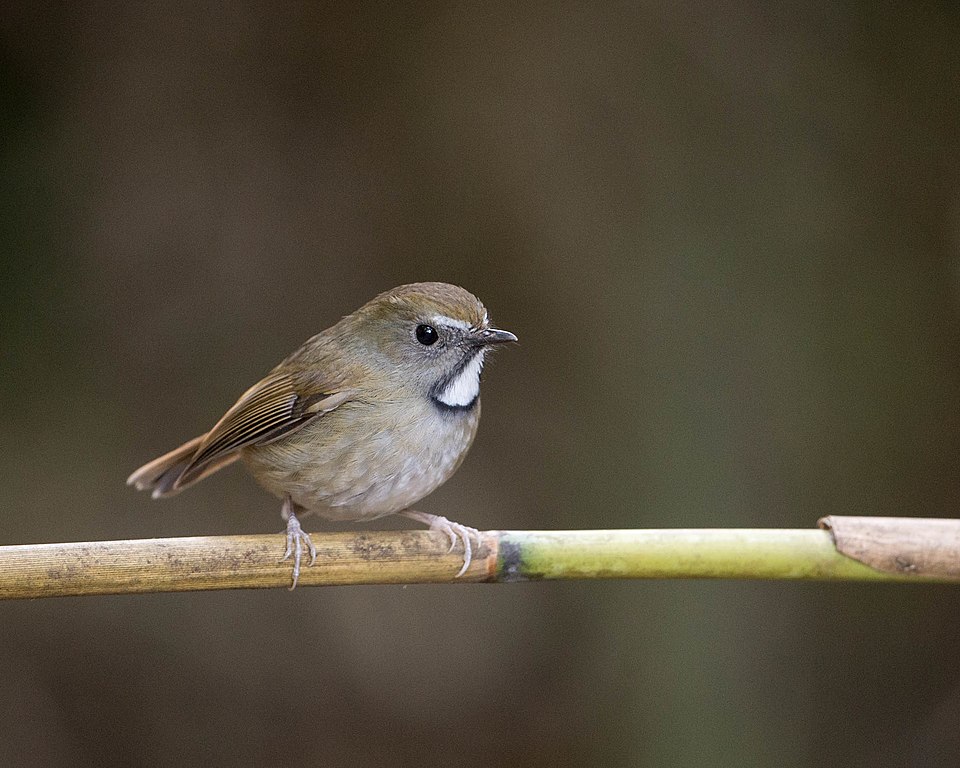
These species are often confused with the Forest Robin due to similar appearance or overlapping range.