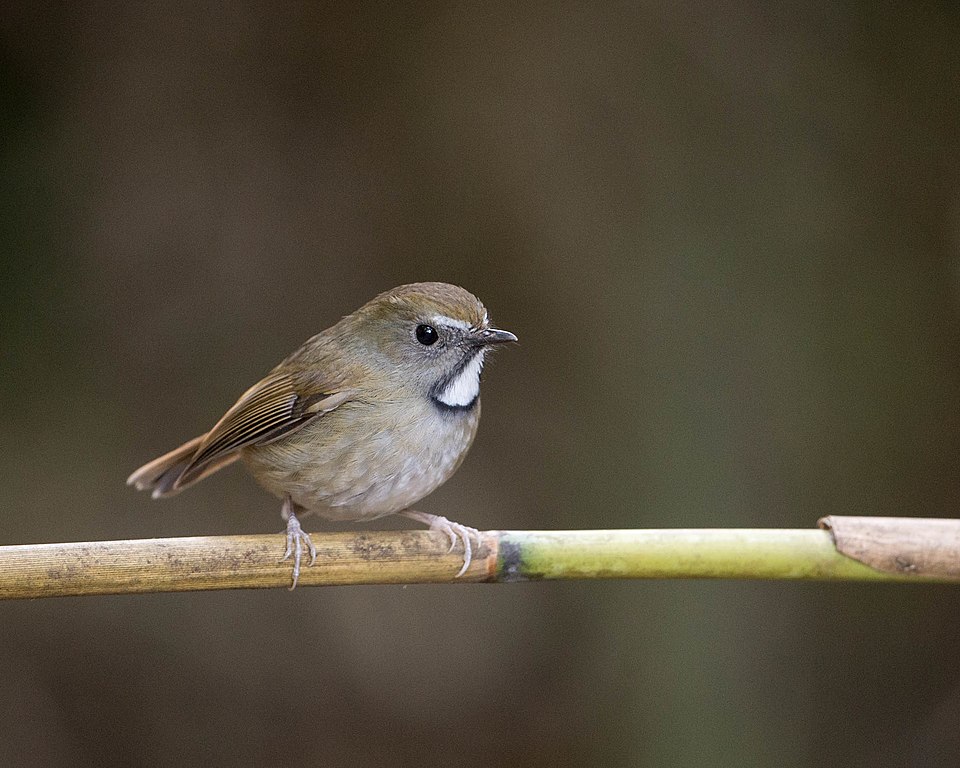
Forest Rock-Thrush
Monticola sharpei
Order: Passeriformes / Family: Muscicapidae

Wikimedia Commons
About the Forest Rock-Thrush
The Forest Rock-Thrush, scientifically known as Monticola sharpei, is a captivating bird found primarily in the montane forests of central and eastern Africa. This species plays a significant role in the ecosystems it inhabits, acting as both predator and prey within its environment. The Forest Rock-Thrush is notable for its distinctive blue plumage, which is especially vibrant in males. It occupies a niche within the Muscicapidae family, a group known for their diverse and adaptive feeding strategies. Often residing at elevations between 1,500 to 3,000 meters, this bird prefers dense forests where it can find ample food and cover.
The ecological role of the Forest Rock-Thrush extends beyond its immediate habitat. By controlling insect populations, it helps maintain a balance in the ecosystem. Its presence also indicates the health of its forest environment, as it requires specific conditions to thrive. In terms of seasonal behavior, the Forest Rock-Thrush is a resident species with some altitudinal movement, depending on the availability of food resources. During the breeding season, which typically occurs from September to November, the birds become more vocal and territorial, ensuring they have the best chance of attracting a mate and raising a successful brood.
The Forest Rock-Thrush's significance goes beyond its immediate ecological contributions. In several cultures within its range, the bird holds symbolic value, often associated with good fortune and the changing seasons. Its song, a complex series of melodious whistles and trills, is a familiar sound in the forests it inhabits, announcing the onset of new growth and vitality each year. As such, the Forest Rock-Thrush is not only a critical component of its ecological community but also an important cultural icon in the regions it inhabits.
The Forest Rock-Thrush belongs to the family Muscicapidae, within the order Passeriformes. These birds typically live average lifespan is around 5-6 years..
How to Identify a Forest Rock-Thrush
Identifying the Forest Rock-Thrush involves noting its vivid coloration and distinct size. Adult males typically exhibit a striking cobalt blue coloration on their upperparts, contrasting sharply with the orange-rufous underparts. Females are more subdued in color, with a mix of gray and brown tones that provide excellent camouflage against the forest floor. Juveniles resemble females but have a more mottled appearance, which aids in their protection from predators.
In terms of size, the Forest Rock-Thrush is a medium-sized bird, measuring approximately 20 to 23 centimeters in length. Its robust body and relatively long tail make it easily distinguishable from other species. When observing in flight, the bird's silhouette is characterized by strong, direct wingbeats. Perching posture is typically upright, often on a low branch or rock, where it remains alert and vigilant.
Some might confuse the Forest Rock-Thrush with the Blue Rock-Thrush; however, the latter lacks the vivid orange underparts and prefers more open rocky habitats. Observers should note the Forest Rock-Thrush's preference for dense canopy cover and its distinctive song, which sets it apart from similar species in overlapping ranges.
Having trouble telling birds apart? Upload a photo to our bird identification tool for an instant species match.
Forest Rock-Thrush Habitat and Range
Preferred Habitat
The Forest Rock-Thrush inhabits montane forests, thriving in regions with dense canopy cover and rich understory. It is typically found at elevations ranging from 1,500 to 3,000 meters, where the climate is cooler and more temperate compared to the lowlands. This bird prefers forests with a mix of mature trees and open areas that facilitate its foraging habits.
In specific examples, the Forest Rock-Thrush is commonly found in the forests of the Albertine Rift, which spans parts of Uganda, Rwanda, and the Democratic Republic of the Congo. These regions provide the ideal combination of altitude and habitat complexity. During certain seasons, the bird may shift slightly within its range to find optimal conditions for feeding and breeding.
The Forest Rock-Thrush is rarely found in urban areas, as its habitat requirements are closely tied to undisturbed forest environments. However, it can occasionally be seen in rural settings where forest fragments remain intact. This preference for less disturbed habitats underscores the importance of conservation efforts to preserve these critical areas.
Geographic Range
The range of the Forest Rock-Thrush is primarily concentrated in central and eastern Africa, where it occupies mainly montane forest regions. Its breeding range extends across countries such as Uganda, Rwanda, Burundi, and the eastern Democratic Republic of the Congo. Within these regions, the bird is most commonly found in the Albertine Rift, a biodiversity hotspot renowned for its endemic species.
Though primarily a resident species, the Forest Rock-Thrush exhibits some altitudinal migration, moving to lower elevations during certain times of the year to exploit seasonal food abundance. This movement is not extensive, as the bird remains within its general geographic range throughout the year.
Population density is highest in areas where suitable habitat is abundant and human disturbance is minimal. These include protected areas within national parks and wildlife reserves. Despite its relatively limited distribution, the Forest Rock-Thrush is an important indicator of forest health and integrity in the regions it inhabits.
Want to know which birds visit your area? Browse our backyard birds by location guides for region-specific species lists.
What Does the Forest Rock-Thrush Eat?
The diet of the Forest Rock-Thrush primarily consists of insects and other small invertebrates, which it gleans from the forest floor and low vegetation. Common prey items include beetles, ants, and caterpillars. During the breeding season, the bird's diet becomes more varied, incorporating a greater number of soft-bodied insects to meet the nutritional demands of raising young.
In addition to insects, the Forest Rock-Thrush occasionally consumes fruits and berries, particularly during periods when invertebrate prey is less abundant. This opportunistic feeding behavior allows the bird to adapt to seasonal changes in food availability. The bird typically forages alone or in pairs, using a methodical approach to search for food in leaf litter and among understory plants.
Foraging occurs primarily during the early morning and late afternoon, taking advantage of the cooler temperatures and increased insect activity. The Forest Rock-Thrush's sharp eyesight and quick reflexes make it a proficient hunter, able to capture prey with remarkable precision. Prey size varies, but the bird tends to select items that are easily manageable, allowing for efficient consumption and digestion.
Forest Rock-Thrush Behavior and Social Structure
The Forest Rock-Thrush exhibits a range of behaviors that reflect its adaptability and ecological niche. Socially, it tends to be solitary or found in pairs, particularly outside the breeding season. However, during the breeding season, which occurs from September to November, males become highly territorial, engaging in vocal displays and aerial chases to deter intruders.
Courtship involves a series of displays, where the male showcases his vibrant plumage and sings complex songs to attract a mate. Once paired, the birds remain monogamous for the duration of the breeding season. The pair works together to defend their territory and care for their young.
Though generally elusive, the Forest Rock-Thrush is vigilant and responsive to potential threats. When predators such as raptors or snakes are nearby, it emits a harsh alarm call and seeks cover in dense vegetation. Daily activity patterns are diurnal, with the bird being most active during early morning and late afternoon when foraging conditions are optimal.
Forest Rock-Thrush Nesting and Reproduction
Nesting for the Forest Rock-Thrush involves constructing a cup-shaped nest made from twigs, grass, and leaves. These nests are typically situated in well-hidden locations, such as in the fork of a tree or among dense shrubbery. The choice of nest site is crucial for protecting eggs and chicks from predators and harsh weather.
The typical clutch size ranges from 2 to 4 eggs, which are pale blue with brown speckling. Both parents share the responsibility of incubation, which lasts about 14 days, ensuring that the eggs are kept at a consistent temperature. Once hatched, the chicks are altricial, requiring constant care and feeding by both parents.
Fledging occurs approximately 16 to 18 days after hatching, during which time the young birds develop rapidly. Parental roles are well defined, with both adults participating in feeding and protecting the young. The Forest Rock-Thrush typically raises one brood per year, although favorable conditions may allow for a second.
Forest Rock-Thrush Sounds and Vocalizations
The Forest Rock-Thrush is renowned for its melodious song, which consists of a series of clear whistles and trills. The song has a rhythmic quality, often starting with a few slow notes that accelerate into a rapid sequence. The pitch varies but is generally high, creating a resonant and penetrating sound that can carry through dense forest.
In addition to its primary song, the Forest Rock-Thrush emits a variety of calls, including a sharp 'chuk' note used to communicate with mates and establish territory boundaries. Alarm calls are harsher, serving to warn of nearby predators or disturbances.
During the dawn chorus, the Forest Rock-Thrush is one of the first birds to sing, its voice contributing to the symphony of sounds that mark the beginning of a new day. Comparatively, its song can resemble that of the European Robin, although it is more complex and varied.
Interesting Facts About the Forest Rock-Thrush
- 1The Forest Rock-Thrush can sing over 50 different song variations, making it a master of melody.
- 2Males use their vibrant blue plumage to attract females, showcasing it in elaborate courtship displays.
- 3The bird's preference for montane forests makes it an indicator species for forest health.
- 4Forest Rock-Thrushes are known to live up to 10 years in the wild, showcasing their resilience.
- 5Despite their vibrant color, females and juveniles are well-camouflaged, aiding in predator avoidance.
- 6These birds are mainly insectivorous but switch to fruits when prey is scarce, showing dietary flexibility.
- 7The Forest Rock-Thrush's song has been likened to a flute, earning it a place in local folklore.
Forest Rock-Thrush Conservation Status
The Forest Rock-Thrush is currently classified as Least Concern by the IUCN, with a stable population trend. However, habitat loss due to deforestation and agricultural expansion poses a significant threat to its long-term survival. Conservation efforts focus on protecting montane forest habitats and promoting sustainable land-use practices. Historically, the population has experienced fluctuations due to environmental changes and human activities. Recent conservation initiatives aim to stabilize populations by establishing protected areas and encouraging reforestation projects. Monitoring programs continue to assess population trends and the effectiveness of conservation strategies. Despite the challenges, the Forest Rock-Thrush remains relatively widespread within its range. Continued efforts are crucial to ensure that this vibrant species can thrive in its natural habitat for generations to come.