Fulvous-throated Antwren
Epinecrophylla pyrrhonota
Order: Passeriformes / Family: Thamnophilidae

Wikimedia Commons
About the Fulvous-throated Antwren
The Fulvous-throated Antwren (Epinecrophylla pyrrhonota) is a small bird species belonging to the family Thamnophilidae, distinguished for its specialized adaptation to the dense understory of tropical forests. This bird is primarily found in the lowland rainforests of northern South America, most notably in regions such as the Amazon basin, which spans countries like Brazil, Colombia, and Venezuela. The Fulvous-throated Antwren plays a significant role in its ecosystem as an insectivorous bird, contributing to the control of insect populations within its habitat.
The ecological significance of the Fulvous-throated Antwren extends beyond its insectivorous diet. This species participates in mixed-species foraging flocks, a behavior that enhances the foraging efficiency and provides some protection against predators. These flocks often include various species of antbirds, woodcreepers, and foliage-gleaners, which can optimize their foraging by exploiting different niches even within the same stratum of the forest. The presence of the Fulvous-throated Antwren in such flocks underscores its importance in the maintenance of forest biodiversity and ecosystem dynamics.
Seasonally, the Fulvous-throated Antwren does not undergo long migrations but may exhibit some local movements in response to food availability and breeding conditions. This bird is primarily sedentary, maintaining territories that are defended by both males and females. Breeding generally coincides with periods of insect abundance, which ensures sufficient food supply for rearing chicks. During the non-breeding season, pairs may remain together or join mixed-species flocks, thus altering their social structure and foraging behavior.
The Fulvous-throated Antwren belongs to the family Thamnophilidae, within the order Passeriformes. These birds typically live average 3-4 years, with some individuals reaching 6 years..
How to Identify a Fulvous-throated Antwren
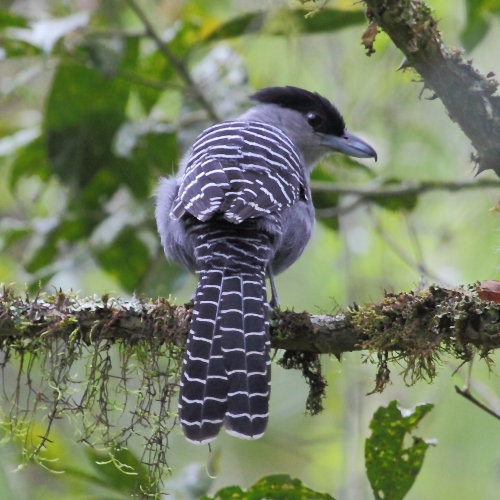
The Fulvous-throated Antwren is a small passerine, measuring approximately 9-10 cm in length. Adult males exhibit a distinct fulvous or tawny throat, contrasting with their otherwise grayish-brown plumage. The back and wings have a more rufous tint, providing effective camouflage against the forest floor and understory foliage. Females are similar in size and general coloration but may have a less pronounced throat coloration, leaning towards a paler fulvous shade.
Juveniles resemble adult females but tend to have duller and less distinct plumage, lacking the fully developed throat coloration. This can sometimes lead to confusion with other sympatric antwren species, such as the Rufous-tailed Antwren, though that species typically displays more rufous overall and lacks the distinctive throat pattern. In flight, the Fulvous-throated Antwren presents a compact and agile silhouette, with rapid wingbeats suited to maneuvering through dense foliage.
When perching, the Fulvous-throated Antwren often adopts a horizontal posture, with its tail slightly cocked upwards. This posture aids in its identification, particularly when observed at rest in mixed-species flocks. Its quick, darting movements and tendency to remain low in the understory also serve as field marks distinguishing it from similar species.
Having trouble telling birds apart? Upload a photo to our bird identification tool for an instant species match.
Fulvous-throated Antwren Habitat and Range
Preferred Habitat
The Fulvous-throated Antwren primarily inhabits dense, humid lowland tropical forests, thriving in the thick understory where it can forage for insects. It is most frequently found at elevations ranging from sea level to about 800 meters, though it is occasionally observed at higher altitudes in certain locales.
This species exhibits a strong preference for primary forests, where it benefits from the rich diversity and abundance of insect life. However, it can also persist in selectively logged or secondary forests, provided that sufficient understory cover remains intact. Seasonal shifts in habitat usage are minimal, as the Fulvous-throated Antwren tends to be a year-round resident within its range.
Unlike some avian species, it shows limited adaptation to urban environments, preferring the stability and resources found within natural forest settings. Its reliance on undisturbed forest habitats highlights its vulnerability to deforestation and habitat fragmentation, which can disrupt its foraging and breeding activities.
Geographic Range
The Fulvous-throated Antwren is native to the northern regions of South America, with its range primarily centered in the Amazon basin. It is found in countries such as Brazil, Colombia, Venezuela, and Peru, where it occupies extensive tracts of rainforest. The species does not engage in long-distance migrations but remains within its established range throughout the year.
Within this range, population densities vary, with higher concentrations typically found in areas with well-preserved primary forest. The Brazilian Amazon is a notable hotspot for the Fulvous-throated Antwren, given its vast and relatively continuous forest cover. In contrast, populations in more fragmented habitats, such as the edges of the Amazon or regions undergoing significant deforestation, may be less stable.
Despite its relatively wide distribution, the Fulvous-throated Antwren's reliance on specific forest habitats means that it is unevenly distributed, with its presence closely tied to the availability of suitable forest environments.
Want to know which birds visit your area? Browse our backyard birds by location guides for region-specific species lists.
What Does the Fulvous-throated Antwren Eat?
The diet of the Fulvous-throated Antwren consists primarily of insects and other small arthropods, which it adeptly captures using its sharp, pointed bill. This bird forages in the dense understory of tropical forests, often gleaning prey from leaves, branches, and the forest floor. It employs a methodical foraging technique, moving quickly and deliberately, using its acute vision to detect and capture prey.
While it primarily feeds on insects such as ants, beetles, and caterpillars, the Fulvous-throated Antwren may also consume spiders and small terrestrial invertebrates. Seasonal variations in diet are minimal, as its foraging habitat provides a consistent supply of prey throughout the year. However, during the breeding season, there may be a slight shift towards larger prey items to meet the increased nutritional demands of feeding chicks.
The Fulvous-throated Antwren typically follows a diurnal feeding schedule, with peak foraging activity occurring in the early morning and late afternoon when insect activity is highest. Its participation in mixed-species foraging flocks enhances its feeding efficiency, as it can exploit different foraging strata and benefit from the vigilance of other flock members.
Fulvous-throated Antwren Behavior and Social Structure
The Fulvous-throated Antwren exhibits a complex social structure centered around monogamous pairs or small family groups. Territorial by nature, these birds defend their breeding territories vigorously, using vocalizations and displays to deter intruders. Males often perform courtship displays, which include a series of rapid wing flicks and short flights intended to attract a mate.
During the breeding season, pairs work together to maintain a territory, which they defend from conspecifics and other potential competitors. Outside the breeding season, the Fulvous-throated Antwren may join mixed-species foraging flocks, where it participates as both a forager and a sentinel within the group.
In terms of daily activity, this species is predominantly diurnal, with peak activity during the cooler parts of the day. As a response to predators, the Fulvous-throated Antwren relies on its cryptic plumage and the protection offered by dense foliage. Alarm calls are used to alert other members of its group to danger, and these calls often prompt a swift retreat into thicker cover.
Fulvous-throated Antwren Nesting and Reproduction
The Fulvous-throated Antwren constructs small, cup-shaped nests, typically placed low in the understory shrubs or tangles of vines. These nests are crafted with care, using materials such as leaves, plant fibers, and spider silk to ensure stability and camouflage. The location of the nest is crucial, as it must offer protection from predators and the elements while remaining accessible to the adult birds.
During the breeding season, which generally coincides with the rainy season to coincide with insect abundance, the female lays a clutch of 2-3 eggs. Both parents share incubation duties, which last approximately 14 days. After hatching, the chicks remain in the nest for another two weeks, during which both parents feed and care for them.
The Fulvous-throated Antwren generally raises one brood per year, although in particularly favorable conditions, they may attempt a second. Parental roles are well defined, with both sexes contributing to feeding and protection, ensuring that fledglings have the best possible chance of survival.
Fulvous-throated Antwren Sounds and Vocalizations
The vocalizations of the Fulvous-throated Antwren are distinctive, featuring a series of rapid, high-pitched notes often described as a 'tick-tick-tick' pattern. The primary song, typically performed by males, serves as both a territorial claim and a mating call. These songs are delivered with a steady rhythm and moderate pitch, echoing softly through the dense forest understory.
In addition to their primary song, Fulvous-throated Antwrens emit a variety of call notes, including sharp 'chek' sounds used in communication between mates and family members. Alarm calls are more abrupt and higher in pitch, designed to alert others in the flock of potential threats.
During the dawn chorus, these antwrens contribute their voices to the symphony of forest sounds, their calls mingling with those of other insectivorous birds. The acoustic environment of their habitat is a key component of their communication strategies, influencing both mate attraction and territory defense.
Interesting Facts About the Fulvous-throated Antwren
- 1The Fulvous-throated Antwren often joins mixed-species flocks, increasing its foraging success.
- 2This bird's name comes from the distinctive fulvous, or tawny, coloration of its throat.
- 3Fulvous-throated Antwrens are monogamous, with pairs maintaining territories year-round.
- 4Despite its small size, it plays a crucial role in controlling insect populations in its habitat.
- 5The species was first described scientifically in 1855, highlighting its long-recognized significance.
- 6Its reliance on primary forests makes it a sensitive indicator of environmental health.
- 7The Fulvous-throated Antwren rarely ventures into open areas, preferring dense, shaded environments.
Fulvous-throated Antwren Conservation Status
Currently, the Fulvous-throated Antwren is listed as Least Concern by the IUCN, but this status belies the challenges it faces due to habitat loss. Deforestation, driven by logging, agriculture, and urban expansion, poses the greatest threat to its survival, as it relies heavily on undisturbed forest habitats. Population trends indicate a slow decline, particularly in areas where deforestation rates are high. Conservation efforts are focused on preserving large tracts of tropical forest and mitigating habitat fragmentation, crucial for maintaining viable populations. Historically, the Fulvous-throated Antwren has maintained stable populations in extensive and intact forest areas. However, ongoing environmental pressures underscore the need for continued conservation vigilance to ensure the long-term survival of this species.