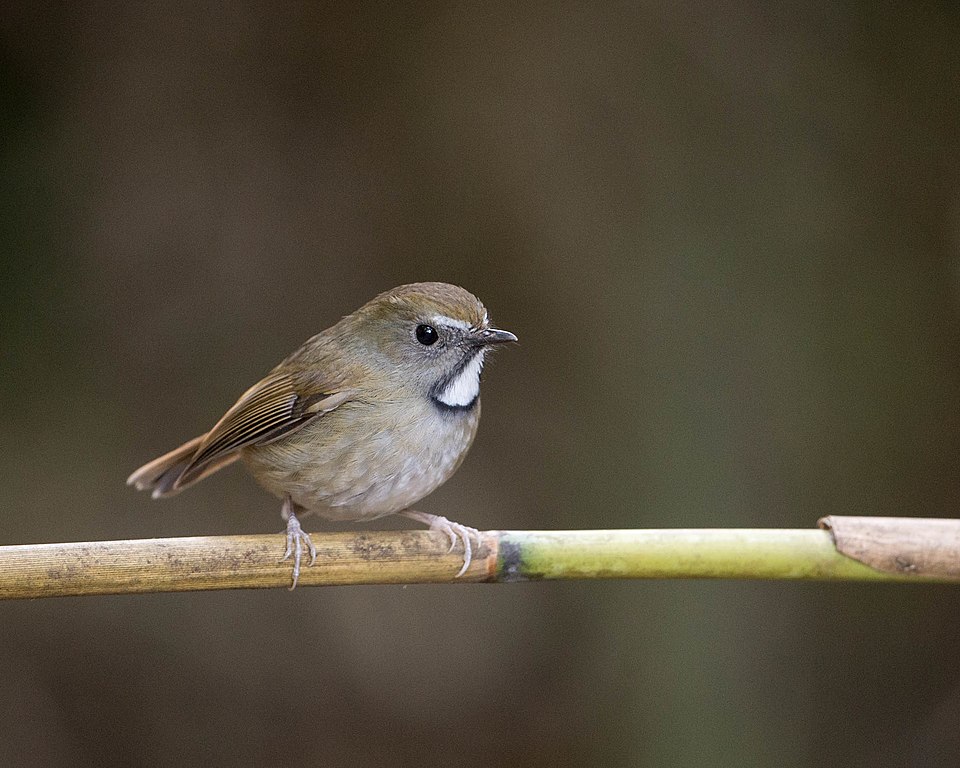
Furtive Flycatcher
Ficedula disposita
Order: Passeriformes / Family: Muscicapidae

Wikimedia Commons
About the Furtive Flycatcher
The Furtive Flycatcher, Ficedula disposita, is an enigmatic member of the Muscicapidae family, often spotted in the dense understories of Southeast Asian forests. This small passerine bird exhibits a preference for the humid, lush environments found in countries like Thailand, Malaysia, and Indonesia. The significance of this species extends beyond its ecological role, offering insights into the health of its forest habitat. As a bioindicator species, the Furtive Flycatcher reflects the state of biodiversity within its environment, making its presence an encouraging sign of ecosystem integrity.
In terms of ecological role, the Furtive Flycatcher serves as both a predator and prey. It contributes to controlling insect populations, thus maintaining a balance within the food web. This bird's diet primarily consists of small insects, which it skillfully captures in mid-air with agile acrobatics. Such feeding behavior aids in the regulation of insect populations, preventing outbreaks that could potentially harm vegetation.
Seasonally, the Furtive Flycatcher displays intriguing behaviors. During the breeding season, which aligns with the onset of the monsoon, males engage in elaborate courtship displays to attract females. This period is crucial for the population dynamics of the species, as successful breeding seasons can help stabilize or increase their numbers. Outside of the breeding season, these birds demonstrate more solitary or paired living, often blending seamlessly into their environment. The Furtive Flycatcher exemplifies adaptability, thriving in primary forests and showing resilience in secondary growth areas, which is essential as deforestation continues to impact their native habitats.
The Furtive Flycatcher belongs to the family Muscicapidae, within the order Passeriformes. These birds typically live typically 5-6 years, with some individuals living up to 8 years..
How to Identify a Furtive Flycatcher
The Furtive Flycatcher is a small bird, measuring approximately 12 cm in length. Its plumage is subtle yet distinct, with a predominantly olive-brown back and pale underparts. Adult males exhibit a slightly darker head with a faint eye ring that can aid in identification. Females, while similar in coloration, tend to have a slightly duller hue, lacking the pronounced head markings seen in males.
Juveniles resemble females but often display more streaking on the breast and sides, which fades as they mature. The Furtive Flycatcher's compact body and short wings contribute to a distinctive flight silhouette that is agile and quick, allowing it to navigate through dense foliage with ease. When perched, it often assumes an upright posture, flicking its wings and tail intermittently, a behavior that can help observers differentiate it from similar species.
Confusion may arise with other flycatchers of the region, particularly those within the same genus, like the Rufous-chested Flycatcher. However, the Furtive Flycatcher's more subdued coloration and lack of a rufous chest can help distinguish it from its relatives. Observing its behavior and habitat preference further aids in accurate identification.
Having trouble telling birds apart? Upload a photo to our bird identification tool for an instant species match.
Furtive Flycatcher Habitat and Range
Preferred Habitat
The Furtive Flycatcher thrives in lowland tropical forests, preferring areas with thick understories and dense canopy cover. It can be found at elevations ranging from sea level to about 1,200 meters. This bird is most frequently observed in primary forests, where it benefits from the rich insect life and complex vegetation structure.
Despite its preference for primary forests, the Furtive Flycatcher demonstrates adaptability by inhabiting secondary growth and selectively logged areas. This flexibility is vital given the ongoing threats of deforestation and habitat fragmentation. While the bird is more commonly found in rural settings, occasional sightings occur in urban green spaces, particularly in regions where forest patches remain intact.
Seasonal shifts in habitat use are minimal, as the Furtive Flycatcher is primarily non-migratory, maintaining its territory year-round. However, during the breeding season, it may venture into slightly different microhabitats within its range, seeking optimal nesting sites.
Geographic Range
The Furtive Flycatcher is a resident breeder in the forests of Southeast Asia. Its range includes countries such as Thailand, Malaysia, Indonesia, and parts of Vietnam. Within these countries, it occupies a variety of forest types, though it exhibits a marked preference for lowland and foothill forests.
While the Furtive Flycatcher is a non-migratory species, it does exhibit some local movements, possibly in response to food availability or habitat changes. The bird's population is generally more concentrated in areas with well-preserved forest cover. Regions like Borneo and Sumatra serve as population density hotspots, providing ample resources and suitable habitats for this elusive flycatcher.
Due to its preference for dense forest environments, the Furtive Flycatcher is less likely to be encountered in heavily urbanized areas or intensively agricultural landscapes. Conservation efforts focusing on protecting and restoring its natural habitat are crucial for maintaining its population across its range.
Want to know which birds visit your area? Browse our backyard birds by location guides for region-specific species lists.
What Does the Furtive Flycatcher Eat?
The Furtive Flycatcher's diet consists primarily of small insects, including flies, beetles, and caterpillars. During the breeding season, it may also consume a higher proportion of protein-rich prey to support the nutritional demands of raising young.
This species employs a distinctive foraging technique known as sallying, where it waits on a perch before darting out to capture insects in mid-air. This method allows it to efficiently exploit the insect-rich environments of its forest habitat. Prey size usually varies, but the Furtive Flycatcher typically targets insects ranging from 5 to 10 millimeters in length.
Seasonal variations in diet are subtle but can include an increase in fruit consumption during periods of insect scarcity. The bird's feeding schedule is largely diurnal, with peak activity occurring during the early morning and late afternoon when insects are most active.
Furtive Flycatcher Behavior and Social Structure
The social structure of the Furtive Flycatcher is primarily solitary or in pairs outside of the breeding season. During breeding, males establish and defend territories through vocalizations and displays. These territories serve as the core area for mating and nesting activities.
Courtship displays often involve a combination of vocalizations and physical posturing, including wing flicking and tail spreading. These displays are critical for attracting mates and reinforcing pair bonds. Once paired, both sexes participate in territory defense, though males typically engage more actively in vocal challenges against intruders.
The Furtive Flycatcher is primarily active during daylight hours, with a burst of activity in the early morning. It responds to predators with a mix of alarm calls and evasive maneuvers, often retreating into dense foliage to avoid detection. Flocking behavior is rare, although during migration periods, loose associations may form, allowing the birds to benefit from collective vigilance.
Furtive Flycatcher Nesting and Reproduction
The Furtive Flycatcher constructs a cup-shaped nest using a variety of materials, including moss, leaves, and rootlets. It typically situates the nest on a horizontal branch or within a natural cavity, often preferring locations that offer concealment from predators.
Clutch size generally ranges from two to four eggs, with an incubation period of approximately 12 to 14 days. Both parents share incubation duties, although the female typically takes the lead. Once hatched, the nestlings remain under parental care for about two weeks before fledging.
The Furtive Flycatcher may produce two broods per breeding season, depending on environmental conditions and food availability. Parental roles are well-defined, with both sexes participating in feeding and protecting the young. This cooperative breeding strategy enhances the survival odds of their offspring.
Furtive Flycatcher Sounds and Vocalizations
The primary song of the Furtive Flycatcher consists of a series of soft, melodic whistles interspersed with short trills. This song, often delivered from a concealed perch, serves as both a territorial signal and a mate attraction call.
Call notes are simpler, typically consisting of a single, sharp 'chip' sound used for communication between mates or as an alarm call. In the presence of predators, alarm calls become faster and more insistent, alerting nearby birds to potential threats.
During the dawn chorus, the Furtive Flycatcher's song contributes a gentle yet distinct element to the symphony of sounds, often blending harmoniously with the calls of other forest dwellers.
Interesting Facts About the Furtive Flycatcher
- 1The Furtive Flycatcher can consume up to 50% of its body weight in insects every day, showcasing its role in pest control.
- 2Despite its name, the Furtive Flycatcher is not entirely elusive and can be quite vocal during the breeding season.
- 3This species' adaptability to secondary growth areas highlights its resilience, important in a changing landscape.
- 4The Furtive Flycatcher exhibits a unique wing-flicking behavior that may serve as a communication signal among individuals.
- 5During peak insect outbreaks, the Furtive Flycatcher can increase its feeding rate by 30%, efficiently managing prey populations.
- 6The Furtive Flycatcher's nest can be camouflaged so well that it is often missed by both predators and human observers.
- 7Studies show that the Furtive Flycatcher prefers nesting sites with at least 70% canopy cover, emphasizing its need for dense forest.
Furtive Flycatcher Conservation Status
Currently, the Furtive Flycatcher is listed as Least Concern by the IUCN, though its population trend shows signs of decline due to habitat loss. Deforestation, particularly in Southeast Asia, poses the most significant threat, reducing available habitat and resources. Conservation efforts are underway, focusing on habitat preservation and restoration in key areas. Protected areas in regions like Borneo and Sumatra play a vital role in safeguarding the bird's habitat. Additionally, reforestation projects aim to restore degraded lands, offering potential new territories for this species. Historically, the Furtive Flycatcher benefited from the extensive forest cover across its range. However, modern pressures necessitate continued conservation work to ensure its survival.