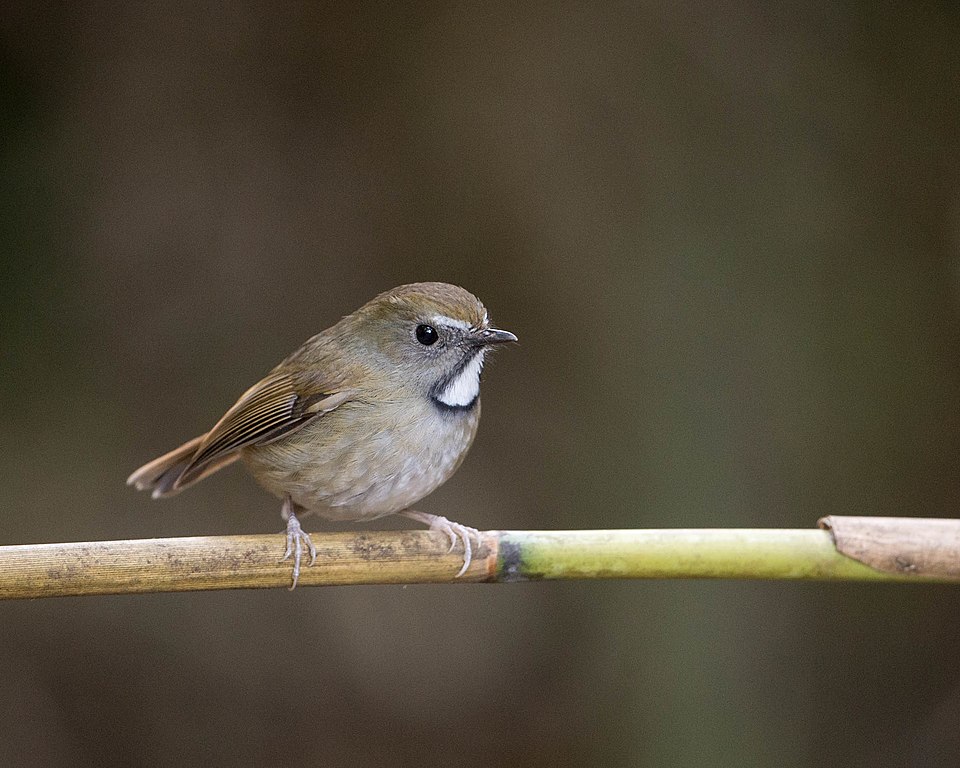
Gould's Shortwing
Heteroxenicus stellatus
Order: Passeriformes / Family: Muscicapidae

Wikimedia Commons
About the Gould's Shortwing
The Gould's Shortwing (Heteroxenicus stellatus) is a small passerine bird, celebrated for its striking blue plumage, predominantly found in the high-altitude temperate forests of the Himalayan region. This bird holds significance for its unique ecological role as an insectivore, aiding in controlling insect populations and contributing to the health of forest ecosystems. Primarily residing in the dense undergrowth, Gould's Shortwing thrives in the moss-laden forests of Nepal, Bhutan, and the northeastern states of India, such as Arunachal Pradesh. Its presence in these biodiverse regions underscores its importance as an indicator species, reflecting the health of its habitat. Seasonally, the Gould's Shortwing exhibits altitudinal movements, descending to lower elevations during the harsh winter months when food becomes scarce in its preferred high-altitude retreats. As a member of the Muscicapidae family, it shares behavioral traits with other Old World flycatchers, yet maintains a distinct ecological niche. Observers have noted its preference for moist, shaded environments where it can forage efficiently. Its behavior during the breeding season, typically from April to July, involves intricate courtship displays, with the male showcasing his vivid plumage to attract a mate. The Gould's Shortwing remains an essential part of the montane forest ecosystems, its presence ensuring the balance of insect populations and contributing to the overall biodiversity. Despite its elusive nature, birdwatchers and researchers continue to study this species to better understand its ecological impact and conservation needs. With habitat loss posing a significant threat, conservation efforts focus on preserving the pristine forest habitats that are vital for the survival of this and many other species.
The Gould's Shortwing belongs to the family Muscicapidae, within the order Passeriformes. These birds typically live average 4 years with a max recorded of 6 years.
How to Identify a Gould's Shortwing
The Gould's Shortwing is a small bird, measuring approximately 13 cm in length. Adult males exhibit a vibrant blue plumage with a slightly darker blue on the wings and tail. The underparts are pale, providing a stark contrast to the deep blue upperparts. Females and juveniles are less vivid, displaying more subdued brownish tones with hints of blue. This sexual dimorphism makes males more conspicuous during the breeding season. Juvenile birds can be distinguished by their mottled brown appearance, lacking the sheen of adult plumage. Identification can be challenging when compared to similar species like the Blue-fronted Redstart, but the Shortwing's shorter tail and absence of rufous underparts serve as distinguishing features. In flight, the Gould's Shortwing exhibits a rapid, fluttering motion, typical of forest-dwelling songbirds. When perched, it often maintains a low profile, blending into the undergrowth, making field observations demanding. Despite its vibrant coloration, its preference for staying near the ground and within dense foliage aids in evading predators.
Having trouble telling birds apart? Upload a photo to our bird identification tool for an instant species match.
Gould's Shortwing Habitat and Range
Preferred Habitat
Gould's Shortwing prefers the dense, humid undergrowth of montane forests. These habitats, rich in mosses and ferns, provide ample cover and foraging opportunities. Located at elevations ranging from 2,000 to 3,500 meters, these forests span across the Himalayas, including Nepal, Bhutan, and parts of northeastern India. During winter, some populations may descend to altitudes as low as 1,500 meters. The bird avoids urbanized areas, thriving instead in undisturbed natural habitats. Its reliance on forested environments makes it particularly susceptible to deforestation and habitat degradation. The Shortwing's presence in these specific habitats highlights the importance of preserving high-altitude forest ecosystems to ensure its survival.
Geographic Range
The Gould's Shortwing's breeding range is largely confined to the central and eastern Himalayas, spanning Nepal, Bhutan, and northeastern India. It is also found in the mountains of northern Myanmar and parts of China's Yunnan province. This bird exhibits a relatively sedentary lifestyle, with altitudinal migrations occurring in response to seasonal changes rather than long-distance migrations. During the non-breeding season, it may descend to lower forested areas, but it remains within the general range of its breeding habitat. Population density tends to be higher in well-preserved forest regions where human disturbance is minimal. These areas serve as critical refuges for the species, highlighting the importance of continued conservation efforts.
Want to know which birds visit your area? Browse our backyard birds by location guides for region-specific species lists.
What Does the Gould's Shortwing Eat?
The diet of Gould's Shortwing primarily consists of insects and other small invertebrates. It employs a foraging technique characterized by short, hopping movements, gleaning prey from the forest floor and low vegetation. During the breeding season, the availability of insects increases, allowing the Shortwing to meet the heightened nutritional demands of raising young. Seasonal variations in diet occur, with a slight shift towards consuming more fruit and seeds during the winter months when insect activity diminishes. The bird's ability to exploit a variety of food sources within its habitat underscores its adaptability and role as a pest control agent within the ecosystem.
Gould's Shortwing Behavior and Social Structure
Gould's Shortwing exhibits a solitary or paired lifestyle, particularly during the breeding season when territorial behavior becomes prominent. Males are known to engage in courtship displays, using their vivid plumage and song to attract females. Territories are fiercely defended, with males using song and physical displays to deter intruders. Outside the breeding season, the bird remains elusive and tends to avoid large flocks. Its daily activity pattern involves periods of intense foraging in the early morning and late afternoon, with rest during the hotter midday hours. When faced with predators, the Shortwing relies on its camouflage and swift, low flight to escape detection.
Gould's Shortwing Nesting and Reproduction
The nesting habits of Gould's Shortwing are typical of ground-nesting birds within its family. Nests are constructed low to the ground, often in a natural depression or sheltered by dense vegetation. The nest itself is a compact cup made from mosses, leaves, and rootlets, camouflaged to blend with the forest floor. A typical clutch consists of 2-3 eggs, with both parents participating in incubation over a period of approximately 14 days. After hatching, the chicks remain in the nest for another 14-16 days before fledging. Both parents share feeding and protective duties, ensuring the safety and growth of their young. The species typically raises one brood per year, although favorable conditions might allow for a second.
Gould's Shortwing Sounds and Vocalizations
The Gould's Shortwing's song is a melodious series of clear, flute-like notes, often delivered from a concealed perch within dense foliage. Its rhythm is steady, with a pitch that rises and falls, creating a harmonious effect. The bird also produces a variety of call notes, including a sharp 'chip' used in alarm situations. During the dawn chorus, the Shortwing's song stands out, contributing to the symphony of forest sounds that greet the new day. Its calls and songs serve not only as communication but also as a means of establishing territory and attracting mates.
Interesting Facts About the Gould's Shortwing
- 1Gould's Shortwing is named after the renowned ornithologist John Gould, who first described the species in the 19th century.
- 2This bird is often mistaken for a thrush due to its size and foraging behavior, despite belonging to a different family.
- 3The vibrant blue plumage of male Gould's Shortwing is due to the microscopic structure of its feathers, not pigments.
- 4Gould's Shortwing is rarely seen in flight, preferring to hop along the forest floor in search of food.
- 5Despite its colorful appearance, it can be surprisingly hard to spot due to its preference for dense undergrowth.
- 6This species plays a crucial role in controlling forest insect populations, helping to maintain ecological balance.
- 7Gould's Shortwing's song is considered one of the most melodious among Himalayan songbirds, often compared to a flute.
Gould's Shortwing Conservation Status
The IUCN lists Gould's Shortwing as a species of Least Concern, but its population trend is decreasing due to habitat loss. Primary threats include deforestation for agriculture and infrastructure development in its range. Conservation efforts focus on protecting high-altitude forests and establishing reserves to maintain habitat integrity. Historical data suggests a more widespread distribution, but human encroachment has led to fragmentation. Ongoing research and habitat protection are essential to prevent further declines.