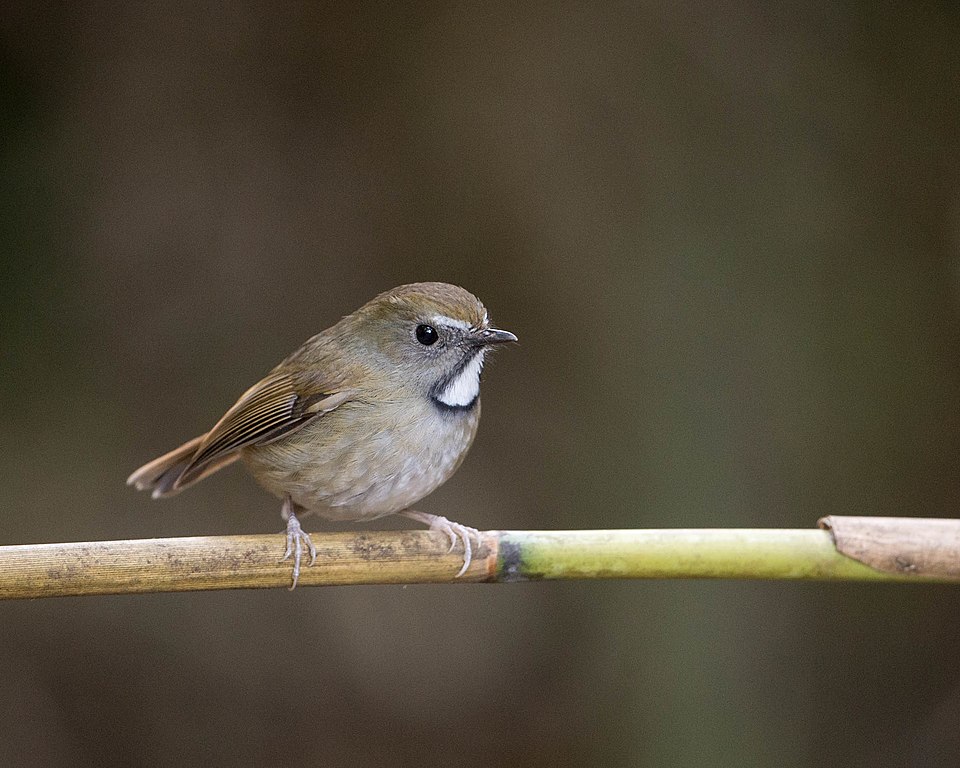
Grand Comoro Flycatcher
Humblotia flavirostris
Order: Passeriformes / Family: Muscicapidae
About the Grand Comoro Flycatcher
The Grand Comoro Flycatcher, scientifically known as Humblotia flavirostris, is a small, elusive bird endemic to the island of Grand Comoro in the Comoros archipelago. This flycatcher is of particular interest to ornithologists due to its highly restricted range and unique evolutionary lineage, being the sole representative of its genus. The bird has adapted to life in the montane forests of Grand Comoro, where it plays a critical role in the local ecosystem as an insectivore, helping to control insect populations and thus maintaining ecological balance. The Grand Comoro Flycatcher occupies a niche that supports its survival amidst the challenges posed by habitat loss and environmental changes. The bird’s presence in the island's forested regions signifies a healthy, functioning ecosystem, as it relies on the dense canopy and diverse insect life found there. Seasonal behaviors of the Grand Comoro Flycatcher include its breeding activities, which peak during the rainy season when insect prey is most abundant. During this time, the forests of Grand Comoro resonate with the flycatcher's calls, a sign of its vital role in the local avian community. The Grand Comoro Flycatcher's ecological significance extends beyond its role as a predator; it also serves as a bioindicator species. Because it is sensitive to changes in its habitat, its population trends can offer insights into the health of the montane forest ecosystems on Grand Comoro. The bird's adaptability to its environment has been crucial for its survival, yet ongoing conservation efforts are necessary to ensure that its habitat remains intact amid human encroachment and climate change. Dedicated conservation programs focus on preserving the natural habitats of the Grand Comoro Flycatcher, recognizing the bird as a symbol of the island's rich biodiversity and ecological heritage.
The Grand Comoro Flycatcher belongs to the family Muscicapidae, within the order Passeriformes. These birds typically live average 5 years, with a maximum recorded of 8 years..
How to Identify a Grand Comoro Flycatcher
Adult Grand Comoro Flycatchers are medium-sized songbirds with a distinctive appearance that aids in their identification. Their most striking feature is the bright yellow bill, which contrasts sharply with their otherwise muted plumage. The species typically displays a combination of gray and brown on its back, with a lighter gray underbelly. The absence of vibrant coloration makes the bird somewhat inconspicuous in its forest habitat, yet the yellow bill remains a reliable field mark for birdwatchers. Juvenile flycatchers resemble adults but may possess slightly duller plumage and a less pronounced yellow bill. There is minimal sexual dimorphism in this species, meaning males and females appear very similar, which can complicate sex identification in the field. The Grand Comoro Flycatcher’s flight silhouette is characterized by a relatively straight wing posture and a slightly forked tail, distinguishing it from other flycatchers that might have more pronounced tail features. When perched, the bird often adopts an alert posture, frequently flicking its wings or tail as it surveys for prey. This behavior, combined with its distinctive bill color, helps distinguish it from other small passerines in the region.
Having trouble telling birds apart? Upload a photo to our bird identification tool for an instant species match.
Grand Comoro Flycatcher Habitat and Range
Preferred Habitat
The Grand Comoro Flycatcher primarily inhabits the montane forests of Grand Comoro, thriving at elevations ranging from 500 to 1,200 meters. These forests provide dense canopy cover and a rich insect population, essential for the flycatcher's survival. During the breeding season, the flycatcher may be found in slightly lower elevations where insect abundance peaks. The bird shows a marked preference for primary and mature secondary forests, avoiding heavily disturbed areas. Though it is not commonly found in urban settings, its presence in rural and forest-edge habitats highlights its adaptability within its restricted range. Seasonal shifts in habitat use are minimal, as the bird remains within forested regions year-round.
Geographic Range
The Grand Comoro Flycatcher is endemic to Grand Comoro, the largest island in the Comoros archipelago, located off the eastern coast of Africa. It does not migrate, instead remaining within its established range throughout the year. This bird's range is confined to the island's montane forest regions, with highest population densities occurring in undisturbed areas of suitable habitat. The flycatcher's limited distribution reflects its specialization and reliance on the specific ecological conditions found on Grand Comoro. Due to its restricted range, the bird is susceptible to habitat loss, making the conservation of these montane forests crucial for its continued survival.
Want to know which birds visit your area? Browse our backyard birds by location guides for region-specific species lists.
What Does the Grand Comoro Flycatcher Eat?
The diet of the Grand Comoro Flycatcher consists primarily of insects, which it captures through agile flight maneuvers and gleaning from foliage. It favors a variety of arthropods, including beetles, flies, and caterpillars, adjusting its diet seasonally based on prey availability. During the rainy season, when insect populations peak, the flycatcher becomes particularly active in foraging, feeding frequently to support its breeding activities. Its foraging technique involves short, quick flights from a perch to snatch insects in mid-air, followed by a return to the same or nearby perch. This efficient hunting method allows the flycatcher to exploit the diverse insect life within its forest habitat effectively.
Grand Comoro Flycatcher Behavior and Social Structure
The Grand Comoro Flycatcher exhibits solitary or paired behavior, particularly during the breeding season when pairs become highly territorial. Territorial displays include vocalizations and aerial pursuits to deter intruders. Courtship involves complex displays, including song exchanges and aerial maneuvers, to strengthen pair bonds. Outside the breeding season, the flycatcher may occasionally join mixed-species foraging flocks, benefiting from the collective vigilance against predators. Its response to predators includes alarm calls and evasive flight, often retreating to dense foliage for cover. The flycatcher follows a diurnal activity pattern, with peak activity in the early morning and late afternoon when insects are most active.
Grand Comoro Flycatcher Nesting and Reproduction
The Grand Comoro Flycatcher constructs cup-shaped nests using plant fibers, moss, and lichens, often incorporating spider silk for binding. Nests are typically situated on horizontal branches within dense forest canopies, providing camouflage and protection. The typical clutch size ranges from two to four eggs, with the female primarily responsible for incubation, lasting approximately 14 days. Both parents participate in feeding the chicks, which fledge about 16 to 18 days post-hatching. The flycatcher usually raises one brood per year, although favorable conditions may occasionally allow for a second.
Grand Comoro Flycatcher Sounds and Vocalizations
The Grand Comoro Flycatcher’s primary song is a series of melodious whistles, delivered with a rhythmic cadence. The song is often repeated at regular intervals during the breeding season, serving both to attract mates and assert territory. Its call notes are sharp and distinct, often used in communication between mates or as alarm signals in response to threats. The flycatcher participates in a dawn chorus, its whistles blending with those of other forest inhabitants, creating a vibrant acoustic tapestry. Compared to other flycatchers, its song is relatively soft and less varied, reflecting its subtle presence within the forest environment.
Interesting Facts About the Grand Comoro Flycatcher
- 1The Grand Comoro Flycatcher has the unique distinction of being the only species in its genus, Humblotia.
- 2Its bright yellow bill is not only striking but also serves as an important field mark for identification.
- 3Despite its limited range, the Grand Comoro Flycatcher plays a crucial role in controlling insect populations on the island.
- 4This species remains non-migratory, residing exclusively in the montane forests of Grand Comoro year-round.
- 5The flycatcher's reliance on dense forest habitats makes it an important indicator species for ecosystem health.
- 6The Grand Comoro Flycatcher's subtle song contributes to the island's dawn chorus, enriching its acoustic environment.
- 7Conservation efforts on Grand Comoro aim to protect the flycatcher by preserving its montane forest habitat.
Grand Comoro Flycatcher Conservation Status
Classified as Near Threatened by the IUCN, the Grand Comoro Flycatcher faces risks from habitat destruction due to agricultural expansion and logging. The population trend appears to be stable, although localized declines may occur in heavily disturbed areas. Conservation efforts focus on habitat preservation and restoration, with particular emphasis on protecting the montane forests of Grand Comoro. Historical population data is limited, but current conservation actions aim to mitigate further habitat loss and support sustainable land-use practices. Efforts by local and international conservation groups continue to highlight the importance of this unique species as part of the island's natural heritage.