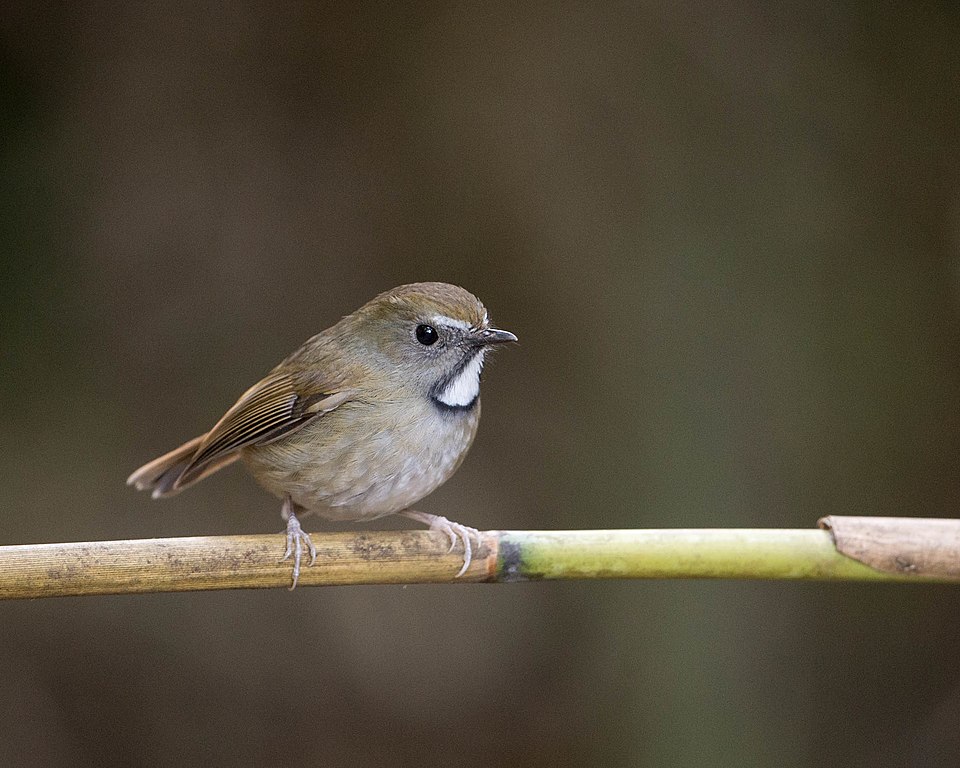
Gray-winged Robin-Chat
Cossypha polioptera
Order: Passeriformes / Family: Muscicapidae

Wikimedia Commons
About the Gray-winged Robin-Chat
The Gray-winged Robin-Chat (Cossypha polioptera) is a remarkable songbird found primarily in the tropical woodlands of Central and East Africa. Known for its melodious song, this bird plays a vital role in its ecosystem as both an insectivore and a seed disperser. Its presence in regions such as the Democratic Republic of the Congo, Uganda, and parts of Kenya signifies healthy woodland environments, where it thrives among dense vegetation. As a member of the Muscicapidae family, the Gray-winged Robin-Chat exhibits a fascinating blend of characteristics typical of both flycatchers and chats. During the breeding season, which occurs primarily in the wet months, the Gray-winged Robin-Chat engages in intricate courtship displays, often involving vocal duets between mates. These performances not only strengthen pair bonds but also serve to establish territory among competing pairs. The bird is non-migratory, maintaining its territory year-round, which underscores its adaptability to the subtropical climates of its range. The Gray-winged Robin-Chat contributes significantly to the control of insect populations, preying on a variety of insects and arthropods. This dietary preference makes it an important player in maintaining the ecological balance in its habitat. Furthermore, its feeding habits aid in the aeration of the soil, as it forages among leaf litter, turning over the topsoil and promoting nutrient cycling. This activity benefits the entire ecosystem, supporting plant growth and aiding in the regeneration of the forest floor. Though not currently threatened, the Gray-winged Robin-Chat faces potential habitat loss due to deforestation and land conversion for agriculture. Conservation efforts in its native regions focus on habitat preservation and reforestation, ensuring that this melodious songbird continues to enchant birdwatchers and researchers alike with its distinctive songs and ecological contributions.
The Gray-winged Robin-Chat belongs to the family Muscicapidae, within the order Passeriformes. These birds typically live 4-6 years in the wild..
How to Identify a Gray-winged Robin-Chat
The Gray-winged Robin-Chat is easily recognizable by its contrasting plumage. Adult birds exhibit a greyish-brown back with striking gray wings and tail feathers that contrast with the rich orange underparts. The head features a subtle whitish supercilium above the eye, adding to its distinctive look. In contrast, juveniles are slightly duller, with less pronounced wing coloration and a more mottled appearance, aiding in camouflage. Males and females appear similar, making sex differentiation challenging in the field. However, during breeding displays, males may appear more vibrant due to the slight iridescence of their feathers. When compared to similar species, such as the White-browed Robin-Chat, the Gray-winged Robin-Chat lacks the prominent white eyebrow and displays more muted coloration. In flight, it shows a medium-sized silhouette with rounded wings and a relatively long tail, often flicked while perching, a telltale behavior of the species. Observers can identify perched individuals by their upright posture and active tail movements, often accompanied by a sudden burst into song.
Having trouble telling birds apart? Upload a photo to our bird identification tool for an instant species match.
Gray-winged Robin-Chat Habitat and Range
Preferred Habitat
The Gray-winged Robin-Chat primarily inhabits dense woodlands and forest edges, thriving in both primary and secondary forests. It shows a preference for areas with ample undergrowth, providing cover for foraging and nesting. These birds are typically found at elevations ranging from 500 to 2000 meters, favoring the cooler, shaded areas of montane forests. During the non-breeding season, they may venture into more open woodlands, but remain close to areas with dense foliage. Although primarily a forest dweller, the Gray-winged Robin-Chat can occasionally be spotted in well-vegetated gardens and parks within urban areas, especially if these environments mimic their natural habitat.
Geographic Range
The Gray-winged Robin-Chat's range extends across several central African countries, with populations concentrated in the Democratic Republic of the Congo, Uganda, Rwanda, and western parts of Kenya. It occupies a relatively stable breeding range, as it does not undertake long migrations. Instead, it maintains a year-round presence within its established territories. Within these regions, the bird can be found in both protected areas and unprotected forests, with population densities highest in undisturbed woodlands. Unlike many migratory species, the Gray-winged Robin-Chat does not follow specific migration corridors but may exhibit minor altitudinal movements in response to seasonal changes in food availability.
Want to know which birds visit your area? Browse our backyard birds by location guides for region-specific species lists.
What Does the Gray-winged Robin-Chat Eat?
The Gray-winged Robin-Chat primarily consumes insects and other small invertebrates, such as beetles, ants, and spiders. During the wet season, when insect abundance peaks, its diet consists predominantly of these protein-rich sources. In the drier months, the bird's diet may shift to include more fruit and berries, which supplement its nutritional requirements. Foraging typically occurs on the ground, where the bird uses its beak to sift through leaf litter and soil, uncovering hidden prey. The Gray-winged Robin-Chat exhibits a diurnal feeding schedule, with peak activity during the early morning and late afternoon when insects are most active.
Gray-winged Robin-Chat Behavior and Social Structure
The Gray-winged Robin-Chat is a solitary or pair-bonded bird, with strong territorial instincts. Pairs often engage in vocal duets, reinforcing their bond and asserting their presence to rivals. These birds are highly territorial, defending their chosen area vigorously from intruders. During courtship, males perform a series of displays, including song flights and wing-flutters, to attract females. The species does not typically form large flocks, although temporary associations may occur during periods of high food abundance. In response to predators, the Gray-winged Robin-Chat exhibits alert behavior, using a series of sharp calls to signal danger. It remains active throughout the day, with a pattern of increased vocal activity during dawn and dusk.
Gray-winged Robin-Chat Nesting and Reproduction
The Gray-winged Robin-Chat constructs cup-shaped nests using a combination of twigs, grass, and leaves. These nests are often situated low in shrubs or small trees, providing concealment from predators. The clutch size typically consists of two to three eggs, which both parents incubate for approximately 14-16 days. After hatching, the chicks remain in the nest for another 14 days before fledging. Both parents share in feeding and caring for the young, ensuring their survival and growth. The species generally raises one brood per year, although favorable conditions may allow for a second attempt.
Gray-winged Robin-Chat Sounds and Vocalizations
The Gray-winged Robin-Chat's primary song is a complex series of melodious and varied notes, delivered with a fluid rhythm and clear, flute-like quality. These songs often include mimicry of other bird species, showcasing the bird's vocal versatility. In addition to its song, the Gray-winged Robin-Chat produces a range of call notes, including sharp alarm calls when predators are nearby. During the dawn chorus, its song can dominate the soundscape, often repeated with slight variations to maintain territorial boundaries and attract mates.
Interesting Facts About the Gray-winged Robin-Chat
- 1The Gray-winged Robin-Chat can mimic the calls of over ten different bird species, showcasing its vocal adaptability.
- 2This robin-chat is highly territorial, often using song battles to assert dominance over neighboring pairs.
- 3Despite its vivid color, the Gray-winged Robin-Chat is adept at remaining concealed within dense underbrush.
- 4Both male and female Gray-winged Robin-Chats participate equally in nest building and chick rearing.
- 5The species' song is so complex that it can include over 20 distinct syllables in a single rendition.
Gray-winged Robin-Chat Conservation Status
The Gray-winged Robin-Chat is currently listed as a species of Least Concern by the IUCN, with stable population trends. However, habitat destruction due to deforestation and agricultural expansion poses a significant threat to its long-term survival. Conservation efforts focus on preserving and restoring forest habitats, particularly in protected areas where the species thrives. While historical population levels remain stable, continued monitoring is necessary to ensure that emerging threats do not lead to future declines.