
Great Parrotbill
Conostoma aemodium
Order: Passeriformes / Family: Sylviidae
Wikimedia Commons
About the Great Parrotbill
The Great Parrotbill (Conostoma aemodium) stands out as an intriguing member of the Sylviidae family, primarily inhabiting the montane forests of the Himalayas. This species plays a significant ecological role within its environment, acting as both a predator of insects and a seed disperser. Found predominantly in regions such as Bhutan, Nepal, and parts of China, the Great Parrotbill adapts adeptly to its forested surroundings. These birds favor dense bamboo thickets and are often seen flitting through the undergrowth. During the breeding season, which spans from April to June, they become particularly active, showcasing their vibrant plumage and engaging in elaborate courtship behaviors. As temperatures fall, these birds may descend to lower elevations in search of food, but they largely remain within their breeding territories year-round. Ecologically, the Great Parrotbill contributes to the control of insect populations and aids in seed dispersal, thereby maintaining the health of their forest habitats. Their preference for dense vegetation not only provides them with ample foraging opportunities but also offers protection from predators. Seasonal behaviors of the Great Parrotbill are tightly linked to their reproductive cycle and food availability. In winter, they adjust their diet to include more seeds and berries due to the scarcity of insects. The Great Parrotbill exhibits a strong territorial instinct, with pairs often defending their nesting sites aggressively. This territoriality is crucial for their reproductive success, ensuring a safe environment for raising their young. Despite their conspicuous appearance, these birds can be challenging to spot due to their preference for thick underbrush. Their ability to thrive in specific forested regions makes them a valuable indicator species for assessing the health of montane ecosystems.
The Great Parrotbill belongs to the family Sylviidae, within the order Passeriformes. These birds typically live average 5-7 years with a max recorded of 10 years.
How to Identify a Great Parrotbill
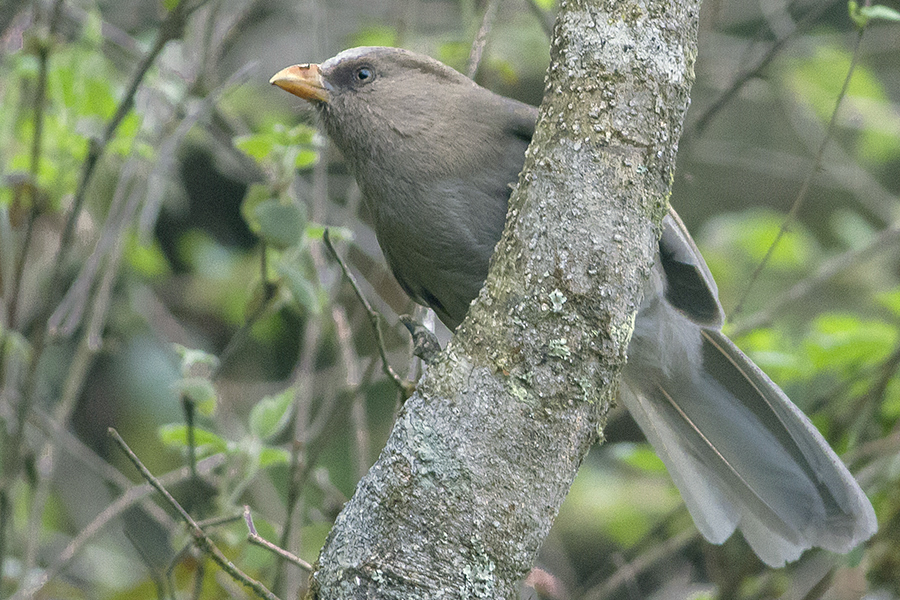
Identifying the Great Parrotbill involves observing several distinct field marks. Adults display a rich brown plumage, accented by a strikingly large, thick bill which is a pale bluish-gray. This robust bill is particularly adapted for cracking seeds and capturing insects. Juveniles resemble adults but often show slightly duller coloration. Both sexes share similar plumage, making it challenging to distinguish males from females outside of behavioral observations during the breeding season. Unlike many other bird species, the Great Parrotbill does not exhibit pronounced sexual dimorphism. When comparing with similar species, one might confuse them with other parrotbills, but the Great Parrotbill's large size and unique bill shape are key distinguishing features. In flight, their silhouette is characterized by broad wings and a relatively short tail, contributing to their powerful yet somewhat cumbersome flight. When perched, they often hold an upright posture, displaying their large bill prominently. These characteristics are vital for correct identification in the field, especially in the dense habitats they frequent.
Having trouble telling birds apart? Upload a photo to our bird identification tool for an instant species match.
Great Parrotbill Habitat and Range
Preferred Habitat
The Great Parrotbill thrives in the montane forests of the Himalayas, particularly those rich in bamboo thickets. These habitats, found at elevations ranging from 2,500 to 4,000 meters, provide the dense cover that is essential for their survival. The bird's preference for bamboo-rich areas is not only due to the availability of food but also because it offers ample nesting sites and protection from predators. While primarily a resident of forested mountain regions, during the colder months, the Great Parrotbill may descend to slightly lower elevations in search of food. This altitudinal movement is, however, limited as the species generally remains within its breeding range throughout the year. Urban presence is negligible, as the Great Parrotbill favors natural, undisturbed habitats away from human settlements. The bird's reliance on specific forest types highlights the importance of conserving these environments to ensure the survival of this unique species.
Geographic Range
The range of the Great Parrotbill extends across several key regions in Asia, primarily within the Himalayan mountain range. It is found in Bhutan, Nepal, northeastern India, and parts of southern China, including the provinces of Yunnan and Sichuan. The bird's range is largely determined by the availability of suitable montane forest habitats. Unlike many other bird species, the Great Parrotbill does not undertake long-distance migrations. Instead, it remains within its established range throughout the year, with only minor altitudinal movements in response to seasonal changes in temperature and food availability. Population density hotspots occur in areas where bamboo thickets are abundant, as these provide both food and nesting opportunities. Despite its relatively limited range, the Great Parrotbill remains a stable presence in these regions, thanks in part to its adaptability to the specific forest environments where it resides.
Want to know which birds visit your area? Browse our backyard birds by location guides for region-specific species lists.
What Does the Great Parrotbill Eat?
The diet of the Great Parrotbill is diverse, reflecting its adaptability to seasonal changes in food availability. Primarily, this bird feeds on insects, which provide essential proteins and nutrients. Insect larvae, beetles, and caterpillars form a significant portion of their diet during the breeding season when energy demands are high. As the seasons change and insect populations dwindle, the Great Parrotbill shifts its focus to seeds and berries, which are abundant in its forest habitat. This dietary flexibility enables the bird to survive in the variable conditions of the montane forests. Foraging typically occurs in small groups, with individuals methodically working their way through dense bamboo thickets and other underbrush. The bird's large bill is perfectly adapted to cracking open hard seeds and capturing elusive insects. Feeding activity peaks during the early morning and late afternoon, aligning with the availability of prey and the cooler temperatures of these times.
Great Parrotbill Behavior and Social Structure
The Great Parrotbill exhibits a range of fascinating behaviors that reflect its adaptation to the montane forest environment. Socially, these birds often forage in small groups, which enhances their ability to locate food and provides safety in numbers against predators. Territorial behavior is pronounced during the breeding season, with pairs vigorously defending their nesting sites from intruders. Courtship displays involve a series of calls and postures, showcasing the bird's vibrant plumage and strength. Flocking patterns change with the seasons, as they may form larger groups during the non-breeding season for added protection. When faced with predators, the Great Parrotbill relies on dense vegetation for cover, often retreating into the thickets at the first sign of danger. Daily activity patterns reveal a preference for early morning and late afternoon activity, coinciding with cooler temperatures and optimal foraging conditions. Despite their robust build, these birds are agile and quick, capable of maneuvering through dense underbrush with ease.
Great Parrotbill Nesting and Reproduction
Great Parrotbills construct their nests with great care, typically choosing locations within dense bamboo thickets or other thick vegetation. The nest itself is a cup-shaped structure, meticulously woven from grasses, bamboo leaves, and other plant fibers. This strategic placement not only provides camouflage but also protects the nest from harsh weather conditions and predators. Clutch size generally ranges from 2 to 4 eggs, with both parents sharing incubation duties. The incubation period lasts approximately two weeks, after which the chicks hatch and are fed a diet rich in insects and seeds brought by the parents. Fledging occurs about three weeks after hatching, with young birds remaining close to the nest site while they learn essential survival skills. The Great Parrotbill typically raises one brood per year, though in optimal conditions, a second brood may be attempted. Parental roles are shared, with both sexes equally contributing to the care and feeding of the young.
Great Parrotbill Sounds and Vocalizations
The vocalizations of the Great Parrotbill are a distinctive feature of its behavior, serving key roles in communication and territory defense. The primary song is a series of melodic whistles, often described as flute-like, with varying pitches and rhythms. These songs are most prominent during the breeding season when males sing to attract mates and establish territory. Call notes are shorter and more abrupt, used for communication between individuals within a group. Alarm calls are sharp and harsh, serving as warnings to others of potential danger. During the dawn chorus, Great Parrotbills contribute to the symphony of the forest with their melodious songs, often continuing into the early morning hours. These sounds, while unique, can occasionally be mistaken for similar species, but the Great Parrotbill's robust and varied repertoire is a reliable identifying characteristic.
Interesting Facts About the Great Parrotbill
- 1The Great Parrotbill's large bill is not only for feeding but also aids in climbing through dense vegetation.
- 2Despite its robust build, the Great Parrotbill is an agile flyer capable of navigating tight spaces in the forest.
- 3Great Parrotbills are often seen in small groups outside the breeding season, highlighting their social nature.
- 4This species is one of the few in its range that remains year-round in the harsh Himalayan climate.
- 5The Great Parrotbill's song can carry over long distances, an adaptation for communication in dense forests.
- 6The species has a particular affinity for bamboo, which provides both shelter and a rich food source.
- 7Unlike many birds, Great Parrotbills show little sexual dimorphism, making male and female birds appear nearly identical.
Great Parrotbill Conservation Status
The Great Parrotbill currently holds a status of Least Concern on the IUCN Red List, with population trends considered stable. However, specific threats such as habitat loss due to deforestation and the encroachment of agriculture could pose future risks. Conservation efforts focus on preserving the montane forest habitats essential for their survival. Protected areas within their range, such as national parks in Bhutan and Nepal, play a crucial role in safeguarding these environments. Historical population changes have been minimal, but ongoing monitoring is necessary to ensure long-term stability. The bird's presence in relatively remote and rugged regions has so far shielded it from the more severe impacts of human activity.
Other Sylviidae Species



Birds Similar to the Great Parrotbill
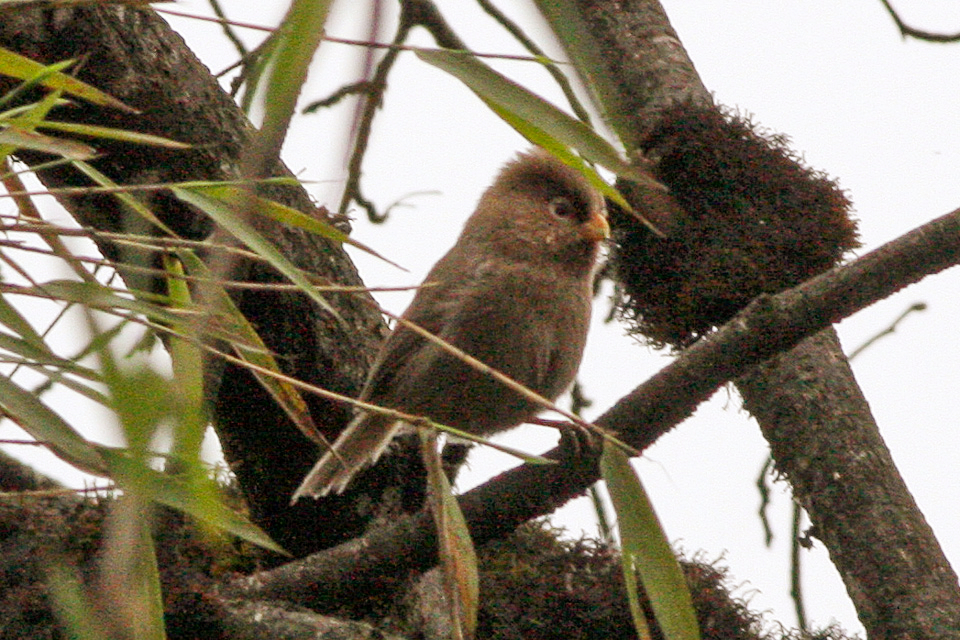
These species are often confused with the Great Parrotbill due to similar appearance or overlapping range.
