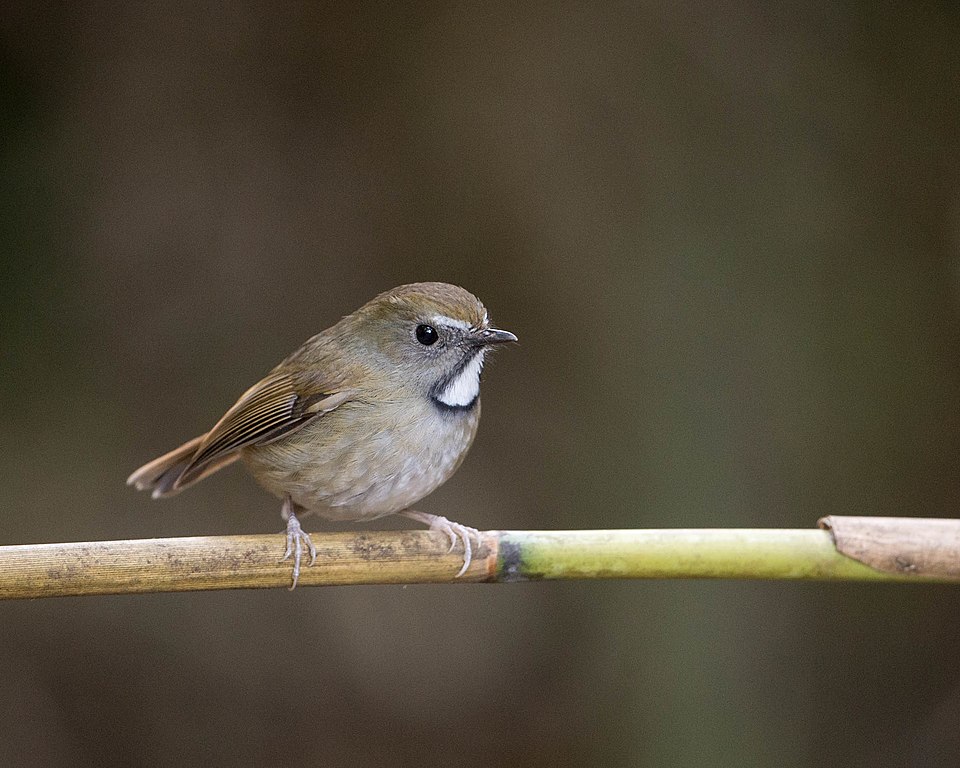
Grey-chested Jungle Flycatcher
Rhinomyias umbratilis
Order: Passeriformes / Family: Muscicapidae

Wikimedia Commons
About the Grey-chested Jungle Flycatcher
The Grey-chested Jungle Flycatcher, scientifically known as Rhinomyias umbratilis, occupies a specific niche within the dense lowland forests of Southeast Asia. This species is primarily found in the lush, humid environments of countries such as Malaysia, Indonesia, and Brunei, where it plays a crucial role in the ecosystem. As an insectivore, the Grey-chested Jungle Flycatcher helps control insect populations, thus maintaining the balance within its native habitats. Its presence is indicative of a healthy forest ecosystem, making it a significant bioindicator species. This bird prefers undisturbed primary and secondary forests, where it can be seen foraging in the understory. Seasonal behaviors include subtle shifts in territory, although the bird does not undertake long-distance migrations like some of its relatives. Instead, it may exhibit altitudinal movements, adjusting its range slightly depending on the availability of food resources. The Grey-chested Jungle Flycatcher has adapted well to its environment, with its muted plumage providing excellent camouflage against predators. Its reliance on forested habitats, however, makes it susceptible to deforestation and habitat fragmentation, which are significant threats in this region. Conservation efforts are vital to ensure the survival of this species, as the destruction of its natural habitat continues to pose a challenge. By promoting sustainable forestry practices and establishing protected areas, conservationists aim to safeguard the future of the Grey-chested Jungle Flycatcher and the ecosystems it inhabits.
The Grey-chested Jungle Flycatcher belongs to the family Muscicapidae, within the order Passeriformes. These birds typically live typically around 4-6 years in the wild..
How to Identify a Grey-chested Jungle Flycatcher
The Grey-chested Jungle Flycatcher is a small bird, measuring about 15 centimeters in length. Adult plumage features a subdued palette, with gray on the chest and a warm brown on the upperparts, allowing it to blend seamlessly into its forest environment. The underparts transition from gray to a paler, almost whitish belly. Males and females are similar in appearance, although females may exhibit slightly duller plumage. Juveniles can be distinguished by their mottled patterning, which provides additional camouflage during their more vulnerable stages of life. In terms of silhouette, the Grey-chested Jungle Flycatcher is compact, with a short tail and relatively broad wings, typical of flycatchers that navigate dense foliage. Its perching posture is upright, often seen actively scanning for prey. When compared to similar species, such as the Brown-streaked Flycatcher, Rhinomyias umbratilis can be identified by its more uniform gray chest, lacking the streaks that characterize its relatives. The bird's flight is undulating, with quick, direct bursts as it pursues insects. It is often observed flitting through the lower to mid-canopy, rarely venturing into the open.
Having trouble telling birds apart? Upload a photo to our bird identification tool for an instant species match.
Grey-chested Jungle Flycatcher Habitat and Range
Preferred Habitat
The Grey-chested Jungle Flycatcher is intrinsically linked to the dense lowland forests of Southeast Asia. It thrives in humid, tropical environments, preferring primary and secondary forests with rich understories. These forests, found primarily in Malaysia, Indonesia, and Brunei, provide the cover and food resources this species needs. Within its range, the bird occupies elevations from sea level to roughly 1,200 meters, although it predominantly stays in lower regions. Seasonal habitat shifts are minimal, as the flycatcher remains within forested areas year-round. While it is not typically associated with urban environments, the Grey-chested Jungle Flycatcher occasionally ventures into forest edges and well-maintained gardens adjacent to natural areas. However, its reliance on intact forest ecosystems makes it vulnerable to habitat destruction.
Geographic Range
The Grey-chested Jungle Flycatcher's range is confined to the lowland and hill forests of Southeast Asia, specifically within Malaysia, Borneo, and Sumatra. It breeds primarily within these regions, maintaining a relatively stable, non-migratory presence. The bird's distribution is patchy, concentrated in areas where suitable habitat remains. Population density hotspots include national parks and protected reserves like Taman Negara in Malaysia and Gunung Palung National Park in Indonesia. While the species does not migrate over long distances, it may engage in localized movements within its range, particularly in response to seasonal food availability or weather conditions. These movements, however, are limited, as the species is largely sedentary.
Want to know which birds visit your area? Browse our backyard birds by location guides for region-specific species lists.
What Does the Grey-chested Jungle Flycatcher Eat?
The Grey-chested Jungle Flycatcher is an insectivore, with a diet primarily consisting of various insects and arthropods. It forages actively in the forest understory, employing a sallying technique typical of flycatchers, where it makes short flights from a perch to catch flying insects. Its prey includes beetles, flies, and caterpillars, which it hunts during the day. The bird's feeding schedule is diurnal, with peak activity occurring during the early morning and late afternoon when insects are most active. Seasonal diet changes are minimal, though it may adjust its foraging strategy based on the availability of different insect species throughout the year. The Grey-chested Jungle Flycatcher's role as a predator of insects helps regulate pest populations, contributing to the overall health of its ecosystem.
Grey-chested Jungle Flycatcher Behavior and Social Structure
The Grey-chested Jungle Flycatcher exhibits solitary and territorial behavior, particularly during the breeding season. Males establish and defend territories through vocal displays, using a series of calls to deter rivals and attract mates. Courtship involves modest displays, with males showcasing their plumage and engaging in subtle dances to woo females. This species is not known for flocking, generally maintaining a solitary or paired existence outside of the breeding season. The bird's response to predators includes remaining motionless, utilizing its cryptic plumage to blend into the forest surroundings. Daily activity patterns are concentrated around dawn and dusk, with the flycatcher spending much of its time perched quietly while scanning for prey. Its territorial nature and reliance on specific habitats make it sensitive to environmental changes, underscoring the importance of preserving its natural habitat.
Grey-chested Jungle Flycatcher Nesting and Reproduction
Nesting for the Grey-chested Jungle Flycatcher occurs in the dense understory of forests. The nest is typically a cup-shaped structure, constructed from twigs, leaves, and moss, and often placed in a sheltered fork of a tree or shrub. The location preferences include areas with ample cover to protect the nest from predators. Clutch size usually consists of two to three eggs, which are incubated by the female. The incubation period lasts approximately 14 days, followed by a fledging timeline of about 12 to 14 days post-hatching. Both parents participate in feeding the chicks, ensuring a steady supply of insects. The number of broods per year is generally one, although favorable conditions may allow for a second brood. Parental roles are shared, with both the male and female actively involved in raising the young.
Grey-chested Jungle Flycatcher Sounds and Vocalizations
The Grey-chested Jungle Flycatcher's primary song is a series of soft, melodious whistles, each note clear and lasting about a second. The rhythm is slow and deliberate, creating a tranquil atmosphere within its forest habitat. Call notes include short, sharp 'chip' sounds used in communication between mates or to signal alarm. The alarm calls are more rapid and high-pitched, alerting others to potential threats. During the dawn chorus, this flycatcher contributes its gentle whistles, blending with the symphony of other forest birds. Compared to more raucous species, its vocalizations are subtle and soothing, reflecting its unobtrusive nature.
Interesting Facts About the Grey-chested Jungle Flycatcher
- 1The Grey-chested Jungle Flycatcher was first described by the ornithologist George Robert Gray in 1847.
- 2This flycatcher is a member of the Muscicapidae family, known for their insect-catching prowess.
- 3Despite its name, the Grey-chested Jungle Flycatcher is not limited to jungle environments, thriving in lowland forests as well.
- 4The species' scientific name, Rhinomyias umbratilis, reflects its shadowy, elusive nature within dense forests.
- 5Unlike many birds, the Grey-chested Jungle Flycatcher does not migrate, remaining within its tropical range year-round.
- 6The bird's subtle plumage acts as effective camouflage, making it difficult to spot even for experienced birders.
- 7It plays a vital ecological role by controlling insect populations, which benefits both forest health and biodiversity.
Grey-chested Jungle Flycatcher Conservation Status
The Grey-chested Jungle Flycatcher is currently listed as Near Threatened on the IUCN Red List. Population trends indicate a decline, primarily driven by habitat loss and fragmentation due to logging and agricultural expansion. The primary threats include deforestation and the conversion of forest land for palm oil plantations. Conservation efforts focus on habitat protection through the establishment of reserves and national parks. Additionally, initiatives promoting sustainable land use practices are crucial in mitigating further habitat destruction. Historical population changes reflect a once stable species, now facing increasing pressures from human activities. Continued efforts are necessary to ensure the long-term survival of this flycatcher and the preservation of its native environments.