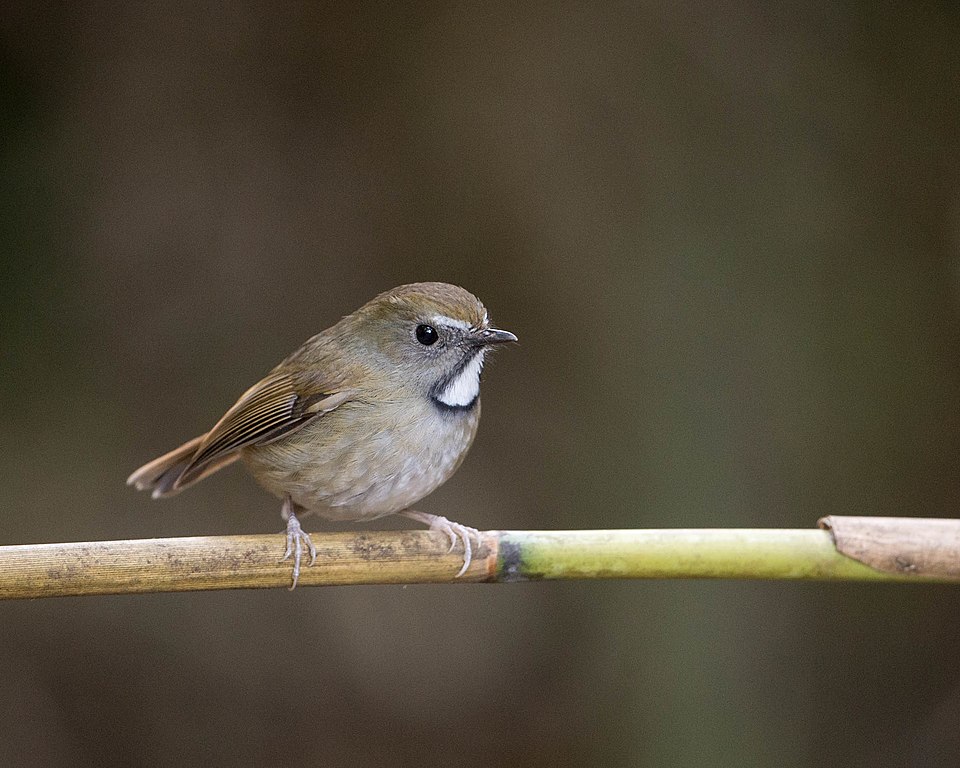
Himalayan Bluetail
Tarsiger rufilatus
Order: Passeriformes / Family: Muscicapidae

Wikimedia Commons
About the Himalayan Bluetail
The Himalayan Bluetail (Tarsiger rufilatus) is a captivating songbird found primarily in the montane forests of Asia. Belonging to the Muscicapidae family, this species thrives in the dense undergrowth of coniferous and mixed forests, often at elevations ranging from 2,000 to 4,000 meters. The species' vibrant coloration and melodious song make it a favorite among birdwatchers and naturalists alike. The Himalayan Bluetail plays a crucial role in its ecosystem, primarily as an insectivore, helping control insect populations in its native habitats. In regions such as the eastern Himalayas, including countries like Bhutan, Nepal, and parts of India, this bird is a common sight during its breeding season. As the seasons change, the Himalayan Bluetail exhibits fascinating migratory behavior. In the winter months, it travels to lower altitudes, seeking warmer climates in areas like the foothills of the Himalayas, northeastern India, and parts of China. This seasonal migration is significant as it highlights the bird's adaptability to diverse climatic conditions while ensuring access to ample food resources throughout the year. The ecological role of the Himalayan Bluetail extends beyond insect control. It also aids in the pollination of various plant species, inadvertently assisting in seed dispersal as it flits from branch to branch. This interaction underlines the interconnectedness of flora and fauna in its habitat, emphasizing the bird's importance in maintaining the ecological balance. The Himalayan Bluetail's adaptability to different environments, from high-altitude forests to subtropical valleys, underscores its resilience and evolutionary success. As climate patterns continue to shift, the bird's ability to navigate these changes offers valuable insights into the adaptability of avian species in the face of environmental challenges. This adaptability also makes the Himalayan Bluetail an excellent indicator species for monitoring forest health and climate change impacts in its native regions.
The Himalayan Bluetail belongs to the family Muscicapidae, within the order Passeriformes. These birds typically live typically around 6 years, with some living up to 10 years..
How to Identify a Himalayan Bluetail
The Himalayan Bluetail is easily recognized by its striking blue coloration, especially in males, which display a vivid cobalt blue on the upperparts, including the head, back, and tail. The underparts are a contrasting white, with an orange-flanked belly, adding to its visual appeal. In contrast, females are more subdued in coloration, exhibiting olive-brown upperparts with a hint of blue on the tail and rump, while their underparts are paler with a subtle buff wash. Juvenile Himalayan Bluetails resemble females but are generally duller, with a more pronounced streaking on their upperparts. The differences between males and females are most apparent during the breeding season when the males' plumage is at its most vibrant. In terms of size, the Himalayan Bluetail is a small songbird, measuring about 13-15 cm in length, with a wingspan ranging from 20 to 24 cm. Its flight silhouette is characterized by a rapid, fluttering motion, typical of many small passerines. When perching, the Himalayan Bluetail often adopts an upright posture, frequently flicking its tail, a behavior that is useful for field identification. Potential confusion with other species may arise with the Red-flanked Bluetail (Tarsiger cyanurus), but the Himalayan Bluetail can be distinguished by its more intense blue and the lack of red flanks in males. Additionally, the Himalayan Bluetail's habitat preferences and range can aid in differentiating it from similar species.
Having trouble telling birds apart? Upload a photo to our bird identification tool for an instant species match.
Himalayan Bluetail Habitat and Range
Preferred Habitat
The Himalayan Bluetail inhabits montane forests across the Asian continent, favoring dense undergrowth in coniferous and mixed forests. Typically, it resides at elevations between 2,000 and 4,000 meters, where the environment offers ample cover and food resources. During the breeding season, these birds prefer high-altitude forests of fir, spruce, and rhododendron. In winter, they descend to lower altitudes, occupying subtropical forests and even scrublands, where temperatures are milder. This seasonal shift in habitat highlights their adaptability to changing environmental conditions. While primarily associated with forested regions, the Himalayan Bluetail occasionally ventures into rural gardens and parklands, especially during migration, demonstrating some degree of tolerance to modified landscapes. However, unlike some other species, it remains scarce in urban environments, preferring the relative seclusion and abundance of rural and wilderness areas.
Geographic Range
The Himalayan Bluetail's range extends across a substantial portion of Asia, covering several countries and regions. During the breeding season, it primarily occupies the eastern Himalayas, including eastern Nepal, Bhutan, and northeastern India. It is also found in parts of southern Tibet and western China. As a migratory species, the Himalayan Bluetail moves to lower elevations in the winter months. Its wintering range includes areas such as the foothills of the Himalayas, northeastern India, and southern China, where it finds milder conditions and adequate food supply. Migration corridors are often along the mountainous terrains that provide both cover and resources during transit. Within these regions, population densities can vary, with the bird being more abundant in undisturbed forest habitats. Despite its extensive range, the Himalayan Bluetail is not uniformly distributed, with certain hotspots of population density linked to optimal habitat conditions and food availability.
Want to know which birds visit your area? Browse our backyard birds by location guides for region-specific species lists.
What Does the Himalayan Bluetail Eat?
The Himalayan Bluetail primarily feeds on a diet of insects, making it an important insectivore within its ecosystem. It consumes a variety of invertebrates, including beetles, caterpillars, and spiders, which it forages for in the leaf litter and low vegetation. During the breeding season, when insect abundance peaks, the bird's diet is predominantly comprised of these protein-rich sources, essential for chick rearing. In the winter months, when insects become scarcer, the Himalayan Bluetail adapts by supplementing its diet with berries and small fruits. This dietary flexibility is crucial for its survival, allowing it to thrive across different habitats and seasons. The bird typically forages alone or in pairs, employing a 'gleaning' technique where it picks off prey from foliage and branches. It is also known to hover briefly before snatching insects in mid-air, demonstrating agility and precision in its feeding behavior. Feeding is most active during the early morning and late afternoon hours, aligning with peak insect activity and the cooler parts of the day.
Himalayan Bluetail Behavior and Social Structure
The Himalayan Bluetail exhibits a range of behaviors that reflect its adaptability and ecological niche. Socially, it is generally solitary or found in pairs, particularly during the breeding season when territoriality is pronounced. Males are known to defend their territories vigorously, using song and display flights to ward off rivals and attract mates. Courtship involves complex displays, including wing fluttering and tail fanning, accompanied by soft, melodious songs. Outside the breeding season, the Himalayan Bluetail may join mixed-species foraging flocks, a behavior that enhances foraging efficiency and predator avoidance. Its response to predators involves a combination of alarm calls and evasive maneuvers, often retreating to dense cover when threatened. Daily activity patterns are diurnal, with peak activity occurring during the cooler morning and late afternoon hours. During these times, the bird engages in foraging and territorial maintenance, interspersed with periods of rest and preening.
Himalayan Bluetail Nesting and Reproduction
The Himalayan Bluetail constructs its nest in a concealed location, often close to the ground within dense undergrowth or among the roots of trees. The nest is a compact cup made from moss, grass, and leaves, lined with softer materials such as feathers and animal hair. This camouflage helps protect the nest from predators. The typical clutch size ranges from three to five eggs, which are pale blue with brown speckles. Both parents share incubation duties, which last for approximately 12 to 14 days before hatching. Once the chicks hatch, both parents participate in feeding and caring for the young. Fledging occurs about two weeks after hatching, with the young birds remaining close to the nest site as they develop their independence. The Himalayan Bluetail typically raises one brood per year, although in optimal conditions, a second brood may be attempted.
Himalayan Bluetail Sounds and Vocalizations
The Himalayan Bluetail's song is a series of melodious, high-pitched notes, often delivered in a sweet, cascading sequence. This song is most prominent during the breeding season, serving both territorial and courtship functions. The bird's call notes are short and sharp, typically used as contact calls between individuals or as alarm signals when predators are nearby. Although not as loud as some other passerine species, the Himalayan Bluetail's song carries well through dense forest habitats. During the dawn chorus, its song blends with those of other forest dwellers, contributing to the vibrant soundscape of its environment. Its alarm calls are more abrupt and harsher in tone, effectively communicating urgency and alerting other birds to potential threats.
Interesting Facts About the Himalayan Bluetail
- 1The Himalayan Bluetail is sometimes called the Orange-flanked Bush-robin due to the orange patches on its sides.
- 2Despite its vibrant colors, the Himalayan Bluetail can be surprisingly elusive, often staying hidden in dense foliage.
- 3The species was once considered a subspecies of the Red-flanked Bluetail but is now recognized as distinct due to differences in song and plumage.
- 4Himalayan Bluetails are excellent indicators of forest health, as they thrive in undisturbed habitats.
- 5The bird's migratory behavior is closely tied to seasonal insect abundance, showcasing its adaptability.
- 6It is one of the few small passerines that successfully breeds at such high altitudes in the Himalayas.
- 7The scientific name Tarsiger rufilatus reflects the bird's reddish flank color, with 'rufilatus' meaning 'red side' in Latin.
Himalayan Bluetail Conservation Status
The Himalayan Bluetail is currently listed as Least Concern on the IUCN Red List, with stable population trends. However, habitat loss due to deforestation and land conversion poses potential threats to its populations. Conservation efforts focus on preserving its montane forest habitats, particularly in regions undergoing rapid development and agricultural expansion. Historical population data indicate that the species has remained relatively stable, benefiting from the inaccessibility of many of its high-altitude habitats. Nonetheless, continued monitoring and habitat protection are essential to ensure its long-term survival.