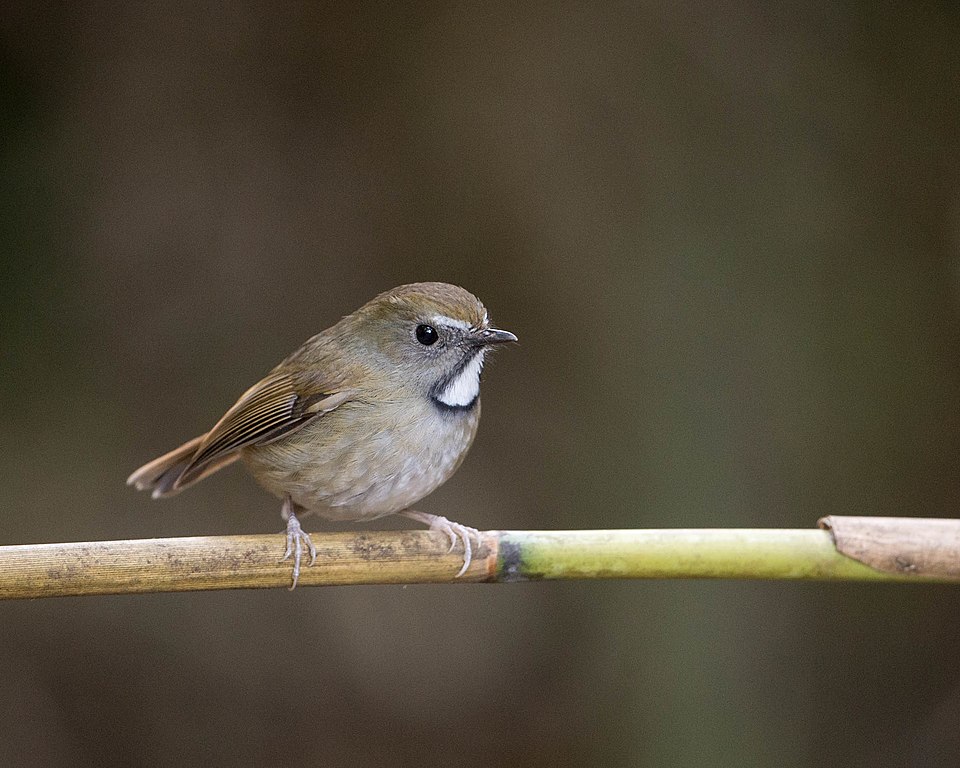
Hodgson's Redstart
Phoenicurus hodgsoni
Order: Passeriformes / Family: Muscicapidae

Wikimedia Commons
About the Hodgson's Redstart
Hodgson's Redstart (Phoenicurus hodgsoni) is a captivating bird species belonging to the family Muscicapidae. It is named in honor of the 19th-century British naturalist Brian Houghton Hodgson. This bird is primarily found across the mountainous regions of Asia, where it thrives in elevations ranging from 2,000 to 4,500 meters. The redstart's vibrant plumage and distinctive behaviors make it a focal point of interest for ornithologists and bird enthusiasts alike. Hodgson's Redstart plays a critical ecological role in its habitat, aiding in insect population control and participating in seed dispersal. This bird's presence serves as an indicator of healthy, biodiverse environments, especially in temperate and subtropical montane forests. Each spring, Hodgson's Redstart undertakes seasonal migrations, moving to higher altitudes for breeding and returning to slightly lower elevations during winter. Such patterns enable the species to exploit diverse ecological niches throughout the year, ensuring its survival and reproductive success. The redstart's adaptability to varying climates and elevations underscores its ecological significance in the mountainous regions of Bhutan, Nepal, and parts of Tibet. Despite the challenges posed by habitat fragmentation and climate change, Hodgson's Redstart remains a resilient species. Its ability to utilize both natural and semi-natural landscapes demonstrates a remarkable level of adaptability. However, continued habitat preservation is essential to maintain the ecological balance these birds help sustain. In conclusion, the Hodgson's Redstart embodies the intricate connections within montane ecosystems, its presence a vivid reminder of the interconnectedness of life in these high-altitude environments.
The Hodgson's Redstart belongs to the family Muscicapidae, within the order Passeriformes. These birds typically live average lifespan is 5 to 7 years, with a maximum recorded of 9 years..
How to Identify a Hodgson's Redstart
Adult Hodgson's Redstarts exhibit striking sexual dimorphism. Males flaunt a distinctive black face and throat contrasted by a bright orange belly and flanks, a feature that distinguishes them from other redstarts. Their grayish-brown back and wings provide a subtle contrast to the vibrancy of their underparts. Females, on the other hand, are more subdued, with a paler orange wash on their underparts and a brownish-gray overall coloration. Juveniles resemble females but often display streakier plumage, aiding camouflage. When attempting to differentiate Hodgson's Redstart from similar species, pay attention to the sharp demarcation between the male's black face and orange belly, a characteristic less pronounced in other redstarts. In flight, Hodgson's Redstart shows a distinctive tail pattern, with a reddish base and black tips, providing a useful identification marker. Their perching posture is typically upright, often flicking their tail as they survey their surroundings, a behavior common among redstarts. Overall, the combination of vivid colors in males and specific behavioral traits assists in accurate field identification.
Having trouble telling birds apart? Upload a photo to our bird identification tool for an instant species match.
Hodgson's Redstart Habitat and Range
Preferred Habitat
Hodgson's Redstart thrives in the high-altitude regions of the Himalayas, particularly in Bhutan, Nepal, and Tibet. It favors open woodlands, forest edges, and shrubby areas within elevation ranges of 2,000 to 4,500 meters. These habitats provide ample foraging opportunities and nesting sites, which are crucial for their survival. During the breeding season, they prefer areas with abundant underbrush and scattered trees, which offer protection from predators and inclement weather. In winter, they descend to lower elevations, where they inhabit more open areas, including agricultural fields and gardens. Although they are primarily associated with rural and mountainous landscapes, Hodgson's Redstarts occasionally venture into urban outskirts, where they can adapt to human-altered environments. This flexibility in habitat preference indicates their ability to navigate changing landscapes, though continued urban expansion poses a potential threat.
Geographic Range
Hodgson's Redstart has a relatively localized range, confined primarily to the central and eastern Himalayas. During the breeding season, they occupy high-altitude regions across Bhutan, Nepal, and Tibet, where they find suitable conditions for nesting and raising their young. As winter approaches, these birds migrate to slightly lower elevations, where they spend the colder months in more temperate climates. This altitudinal migration is crucial for accessing food resources and maintaining energy levels throughout the year. In terms of population density, Hodgson's Redstart is more abundant in areas with minimal human disturbance, particularly in protected national parks and reserves in Bhutan and Nepal. Although they are not widely distributed, their presence in these regions highlights the ecological importance of conserving high-altitude habitats.
Want to know which birds visit your area? Browse our backyard birds by location guides for region-specific species lists.
What Does the Hodgson's Redstart Eat?
Hodgson's Redstart primarily feeds on insects, a diet that supports their energetic lifestyle and vibrant plumage. They exhibit a preference for small insects such as beetles, ants, and caterpillars, which they skillfully capture using agile aerial maneuvers and ground foraging techniques. This insectivorous diet provides essential proteins and nutrients, particularly during the breeding season when energy demands are high. In winter, when insect availability decreases, they may supplement their diet with small fruits and seeds, demonstrating dietary flexibility. Hodgson's Redstart employs a sit-and-wait foraging strategy, often perched on low branches or rocks, watching for potential prey. Once they spot a target, they dive swiftly, capturing insects with precision. This method is especially effective in open habitats where visibility is high.
Hodgson's Redstart Behavior and Social Structure
Hodgson's Redstarts are known for their energetic and engaging behaviors, often observed flicking their tails and wings while perched. During the breeding season, males perform elaborate courtship displays, singing from prominent perches to attract females and establish territories. These displays often involve fluttering flight patterns and vocalizations, showcasing their vibrant plumage and vigorous spirit. Territorial by nature, Hodgson's Redstarts defend their breeding grounds with vigor, engaging in aerial chases and vocal duels with rivals. Outside the breeding season, they become more social, occasionally forming loose flocks as they forage for food. Despite their bold territorial displays, Hodgson's Redstarts exhibit a cautious demeanor in the presence of predators. Upon detecting a threat, they issue sharp alarm calls, alerting others to the danger. Their daily activity peaks during the early morning and late afternoon, taking advantage of cooler temperatures for foraging and social interactions.
Hodgson's Redstart Nesting and Reproduction
Hodgson's Redstart constructs its nest in sheltered locations such as rock crevices, ledges, or tree cavities, ensuring protection from predators and harsh weather. The nest is a compact cup made of moss, lichens, and grass, lined with softer materials like feathers and wool for insulation. A typical clutch consists of 3-5 eggs, which the female incubates for about 12-14 days. Both parents participate in feeding the chicks, which fledge approximately 14-18 days after hatching. This biparental care is crucial for chick survival in the demanding mountain environment. Hodgson's Redstart typically raises one brood per year, although favorable conditions may allow for a second. The choice of nesting site and materials reflects their adaptation to high-altitude environments, balancing concealment with access to food resources.
Hodgson's Redstart Sounds and Vocalizations
The primary song of Hodgson's Redstart is a melodious series of clear, ringing notes that rise and fall in pitch, often delivered from a high perch during the breeding season. This song serves both to attract mates and establish territorial boundaries. In addition to their song, Hodgson's Redstarts produce a variety of call notes, including sharp 'tseep' sounds used for communication between individuals. Alarm calls are more abrupt and urgent, serving to alert others of potential threats. During the dawn chorus, their song contributes to the vibrant symphony of avian sounds, becoming particularly pronounced in spring as they establish territories.
Interesting Facts About the Hodgson's Redstart
- 1Hodgson's Redstart's name honors Brian Houghton Hodgson, a 19th-century British naturalist who extensively studied Himalayan fauna.
- 2Despite their vibrant appearance, Hodgson's Redstarts are adept at blending into rocky, shrub-dense environments, aiding in predator evasion.
- 3Hodgson's Redstart's tail-flicking behavior is believed to be a communication signal, indicating alertness or distress to other birds.
- 4Their migratory movements are primarily altitudinal, shifting between elevations rather than long-distance migrations.
- 5Hodgson's Redstart's song, with its melodious and rhythmic quality, plays a crucial role in mate attraction and territory defense.
- 6During winter, Hodgson's Redstarts may form mixed-species flocks, benefiting from increased vigilance and foraging success.
- 7This species' adaptability to different elevations highlights its resilience in the face of changing environmental conditions.
Hodgson's Redstart Conservation Status
Hodgson's Redstart is currently classified as Least Concern by the IUCN due to its relatively stable population trends. However, localized threats such as habitat destruction and climate change pose potential risks. Conservation efforts focus primarily on habitat protection, particularly in the Himalayan regions where they breed. Establishing and maintaining protected areas in Bhutan, Nepal, and Tibet is essential for ensuring the species' continued survival. While historical population data is limited, current monitoring suggests that maintaining natural habitats and mitigating human impact remain critical for their conservation.