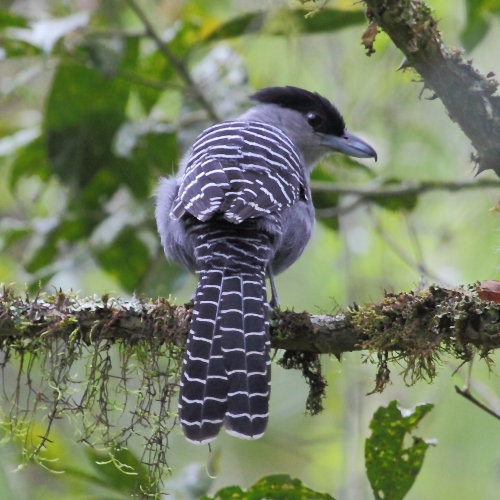
Imeri Warbling-Antbird
Hypocnemis flavescens
Order: Passeriformes / Family: Thamnophilidae

Wikimedia Commons
About the Imeri Warbling-Antbird
The Imeri Warbling-Antbird, scientifically referred to as Hypocnemis flavescens, is a fascinating member of the Thamnophilidae family, known for its vibrant presence in the dense forests of the Amazon Basin. This bird is endemic to South America, primarily found in the regions of Brazil, Colombia, and Venezuela. Its presence is most notable within the rich biodiversity of the Imeri mountain range, which gives the bird its common name. The Imeri Warbling-Antbird plays a significant ecological role as part of the forest understory bird community, contributing to the control of insect populations. The species thrives in humid tropical forests, where it frequents the thick understory and vine tangles, often staying in the shadowy depths of the forest floor. Its behavior is characteristically secretive and elusive, making it a challenging species for birdwatchers to observe. During the breeding season, which typically occurs in the wetter months of the year, the Imeri Warbling-Antbird becomes more vocal, using its distinctive song to establish territories and attract mates. The species exhibits a high degree of adaptability to the complex forest environments it inhabits, often joining mixed-species flocks to enhance foraging success and predator avoidance. The bird's ecological significance extends beyond its role in insect population control. By participating in mixed-species flocks, it contributes to the intricate social structure and dynamic interactions that define its forest habitat. This interspecies association not only aids in reducing predation risks through collective vigilance but also enhances foraging efficiency as different species employ various techniques to uncover hidden prey. The Imeri Warbling-Antbird is a critical component of the Amazonian avian community, highlighting the complex interdependence of species within this biodiverse region.
The Imeri Warbling-Antbird belongs to the family Thamnophilidae, within the order Passeriformes. These birds typically live 5 years with a maximum recorded of 8 years.
How to Identify a Imeri Warbling-Antbird
Identification of the Imeri Warbling-Antbird involves recognizing several distinctive field marks. Adults exhibit a striking plumage with a combination of black, white, and buff colors. The male typically displays a more prominent black facial mask extending down the throat, which contrasts sharply with the white underparts and buff flanks. The back and wings are predominantly olive-brown, providing effective camouflage against the forest floor. Females, by contrast, exhibit a slightly duller coloration with less pronounced black markings. Juveniles resemble females but with even more subdued tones, lacking the full intensity of adult plumage. One of the most distinctive features of the Imeri Warbling-Antbird is its perching posture. It often remains low in the understory, adopting a horizontal stance with its tail slightly cocked, a characteristic behavior that aids in quick, agile movements through dense foliage. In flight, its silhouette is compact, with rapid wing beats and a direct, low flight path that seldom ventures above the canopy. While confusion with other Hypocnemis species is possible, the unique combination of its geographic range and distinctive song assists in accurate identification.
Having trouble telling birds apart? Upload a photo to our bird identification tool for an instant species match.
Imeri Warbling-Antbird Habitat and Range
Preferred Habitat
The Imeri Warbling-Antbird inhabits the humid, tropical forests of the Amazon Basin, favoring the dense understory and vine-laden areas. It is predominantly found in the lowland rainforests of the Imeri mountain range, with a preference for elevations ranging from 100 to 500 meters. This bird shows a strong affinity for regions with a high density of shrubs and ground cover, often avoiding areas with extensive human disturbance. Seasonal habitat shifts are minimal, as the species is largely sedentary and does not undertake long migrations. However, the Imeri Warbling-Antbird may adjust its range within the forest in response to food availability and changes in vegetation density throughout the year. It is typically absent from urban and open areas, maintaining a strong preference for the secluded depths of the forest.
Geographic Range
The range of the Imeri Warbling-Antbird is confined to specific regions within the northern Amazon Basin. It is found in the eastern regions of Colombia, southern Venezuela, and northwestern Brazil, particularly within the Imeri mountain range. The bird's distribution is closely associated with the unique ecological conditions of these rainforest areas, where it remains a resident species year-round. Unlike many other bird species, the Imeri Warbling-Antbird does not migrate, maintaining a stable presence within its preferred habitats. Population density hotspots correspond to areas with high forest cover and minimal human disturbance, where the bird's ecological needs are best met. This localized distribution underscores the importance of conserving these specific forest regions to ensure the continued survival of the species.
Want to know which birds visit your area? Browse our backyard birds by location guides for region-specific species lists.
What Does the Imeri Warbling-Antbird Eat?
The diet of the Imeri Warbling-Antbird primarily comprises insects and other small arthropods, reflecting its role as an active insectivore. Its foraging techniques are highly specialized, involving meticulous gleaning from leaves and branches in the forest understory. The bird employs a methodical approach, often hanging upside down to reach prey hidden beneath foliage. Seasonal changes do not significantly alter its dietary preferences, as the humid, tropical environment provides a consistent supply of insects throughout the year. Prey size typically ranges from small beetles and caterpillars to spiders and ants. The Imeri Warbling-Antbird forages primarily during the early morning and late afternoon, aligning its activity with the peak periods of prey availability and reduced predator activity.
Imeri Warbling-Antbird Behavior and Social Structure
The Imeri Warbling-Antbird exhibits a complex social structure and behavioral repertoire. It is typically observed as part of mixed-species flocks, a strategy that enhances both foraging efficiency and predator avoidance. These flocks often include other insectivorous birds, such as antwrens and foliage-gleaners, creating a dynamic network of interspecies cooperation. Territorial behavior is pronounced, with pairs maintaining well-defined territories that they defend vigorously through vocal displays and physical presence. Courtship displays involve a combination of song and visual signals, with males performing elaborate dances and vocalizations to attract females. The species is primarily diurnal, with peak activity occurring during the cooler hours of the day. In response to predators, the Imeri Warbling-Antbird relies on its cryptic plumage and rapid retreat into dense cover, often using alarm calls to alert other birds in the vicinity.
Imeri Warbling-Antbird Nesting and Reproduction
Nesting for the Imeri Warbling-Antbird involves constructing a cup-shaped nest, typically situated within the dense tangles of vines and low shrubs in the understory. The nest is constructed from a variety of plant materials, including leaves, twigs, and moss, providing excellent camouflage against predators. The female typically lays a clutch of two to three eggs, which are incubated by both parents for a period of approximately 14 to 16 days. After hatching, the chicks remain in the nest for another 12 to 15 days, during which both parents participate actively in feeding and protecting the young. The species usually raises one brood per year, although favorable conditions may occasionally allow for a second. Parental roles are shared equally, with both male and female participating in all aspects of nesting and chick rearing.
Imeri Warbling-Antbird Sounds and Vocalizations
The song of the Imeri Warbling-Antbird is a series of melodious whistles, characterized by a rising and falling rhythm that echoes through the dense forest understory. This primary song serves both territorial and mating purposes, with males delivering it from conspicuous perches in the early morning and late afternoon. The call notes are short and sharp, often used for communication between mates or within mixed-species flocks. In the presence of threats, the bird may emit alarm calls, which consist of rapid, repeated notes that serve to alert other birds in the vicinity. The Imeri Warbling-Antbird's vocalizations contribute significantly to the acoustic landscape of its habitat, providing a familiar backdrop to the dawn chorus typical of Amazonian forests.
Interesting Facts About the Imeri Warbling-Antbird
- 1The Imeri Warbling-Antbird is named after the Imeri mountain range, highlighting its localized habitat preference.
- 2Unlike many other antbirds, the Imeri Warbling-Antbird is known for its melodious song, which is a key trait used in mate attraction.
- 3The species is an integral part of mixed-species flocks, often seen with other insect-eating birds, enhancing its foraging success and safety.
- 4The Imeri Warbling-Antbird exhibits a unique foraging behavior, often hanging upside down to access hidden prey in the forest understory.
- 5Both male and female Imeri Warbling-Antbirds participate equally in nesting duties, showcasing a cooperative breeding strategy.
- 6The bird's melodious song can often be heard echoing through the Amazonian forests, adding to the rich soundscape of its habitat.
- 7Despite its vibrant presence, the Imeri Warbling-Antbird's plumage provides excellent camouflage, making it a challenge to spot in dense foliage.
Imeri Warbling-Antbird Conservation Status
The Imeri Warbling-Antbird currently holds a status of Least Concern according to the IUCN Red List, primarily due to its relatively stable population and widespread distribution within its limited range. However, ongoing deforestation and habitat degradation in the Amazon Basin pose significant threats to its long-term survival. Conservation efforts focus on protecting and preserving the critical forest habitats that this species and many others depend upon. Historical population changes have been minimal, but increased human activity in the region necessitates continuous monitoring. The establishment of protected areas in key regions of the Imeri mountain range is crucial to mitigating further habitat loss and ensuring the survival of the Imeri Warbling-Antbird.