
White-browed Shama
Kittacincla superciliaris
Order: Passeriformes / Family: Sylviidae

Wikimedia Commons
About the White-browed Shama
The White-browed Shama (Kittacincla superciliaris) is a captivating songbird renowned for its vibrant plumage and melodious calls. This species primarily inhabits the subtropical and tropical moist lowland forests across parts of Southeast Asia, particularly in regions such as Sumatra and Java in Indonesia. Its presence in these biodiverse areas highlights its ecological significance as both a pollinator and a seed disperser, contributing to forest regeneration and health. The White-browed Shama thrives in dense undergrowth, often preferring areas near water courses, where it can pursue its varied diet and engage in its complex social behaviors. During the breeding season, which typically occurs from March to August, this bird exhibits territorial behavior, asserting its presence through vocalizations and displays. The shama's ability to adapt to various forest microhabitats, from lowland regions to montane areas, underscores its ecological versatility. By consuming a wide range of insects and fruits, the White-browed Shama plays a dual role in controlling insect populations and facilitating seed dispersal, thus maintaining the ecological balance within its habitat. Seasonal movements are not pronounced as the species tends to be sedentary, remaining within its established territories year-round. However, altitudinal movements may occur in response to climatic changes, ensuring access to optimal feeding and nesting sites.
The White-browed Shama belongs to the family Sylviidae, within the order Passeriformes. These birds typically live average 6-8 years, with a maximum recorded of 11 years..
How to Identify a White-browed Shama
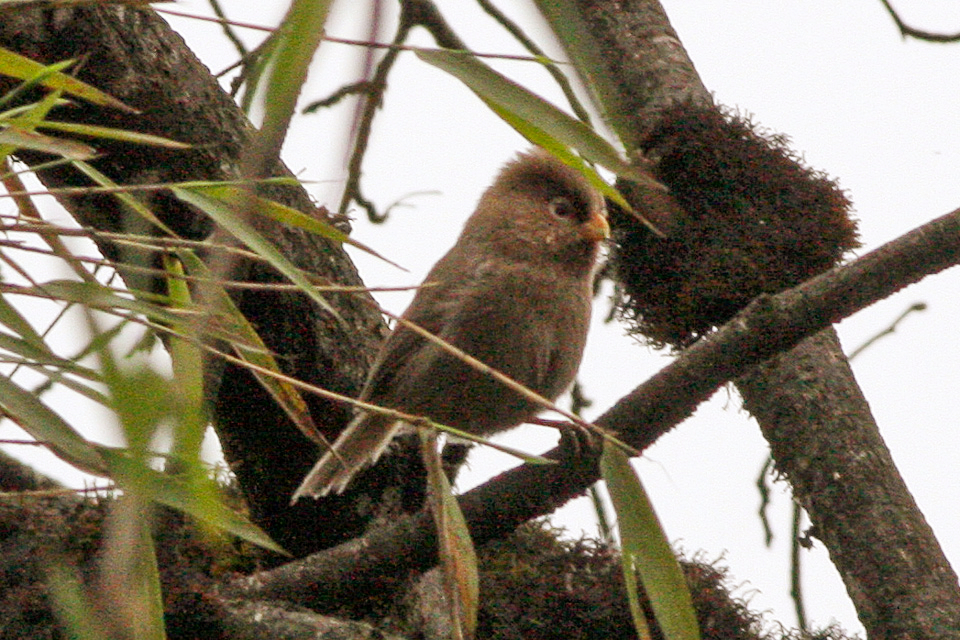
Adult White-browed Shamas are easily identified by their distinctive white eyebrow line that stands out against the dark head and upperparts. The males exhibit striking plumage with glossy black upperparts and a conspicuous white belly, while the females are more subdued, with brownish tones replacing the black. Juveniles resemble females but with even duller plumage and less pronounced facial markings. The tail, long and often prominently displayed, features contrasting white outer feathers, which become particularly visible during flight or when the bird is agitated. The flight silhouette is characterized by a long tail and rounded wings, making it distinguishable from other forest-dwelling passerines. Unlike other similar species, the White-browed Shama's perching posture is upright and alert, often flicking its tail as it surveys its surroundings. Confusion with other shama species is possible, but the white eyebrow and tail pattern are reliable diagnostic features.
Having trouble telling birds apart? Upload a photo to our bird identification tool for an instant species match.
White-browed Shama Habitat and Range
Preferred Habitat
The White-browed Shama is primarily found in humid, tropical lowland forests, favoring dense undergrowth and areas with abundant leaf litter. It thrives in both primary and secondary forests, illustrating its adaptability to altered landscapes, provided there is sufficient cover. This species typically occurs at elevations ranging from sea level to about 1,500 meters, occasionally venturing into montane forests. Seasonal shifts in habitat preference are minimal, though microhabitat selection may vary slightly in response to food availability and climatic conditions. While predominantly a forest dweller, the White-browed Shama can occasionally be found in semi-urban settings where suitable vegetation exists.
Geographic Range
The White-browed Shama's range is relatively confined to Southeast Asia, with its core populations residing in Indonesia, particularly on the islands of Sumatra and Java. There are also reported sightings in neighboring areas where suitable habitat persists. The species does not undertake long-distance migrations, preferring to remain within its established range throughout the year. However, some altitudinal movement may occur, especially during harsher weather conditions, to access resources at different elevations. Key population density hotspots include the protected forest reserves in Sumatra, where conservation efforts have bolstered local populations.
Want to know which birds visit your area? Browse our backyard birds by location guides for region-specific species lists.
What Does the White-browed Shama Eat?
The diet of the White-browed Shama is predominantly insectivorous, consisting mainly of ants, beetles, and caterpillars. It employs a foraging technique that involves hopping on the forest floor, flipping leaves and debris to uncover hidden prey. Its agile movements and keen eyesight enable it to capture both ground-dwelling and flying insects with precision. During the fruiting season, which peaks in late summer, the shama's diet expands to include a variety of berries and small fruits, providing essential nutrients that support breeding activities. The size of prey items typically ranges from small insects like ants to larger caterpillars, allowing the bird to exploit a diverse range of food sources.
White-browed Shama Behavior and Social Structure
The White-browed Shama is known for its complex social and territorial behaviors. Males are highly territorial and employ their melodious song to assert dominance and deter intruders. During the breeding season, these vocalizations become more frequent and complex, aiding in pair bonding and mate attraction. Courtship displays include wing fluttering and tail fanning, often accompanied by soft calls. The species generally forages alone or in pairs, showing little inclination toward flocking. In the presence of predators, the shama exhibits alarm calls and erratic flight patterns to confuse and evade threats. Daily activities peak during the early morning and late afternoon, coinciding with cooler temperatures and increased prey availability.
White-browed Shama Nesting and Reproduction
The White-browed Shama constructs cup-shaped nests using twigs, leaves, and rootlets, often lined with softer materials like feathers. Nests are typically situated in low shrubs or small trees, about 1 to 3 meters above the ground, providing concealment from predators. The female lays a clutch of 2 to 4 eggs, which she incubates for approximately 14 days. Both parents participate in feeding the chicks, which fledge around 12 to 14 days after hatching. The species can raise two broods per year, particularly in regions with extended favorable conditions. Parental roles are well defined, with the male often defending the territory while the female tends to the nest.
White-browed Shama Sounds and Vocalizations
The White-browed Shama is celebrated for its rich and varied song, characterized by a melodious blend of whistles, trills, and clear notes. The rhythm is often complex, with phrases repeated in quick succession, creating a musical cadence that resonates through the forest. Call notes are sharp and piercing, used primarily for communication between mates or signaling alarm. During the dawn chorus, the shama's song is particularly prominent, establishing its presence and territorial boundaries. Compared to other forest songbirds, its vocalizations are notably more varied and melodious, making it a favorite among bird enthusiasts.
Interesting Facts About the White-browed Shama
- 1The White-browed Shama is known for its ability to mimic the calls of other bird species, adding complexity to its vocal repertoire.
- 2Despite its vibrant plumage, the White-browed Shama is adept at camouflage, blending seamlessly with the forest undergrowth.
- 3Research has shown that the song of the White-browed Shama varies significantly between individuals, suggesting regional dialects.
- 4The species' long tail, which often exceeds half the length of its body, aids in agile flight through dense vegetation.
- 5In captivity, the White-browed Shama's song can be trained to include various tunes, making it a popular, though illegal, pet.
White-browed Shama Conservation Status
The White-browed Shama is currently classified as Near Threatened by the IUCN, with population trends showing a gradual decline. Habitat loss due to deforestation and land conversion remains the primary threat, particularly in unprotected areas. In some regions, capture for the illegal pet trade poses an additional risk. Conservation efforts focus on habitat preservation and legal protection against capture and trade. Historical records indicate a more stable population in the past, suggesting that continued conservation actions are crucial to prevent further decline.
Other Sylviidae Species



Birds Similar to the White-browed Shama
These species are often confused with the White-browed Shama due to similar appearance or overlapping range.
