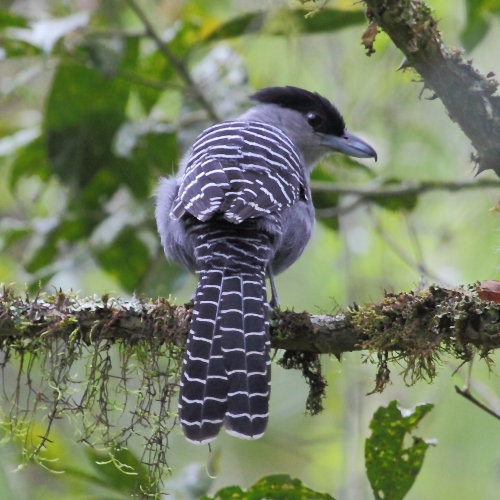
Klages's Antbird
Drymophila klagesi
Order: Passeriformes / Family: Thamnophilidae

Wikimedia Commons
About the Klages's Antbird
Klages's Antbird, scientifically referred to as Drymophila klagesi, belongs to the Thamnophilidae family and is a fascinating subject for ornithologists and birdwatchers alike. This species is endemic to the subtropical and tropical forests of northern South America, particularly thriving in the lush regions of Venezuela. These birds are primarily found in lower elevations, preferring the dense understory of humid forests where they can remain elusive and protected. Their preference for such environments makes them an important indicator of forest health and biodiversity. Klages's Antbird plays a crucial role in the ecosystem by controlling insect populations, thus maintaining a balance within the forest food web. Their activity peaks during the wet season when insects are abundant, aligning their breeding season with optimal food resource availability. The antbird's presence in these habitats highlights the intricate relationships within the forest ecosystem, making them a key species for ecological studies. Despite their tendency to remain hidden, these birds contribute significantly to the auditory landscape of their habitat with their vocalizations, often heard before seen. Conservationists emphasize the importance of preserving their natural habitats, as deforestation and habitat fragmentation pose significant threats. Conservation efforts focus on protecting these critical areas to ensure the survival of Klages's Antbird and the myriad of species that share its home.
The Klages's Antbird belongs to the family Thamnophilidae, within the order Passeriformes. These birds typically live typically 4-6 years, with some living up to 7 years..
How to Identify a Klages's Antbird
Klages's Antbird exhibits distinctive field marks that make identification possible for the keen observer. Adult plumage features a combination of black and white stripes on the head and back, with a contrasting chestnut belly and flanks. The males and females are similar in appearance, though males typically have more pronounced markings. Juveniles tend to be duller, with less contrast in their plumage, allowing them to blend into the forest understory more effectively. One may confuse Klages's Antbird with other species of antbirds, such as the Long-tailed Antbird, but differences in vocalizations and habitat preference can aid in accurate identification. In flight, Klages's Antbird displays a short, rounded silhouette with rapid wingbeats, though they are more often seen hopping through dense vegetation. When perching, they adopt an upright posture, occasionally flicking their tails. Such behavior, combined with their unique vocalizations, helps distinguish them from similar species in their range.
Having trouble telling birds apart? Upload a photo to our bird identification tool for an instant species match.
Klages's Antbird Habitat and Range
Preferred Habitat
Klages's Antbird inhabits the tropical and subtropical moist broadleaf forests of northern South America, favoring the dense undergrowth that provides both cover and abundant foraging opportunities. These birds are typically found at elevations ranging from sea level to 1,200 meters, although they are most common in the lowland forests of Venezuela. They exhibit a strong preference for undisturbed forest environments, making them less likely to be found in urban or heavily altered landscapes. During the wet season, Klages's Antbird may extend its range slightly into the forest edges, taking advantage of the increased insect activity. However, they largely remain within the protective cover of the forest interior throughout the year.
Geographic Range
The range of Klages's Antbird is primarily confined to the northern part of South America, with a significant concentration in the forests of Venezuela. Their distribution is patchy, reflecting the fragmented nature of their preferred habitats. The species is non-migratory, maintaining a relatively stable presence within its range year-round. However, local movements might occur in response to seasonal changes in food availability. While they are more common in Venezuela, they may occasionally be observed in neighboring regions where suitable habitat exists. Population density hotspots are typically found in areas with high forest integrity, underscoring the importance of habitat conservation in these regions.
Want to know which birds visit your area? Browse our backyard birds by location guides for region-specific species lists.
What Does the Klages's Antbird Eat?
Klages's Antbird primarily feeds on a diet of insects and other small arthropods, foraging actively within the dense forest undergrowth. Their diet includes ants, beetles, caterpillars, and spiders, which they capture by gleaning from leaves and bark. During the wet season, when insect populations surge, the antbird increases its foraging activity to take full advantage of the bounty. These birds employ a methodical foraging technique, often working in pairs or small family groups to cover more ground efficiently. They exhibit a preference for prey of manageable size, typically ranging from 5 to 15 millimeters, ensuring that their dietary needs are met without expending excessive energy. Their feeding schedule is aligned with the peak activity times of their prey, usually early in the morning and late in the afternoon, when the forest is alive with insect activity.
Klages's Antbird Behavior and Social Structure
Klages's Antbird is a socially complex species, often observed in pairs or tight-knit family groups. They establish and defend territories vigorously, using vocalizations as a primary means of communication. During the breeding season, males engage in elaborate courtship displays, involving song and visual displays to attract mates. Flocking behavior is rare outside of family groups, and these birds are typically seen foraging alone or with a few close companions. When faced with predators, Klages's Antbird exhibits a range of defensive behaviors, including remaining motionless to avoid detection or engaging in mobbing to deter threats. Daily activity patterns show a peak in the early morning and late afternoon, coinciding with cooler temperatures and higher prey availability.
Klages's Antbird Nesting and Reproduction
The nesting habits of Klages's Antbird reflect their adaptation to the dense forest environment. They construct cup-shaped nests using natural materials such as twigs, leaves, and moss, typically positioned low in the undergrowth or in small shrubs. Nest sites are selected with care to provide concealment from predators and shelter from the elements. A typical clutch consists of two to three eggs, which both parents incubate over a period of approximately 14 to 16 days. Once hatched, the chicks receive attentive care from both parents, who feed and protect them rigorously. The fledging period lasts about 10 to 12 days, after which the young birds continue to receive parental support until they become independent. Klages's Antbird often raises one brood per year, though favorable conditions may allow for a second.
Klages's Antbird Sounds and Vocalizations
The vocalizations of Klages's Antbird are a distinctive feature of the species, often serving as the first indication of their presence in dense forests. Their primary song is a rapid series of melodious whistles, each note rising in pitch, creating a lively and penetrating rhythm that resonates through the understory. In addition to their song, they produce a variety of call notes, including sharp chips and trills, used for communication between mates and family members. Alarm calls, characterized by a series of harsh, rapid notes, are employed to signal the presence of predators and to rally family members. During the dawn chorus, their vocalizations blend seamlessly into the symphony of the forest, contributing to the rich auditory tapestry of their habitat.
Interesting Facts About the Klages's Antbird
- 1Klages's Antbird was first described in the early 20th century, highlighting its relatively recent introduction to ornithological records.
- 2Unlike many bird species, Klages's Antbird does not migrate, making it a permanent resident of its forested range.
- 3The antbird's vocalizations can carry over considerable distances, often heard long before the bird itself is seen.
- 4Females of the species play an active role in territory defense, challenging intruders with vocalizations and displays.
- 5Klages's Antbird tends to avoid areas with heavy human activity, preferring the seclusion of pristine forest habitats.
- 6Their foraging technique, known as 'pecking and probing,' involves inspecting foliage and bark for hidden insects.
- 7The species' reliance on forest understory makes it particularly susceptible to changes in vegetation structure due to land use.
Klages's Antbird Conservation Status
Klages's Antbird currently holds a status of Least Concern according to the IUCN, though its population trends warrant careful monitoring. The primary threat to this species is habitat destruction due to logging and agricultural expansion, which leads to fragmentation of the forest landscapes they depend on. Conservation efforts focus on safeguarding these habitats through protected areas and sustainable land management practices. Historical population changes indicate that while the species is resilient, continuous habitat loss could pose significant risks. Efforts to preserve the biodiversity of the regions they inhabit are crucial to ensuring the long-term survival of Klages's Antbird and maintaining the ecological integrity of their environment.