
Large Niltava
Niltava grandis
Order: Passeriformes / Family: Muscicapidae

Wikimedia Commons
About the Large Niltava
The Large Niltava (Niltava grandis) is an exquisite member of the Muscicapidae family, celebrated for its vibrant coloration and melodious song. This bird inhabits the lush montane forests of Southeast Asia, thriving in the dense, humid environments of countries like India, Thailand, Vietnam, and Malaysia. The Large Niltava plays a significant ecological role as both a predator of insects and a disperser of seeds, maintaining the delicate balance of its forest ecosystem. Its presence indicates a healthy, biodiverse habitat, as it requires pristine conditions to survive. During the breeding season, which aligns with the onset of the monsoon, the Large Niltava's song becomes particularly prominent, as males sing to establish territory and attract mates. In the non-breeding season, it exhibits partial altitudinal migration, moving to lower elevations when food becomes scarce in its highland home. The bird's behavior is closely tied to the seasonal changes of its habitat, making it a fascinating study for ornithologists and naturalists alike. The Large Niltava is not just a visual spectacle but also a crucial component of its habitat, contributing to the health of the forest through its feeding and breeding activities. Its presence is a testament to the richness of Southeast Asian montane forests, where the interplay of flora and fauna creates a vibrant, living tapestry.
The Large Niltava belongs to the family Muscicapidae, within the order Passeriformes. These birds typically live typically 6-8 years, but can live longer in favorable conditions..
How to Identify a Large Niltava
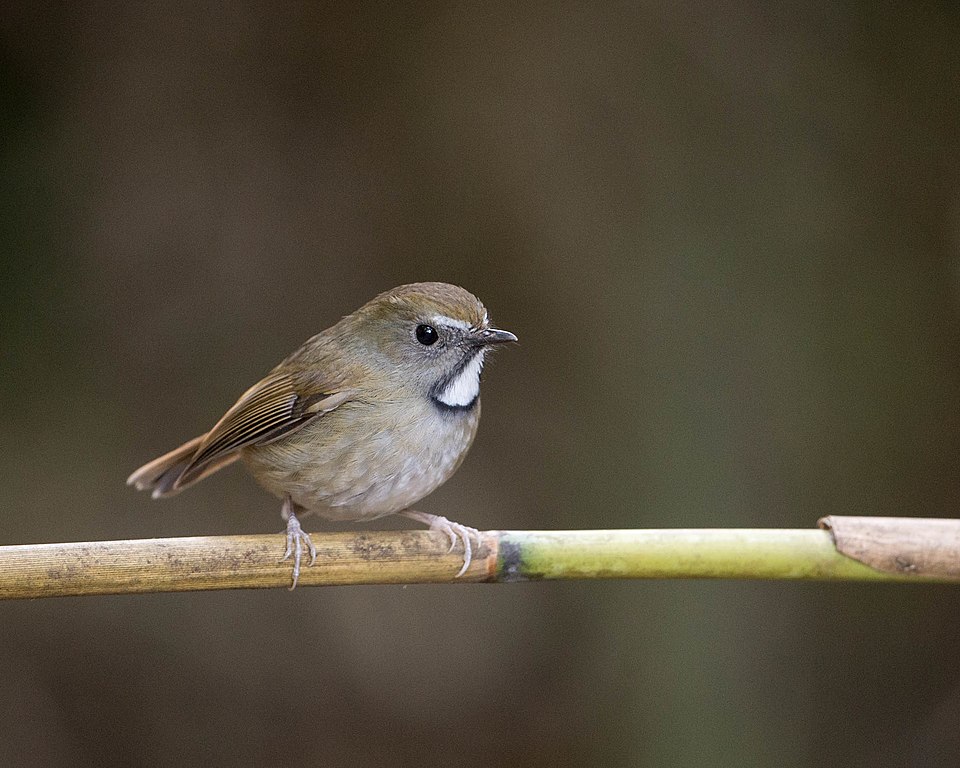
The Large Niltava is a medium-sized bird characterized by its striking coloration and distinct sexual dimorphism. Adult males are particularly eye-catching, with a brilliant cobalt blue head, nape, and upperparts that contrast with the black of their wings and tail. Their underparts are a bright azure blue, creating a vivid display in the dappled forest light. In contrast, females are more subdued in appearance, with olive-brown upperparts and a rufous-orange wash on their underparts, which can lead to confusion with other brown forest birds. Juveniles resemble females but have more mottling on their upperparts. In flight, the Large Niltava's silhouette is robust, with a short tail and broad wings that aid in its agile maneuvering through dense canopy. When perched, the bird holds a slightly upright posture, often flicking its tail and wings, a behavior that is also helpful in identification. Despite its distinctive appearance, it can be confused with the Blue-and-white Flycatcher or other sympatric niltavas, though its larger size and richer coloration typically aid in accurate identification.
Having trouble telling birds apart? Upload a photo to our bird identification tool for an instant species match.
Large Niltava Habitat and Range
Preferred Habitat
The Large Niltava predominantly inhabits montane evergreen forests, thriving at elevations ranging from 900 to 2500 meters. It is particularly common in the dense understory and mid-canopy layers, where it finds ample cover and feeding opportunities. These forests are characterized by high humidity and a complex structure of vegetation, providing an ideal environment for this bird's lifestyle. During the breeding season, the Large Niltava may favor higher elevations, moving slightly lower in elevation during the winter months as food availability decreases. While primarily a forest dweller, it occasionally ventures into secondary growth areas or forest edges, but it is rarely found in urban or highly disturbed habitats. Its reliance on pristine forest environments makes it less adaptable to habitat degradation compared to more generalist species.
Geographic Range
The Large Niltava's range extends across several Southeast Asian countries, including India, Nepal, Bhutan, Myanmar, Thailand, Vietnam, Laos, Cambodia, and Malaysia. It is most commonly found in the foothills of the Himalayas, stretching from the northeastern regions of India through to the northern parts of Southeast Asia. The bird is a resident species in these regions but exhibits some altitudinal migration, moving to lower elevations during the winter. Within its range, population densities are highest in areas of undisturbed forest, particularly within protected reserves and national parks. While generally not considered a long-distance migrant, the Large Niltava's altitudinal movements are sufficient to help it avoid the harshest seasonal conditions.
Want to know which birds visit your area? Browse our backyard birds by location guides for region-specific species lists.
What Does the Large Niltava Eat?
The diet of the Large Niltava primarily consists of insects and other small invertebrates, making it an important insectivore in its montane forest habitat. It feeds on a variety of arthropods, including beetles, caterpillars, and spiders, which it gleans from foliage and captures in mid-air sallies. During the breeding season, when the demand for protein-rich food is high, its diet shifts even more towards abundant insect prey. In the non-breeding season, when insects are less plentiful, the Large Niltava supplements its diet with small fruits and berries, thus playing a role in seed dispersal. Foraging typically occurs during daylight hours, with peak activity in the early morning and late afternoon when insect activity is highest. The bird's foraging technique is characterized by short, agile flights between perches, where it pauses to scan for prey before darting out to capture it.
Large Niltava Behavior and Social Structure
The Large Niltava exhibits a range of fascinating behaviors that reflect its adaptation to the montane forest environment. It is generally solitary or found in pairs, especially during the breeding season when males become highly territorial. Males engage in elaborate courtship displays, which involve singing from prominent perches and performing aerial maneuvers to attract mates. The song, a series of clear, melodious whistles, serves both as a mating call and a territorial proclamation. Outside of breeding season, the bird's territoriality decreases, and it may join mixed-species foraging flocks, although it remains less gregarious than some other forest species. The Large Niltava is primarily diurnal, with activity peaking during the cooler parts of the day. Its response to predators includes alarm calls and rapid, evasive flight to dense cover, where it relies on its camouflage to avoid detection.
Large Niltava Nesting and Reproduction
Nesting habits of the Large Niltava are intricately linked to its forest habitat. The female typically selects a nest site in a well-concealed location, often within a tree crevice or among dense foliage. The nest itself is a cup-shaped structure, constructed using moss, leaves, and fine roots, materials that blend seamlessly with the surrounding environment. A typical clutch consists of 2 to 4 eggs, which the female incubates for approximately 14 to 16 days. During this period, the male plays a supportive role, providing food to the female and guarding the nesting territory. Once hatched, the chicks remain in the nest for about 12 to 15 days before fledging. Both parents participate in feeding the young, with the male often taking a more active role as the chicks grow. The Large Niltava typically raises one or two broods per year, depending on environmental conditions and food availability.
Large Niltava Sounds and Vocalizations
The Large Niltava is known for its distinctive and melodious song, which consists of a series of clear, rich whistles that rise and fall in pitch. These whistles are often repeated in a rhythmic pattern, creating a song that is both soothing and complex. In addition to its primary song, the Large Niltava has a repertoire of call notes, including sharp 'chip' sounds that serve as contact calls between mates and family members. Its alarm calls are harsher and more rapid, designed to alert others of potential threats. During the dawn chorus, the Large Niltava's song stands out, often one of the first to be heard as the forest awakens. Its vocalizations are an integral part of its courtship and territorial behavior, providing both an auditory spectacle and a means of communication.
Interesting Facts About the Large Niltava
- 1The Large Niltava's vibrant blue coloration is due to structural coloration, not pigments.
- 2It can often be heard singing before dawn, making it one of the earliest risers in its habitat.
- 3The name 'niltava' is derived from the Hindi word 'niltav,' reflecting its striking blue color.
- 4During courtship, males may perform an aerial display involving rapid wing beats and acrobatics.
- 5Large Niltava pairs are monogamous, often maintaining pair bonds across multiple breeding seasons.
- 6Despite its size, the Large Niltava can be elusive, often heard more than seen in the dense forest.
- 7This bird's preference for pristine forest makes it an indicator species for habitat health.
Large Niltava Conservation Status
The Large Niltava is currently listed as a species of Least Concern by the IUCN, reflecting its relatively stable population across its range. However, this status belies the ongoing threats it faces from habitat loss and degradation. Rapid deforestation for agriculture and urban expansion in Southeast Asia poses a significant threat to its montane forest habitat. Conservation efforts focus on protecting forest reserves and promoting sustainable land use practices. Historical records suggest that while the Large Niltava's range has remained relatively stable, local population declines have occurred in areas where habitat destruction is most pronounced. Continued monitoring and habitat protection are essential to ensure the species' long-term survival.
Other Muscicapidae Species


Birds Similar to the Large Niltava
These species are often confused with the Large Niltava due to similar appearance or overlapping range.
