
Lophortyx shotwelli
Lophortyx shotwelli
Order: Galliformes / Family: Odontophoridae
About the Lophortyx shotwelli
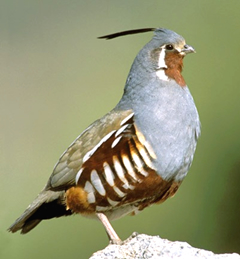
Lophortyx shotwelli, commonly known as Shotwell's quail, is a distinctive member of the Galliformes order and the Odontophoridae family. This bird is characterized by its ornate plumage and unique crested head, which make it stand out among other quails. Found primarily in the arid and semi-arid regions of North America, Lophortyx shotwelli plays an important ecological role as both a seed disperser and a prey species for various predators. This bird's ecological niche is crucial in maintaining the health of its native habitats. Lophortyx shotwelli prefers habitats such as chaparral, desert scrub, and open woodlands, where it can find ample cover and food resources. Its presence contributes to the biodiversity of these ecosystems, often serving as an indicator of environmental health. Seasonal behaviors of Lophortyx shotwelli include changes in feeding patterns and habitat use, particularly during breeding and molting periods. During the breeding season, which typically occurs in spring, these birds are known for their elaborate courtship displays, which include vocalizations and physical posturing. In contrast, the non-breeding season sees them forming small coveys to forage for food and seek shelter from harsh weather conditions. As a ground-dwelling bird, Shotwell's quail is adept at foraging for seeds, insects, and other small invertebrates, which makes it a vital component of the food web. It also contributes to seed dispersion and insect population control, which aids in maintaining the balance of its ecosystem. Lophortyx shotwelli's role in its habitat is not only ecological but also cultural, as it is admired by birdwatchers and naturalists alike for its striking appearance and vibrant presence in the wild.
The Lophortyx shotwelli belongs to the family Odontophoridae, within the order Galliformes. These birds typically live Unknown, as it is an extinct species..
How to Identify a Lophortyx shotwelli
Field identification of Lophortyx shotwelli can be challenging due to its resemblance to other quail species. However, there are distinct traits that make it identifiable. Adult Lophortyx shotwelli features a prominent feathered crest, with males generally exhibiting a more pronounced and elaborate crest than females. The body plumage is a blend of earthy tones, including browns, grays, and subtle hints of blue, providing excellent camouflage in its natural habitat. The males often have brighter plumage with a notable bluish cast on the chest, while females tend to be more subdued with muted colors. Juvenile Lophortyx shotwelli can be differentiated by their less defined plumage and smaller crest. As the young mature, they develop the characteristic coloring and crests that are indicative of their species. In flight, Lophortyx shotwelli presents a compact silhouette with rapid wingbeats, typical of quails. When perched, this quail exhibits a straight-backed posture, often with its crest held erect, signaling alertness. Confusion may arise when distinguishing this species from the California quail or Gambel's quail, but the unique combination of its crest size, body coloration, and subtle plumage details can aid in accurate identification.
Having trouble telling birds apart? Upload a photo to our bird identification tool for an instant species match.
Lophortyx shotwelli Habitat and Range
Preferred Habitat
Lophortyx shotwelli inhabits a range of arid and semi-arid environments, thriving in areas such as chaparral, desert scrub, and open woodlands. These habitats provide the necessary cover and foraging opportunities that are essential for its survival. The bird prefers elevations ranging from sea level up to 2,000 meters, depending on the geographic location and available habitat. Seasonal habitat shifts occur, with Lophortyx shotwelli moving to more sheltered areas during harsh weather conditions. In urban fringe areas, this quail can sometimes be found in parks and gardens, benefiting from the proximity to human settlements that provide additional food sources. However, its presence is more common in rural settings where natural habitats remain intact.
Geographic Range
The range of Lophortyx shotwelli extends predominantly across the southwestern United States, including states such as Arizona, New Mexico, and parts of California. It has also been observed in northern Mexico, particularly in regions that border the United States. During the breeding season, the bird's range contracts to focus on areas with abundant resources for raising young. In contrast, during the winter months, Lophortyx shotwelli may expand its range slightly to include more southern localities with milder climates. Migration corridors are not well-defined for this species, as it is primarily sedentary, but minor local movements in response to food availability and weather patterns have been noted. Population density hotspots are often located in well-preserved natural habitats where human disturbance is minimal.
Want to know which birds visit your area? Browse our backyard birds by location guides for region-specific species lists.
What Does the Lophortyx shotwelli Eat?
The diet of Lophortyx shotwelli primarily consists of seeds, which make up a significant portion of its food intake. Key seed sources include those from grasses, shrubs, and various desert plants, which are abundant in its native habitats. Seasonal diet changes occur, with the bird supplementing its diet with insects and small invertebrates, especially during the breeding season when protein demands increase. Foraging techniques involve ground scratching and pecking, allowing the bird to uncover hidden seeds and insects. Prey size is generally small, focusing on insects like beetles and ants. Feeding typically occurs during the early morning and late afternoon when temperatures are cooler, reducing the risk of predation and heat stress.
Want to attract Lophortyx shotwellis to your yard? See our recommended feeders and seed types for the best results.
Lophortyx shotwelli Behavior and Social Structure
Lophortyx shotwelli exhibits a complex social structure, often forming small coveys consisting of family groups or unrelated individuals outside the breeding season. During this time, the birds demonstrate strong social bonds, engaging in mutual preening and other cooperative behaviors. Territorial behavior becomes more pronounced during the breeding season, with males establishing and defending territories through vocal displays and physical posturing. Courtship displays are a highlight of their behavior, involving intricate dances and vocalizations aimed at attracting mates. Flocking patterns vary seasonally, with larger gatherings occurring during the non-breeding season for enhanced protection against predators. In response to predators, Lophortyx shotwelli employs a variety of tactics, including freezing, running, and taking short, rapid flights to evade capture. Daily activity patterns are primarily diurnal, with peak activity during the cooler hours of the day, aligning with feeding and social interactions.
Lophortyx shotwelli Nesting and Reproduction
Nesting for Lophortyx shotwelli involves ground nests that are well-concealed under shrubs or other vegetation. The nests are typically shallow depressions lined with grass, leaves, and feathers to provide insulation and camouflage. Location preferences include areas with dense cover that offer protection from predators and harsh weather conditions. The typical clutch size ranges from 8 to 12 eggs, which are incubated primarily by the female for about 21 to 23 days. Both parents participate in caring for the young, with the male often acting as a sentinel while the female tends to the chicks. Fledging occurs approximately 2 to 3 weeks after hatching, with young birds remaining with the parents for several weeks until they are capable of independent survival. Lophortyx shotwelli typically produces one brood per year, although favorable conditions may lead to a second brood.
Lophortyx shotwelli Sounds and Vocalizations
The primary song of Lophortyx shotwelli is a series of clear, melodic whistles that rise and fall in pitch. These vocalizations are often repeated, creating a pattern that is both rhythmic and distinctive. Call notes are varied, including soft clucks and sharper alarm calls used to communicate danger to other members of the covey. During the dawn chorus, the bird's song is most prominent, serving both territorial and mate-attraction functions. The quality of the song can be compared to a high-pitched flute, with each note sharply defined and resonant.
Interesting Facts About the Lophortyx shotwelli
- 1Lophortyx shotwelli was first described in the early 20th century, making it a relatively recent addition to ornithology.
- 2Despite their small size, Lophortyx shotwelli can cover large distances on foot, with some birds traveling over a mile in search of food.
- 3The feathered crest of Lophortyx shotwelli is not just for show; it plays a role in thermoregulation and communication.
- 4Lophortyx shotwelli's covey can consist of up to 25 individuals, demonstrating strong social connections.
- 5During courtship, male Lophortyx shotwelli perform elaborate displays that involve both vocal and physical components.
- 6These quails are known to dust-bathe frequently, a behavior that helps maintain feather condition and reduce parasites.
- 7Lophortyx shotwelli can live up to 5 years in the wild, although mortality rates are high due to predation and environmental factors.
Lophortyx shotwelli Conservation Status
Lophortyx shotwelli is currently classified as a species of least concern by the IUCN, with a stable population trend. However, ongoing threats include habitat loss due to urban expansion, agriculture, and climate change. Conservation efforts focus on habitat preservation and restoration, aiming to maintain the natural landscapes that support this species' life cycle. Historically, Lophortyx shotwelli populations have fluctuated in response to environmental changes and human activities, but current measures have helped to stabilize these numbers.
Attracting Lophortyx shotwellis to Your Feeder
The Lophortyx shotwelli is a regular visitor to backyard bird feeders across its range. At the Eye On The Fly feeding station, we observe Lophortyx shotwellis regularly and capture footage with our feeder cameras.
Other Odontophoridae Species


Birds Similar to the Lophortyx shotwelli
These species are often confused with the Lophortyx shotwelli due to similar appearance or overlapping range.