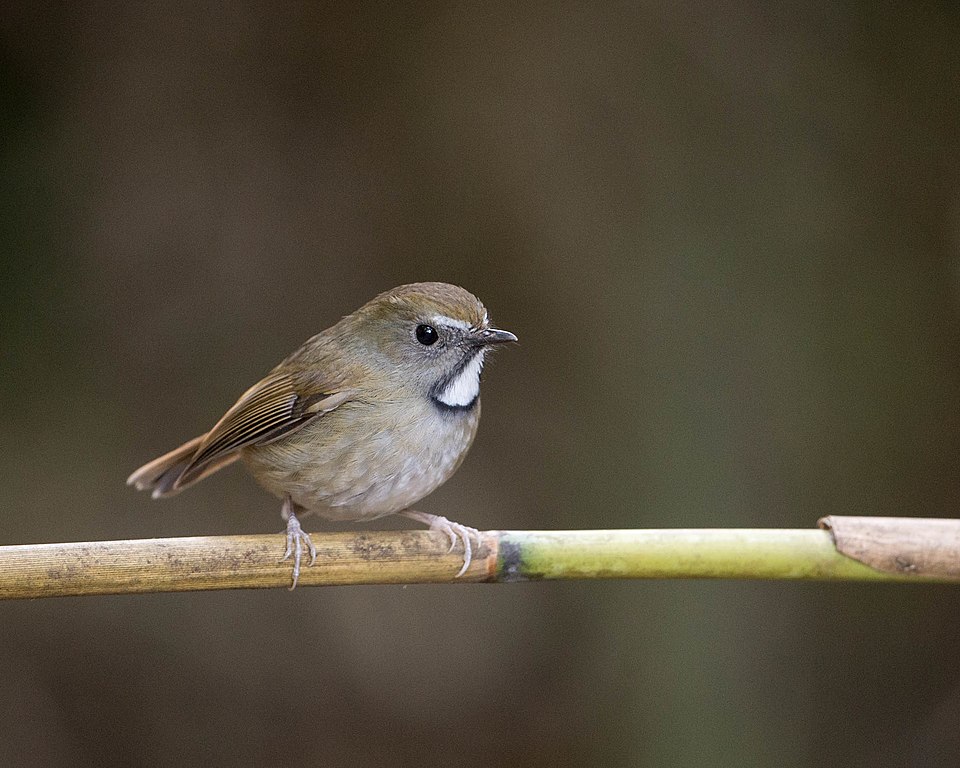
Madagascar Stonechat
Saxicola sibilla
Order: Passeriformes / Family: Muscicapidae

Wikimedia Commons
About the Madagascar Stonechat
The Madagascar Stonechat, scientifically known as Saxicola sibilla, is a captivating small songbird native to the island of Madagascar. This species is part of the Muscicapidae family and represents a unique element of Madagascar's avifauna. The stonechat plays a significant ecological role as an insectivore, helping to control insect populations across its habitats. Found primarily in open landscapes, it thrives in areas such as grasslands, shrublands, and agricultural fields. Unlike many other species native to Madagascar, the Madagascar Stonechat does not face immediate threats from habitat loss due to its adaptability to altered landscapes. Seasonal behaviors of the Madagascar Stonechat include breeding activities during Madagascar’s austral summer, from September to March. During this time, the males become particularly vocal and active, establishing and defending territories. This period coincides with the rainy season, ensuring an abundance of food resources for raising young. Their adaptability allows them to exploit a variety of ecological niches, ranging from coastal areas to highland regions, thereby maintaining stable populations in various parts of Madagascar. The Madagascar Stonechat is an important species for ecological studies, as its presence can indicate the health of open habitats. Furthermore, it serves as an important pollinator and seed disperser, inadvertently supporting plant biodiversity. As a resident species, it contributes to the island's year-round avian population dynamics. The stonechat’s interactions with other wildlife and its response to environmental changes provide valuable insights into the ecological balance and conservation needs of Madagascar’s diverse environments.
The Madagascar Stonechat belongs to the family Muscicapidae, within the order Passeriformes. These birds typically live around 2-4 years, with little data on maximum age..
How to Identify a Madagascar Stonechat
The Madagascar Stonechat is a small bird, measuring approximately 13-15 cm in length. Adult males are easily identifiable by their striking contrast of black head, nape, and throat against a bright white neck patch and underparts. The back and wings are a rich, dark brown, providing a subtle contrast to the more vivid white and black features. Females exhibit a more muted color palette, with brown replacing the male's black, and a buff-colored breast and flanks. Juveniles resemble females but have mottled patterns on the upperparts, aiding in camouflage. One may confuse the Madagascar Stonechat with the African Stonechat, a close relative found in mainland Africa. However, the Madagascar species can be distinguished by its more pronounced white neck patch and geographical isolation. In flight, the bird's silhouette is compact, with rounded wings and a short tail, which it frequently flicks while perching. Its posture is upright, often seen perched conspicuously on fences, shrubs, or small trees, surveying its territory for insects.
Having trouble telling birds apart? Upload a photo to our bird identification tool for an instant species match.
Madagascar Stonechat Habitat and Range
Preferred Habitat
The Madagascar Stonechat inhabits a variety of open environments, including grasslands, agricultural fields, and shrublands. It is found from sea level up to elevations of about 2,000 meters, adapting well to both lowland and montane regions. During the breeding season, they prefer areas with scattered shrubs or bushes, which provide suitable perching and nesting sites. Unlike some Madagascan species, the stonechat can also be found in modified landscapes, such as pastures and edges of cultivated lands, demonstrating its adaptability. Although it is not common in dense forests, it may occasionally be spotted along forest edges or clearings, especially where open grassland merges with woodland.
Geographic Range
The Madagascar Stonechat is endemic to Madagascar, meaning it is not naturally found outside the island. Its range covers most of the island, with higher densities in areas offering suitable open habitats. This includes the central highlands and the coastal regions, where populations are sustained by the availability of open terrain. The species does not undertake long migrations, but rather exhibits local movements in response to environmental conditions such as food availability and breeding sites. Population densities are generally higher in regions with abundant insect prey and suitable nesting sites, such as the grasslands around Antananarivo and the open areas of the western and southern parts of the island.
Want to know which birds visit your area? Browse our backyard birds by location guides for region-specific species lists.
What Does the Madagascar Stonechat Eat?
The Madagascar Stonechat primarily feeds on insects, making it an important biological control agent for pest populations. Its diet includes a wide variety of arthropods such as beetles, caterpillars, and grasshoppers. The bird employs a sit-and-wait strategy, often perching on a vantage point to spot potential prey before swooping down to capture it. During the breeding season, the demand for food increases, and stonechats might expand their diet to include small fruits and seeds. These additional food sources provide necessary energy and nutrients for both adults and growing chicks. Feeding activity peaks during the early morning and late afternoon, coinciding with increased insect activity.
Madagascar Stonechat Behavior and Social Structure
The Madagascar Stonechat is a territorial bird, with males establishing and defending their territories through vocalizations and displays. Courtship involves the male performing display flights and singing to attract a mate. Once paired, the monogamous relationship often lasts for the breeding season, if not longer. Stonechats are generally solitary or found in pairs, though outside the breeding season, they may form loose associations in areas with high food availability. Their response to predators includes alarm calls and evasive flight patterns. Daily activity follows a pattern of active foraging in the cooler hours of the morning and late afternoon, with midday spent resting or preening.
Madagascar Stonechat Nesting and Reproduction
The nest of the Madagascar Stonechat is typically a cup-shaped structure built close to the ground in dense grass or low shrubs. Constructed by the female, the nest is made from a variety of materials including grass, roots, and leaves, lined with softer materials such as feathers or animal hair. A typical clutch consists of two to four eggs, which the female incubates over approximately two weeks. Both parents participate in feeding the chicks, which fledge about two weeks post-hatching. The stonechat may raise two broods in a single breeding season, given favorable conditions and abundant food supply.
Madagascar Stonechat Sounds and Vocalizations
The primary song of the Madagascar Stonechat is a series of clear, melodic whistles and musical phrases, often delivered from a prominent perch. Its song serves both to attract mates and to defend territory from rivals. Call notes include sharp, metallic 'chak' sounds, used for communication between mates and as alarms when potential threats approach. The dawn chorus is particularly vibrant during the breeding season, with males singing actively at first light to establish their presence and readiness to breed.
Interesting Facts About the Madagascar Stonechat
- 1The Madagascar Stonechat is one of several stonechat species, each adapted to its respective environment, showcasing remarkable evolutionary divergence.
- 2Despite being a small bird, the Madagascar Stonechat can cover territories up to 2 hectares, which it actively defends against intruders.
- 3Stonechats are known for their characteristic tail-flicking behavior, which serves as a visual signal in addition to their vocalizations.
- 4The Madagascar Stonechat has adapted to a wide elevation range, from sea level to 2,000 meters, showcasing its ecological versatility.
- 5During courtship, males perform a dramatic display flight, involving aerial acrobatics and singing to attract females.
- 6The species' adaptability to human-altered landscapes has been crucial to its survival amidst growing agricultural expansion.
- 7The Madagascar Stonechat's song is often described as a 'tinkling' sound, reminiscent of glass wind chimes.
Madagascar Stonechat Conservation Status
The Madagascar Stonechat currently holds a status of Least Concern on the IUCN Red List. Its population trend appears stable, supported by its adaptability to various open habitats and modified landscapes. Primary threats include habitat degradation due to agriculture and fire, but the bird's resilience has helped it maintain healthy populations. Conservation efforts focus on habitat preservation and monitoring population dynamics, ensuring that this endemic species continues to thrive in its native range.