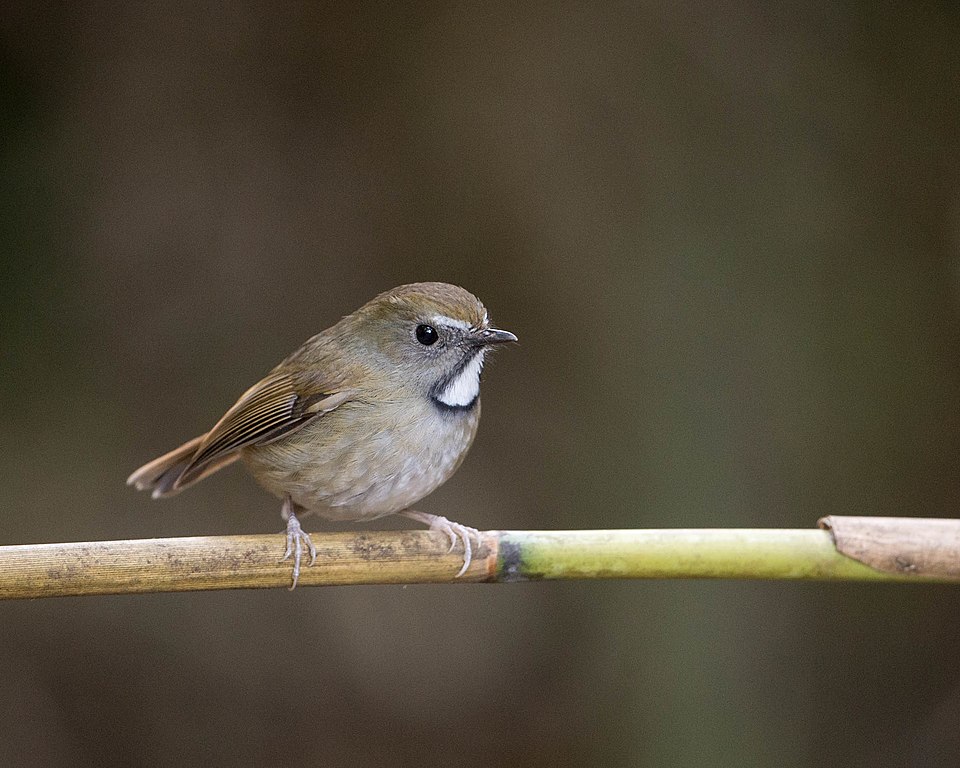
Malayan Whistling-Thrush
Myophonus robinsoni
Order: Passeriformes / Family: Muscicapidae

Wikimedia Commons
About the Malayan Whistling-Thrush
The Malayan Whistling-Thrush (Myophonus robinsoni) is a captivating songbird belonging to the family Muscicapidae. Endemic to the Malay Peninsula, this bird is predominantly found in the dense, humid montane forests of Malaysia. It plays a crucial role in the ecosystem as both a predator and a seed disperser, contributing to the health and regeneration of its forest habitat. The bird's striking appearance and melodious song make it a subject of interest among ornithologists and bird enthusiasts alike. The Malayan Whistling-Thrush is adapted to life in the understory of forests, favoring elevations ranging from 1,000 to 2,000 meters. It is most commonly observed in areas such as the Cameron Highlands and Fraser's Hill, where the environment remains cool and moist throughout the year. This thrush is a resident bird, meaning it does not migrate, but it may exhibit some altitudinal movement in response to seasonal changes in food availability. During the breeding season, which typically occurs from March to August, the Malayan Whistling-Thrush becomes more vocal and territorial, using its song to establish dominance and attract mates. Its presence is a reliable indicator of forest health, as it requires large tracts of unspoiled habitat to thrive. Conservation efforts are essential to ensure the survival of this species, as deforestation and habitat fragmentation pose significant threats to its population. Furthermore, the bird's sensitivity to environmental changes makes it an important bioindicator for researchers studying the impacts of human activity on tropical forest ecosystems.
The Malayan Whistling-Thrush belongs to the family Muscicapidae, within the order Passeriformes. These birds typically live average 5-8 years with a maximum recorded of 10 years..
How to Identify a Malayan Whistling-Thrush
Adult Malayan Whistling-Thrushes possess a glossy, iridescent blue-black plumage that reflects light, giving them a shimmering appearance. The head, back, and wings are a deep blue, while the chest and belly transition to a darker, almost black hue. Juveniles, in contrast, display a more subdued brownish plumage with lighter speckling, gradually acquiring the adult coloration as they mature. Both males and females share similar plumage, making it challenging to differentiate them by sight alone. When observed in the field, the Malayan Whistling-Thrush can be confused with other Myophonus species, but its distinct habitat and vocalizations often aid in correct identification. In flight, the bird exhibits a robust silhouette with broad wings and a relatively short tail, characteristic of thrushes adapted to forest life. On the perch, it adopts a vigilant posture, frequently flicking its wings and tail as it surveys its surroundings.
Having trouble telling birds apart? Upload a photo to our bird identification tool for an instant species match.
Malayan Whistling-Thrush Habitat and Range
Preferred Habitat
The Malayan Whistling-Thrush thrives in montane forests, preferring cool, humid environments with dense undergrowth. It is typically found at elevations ranging from 1,000 to 2,000 meters, where it inhabits areas with abundant leaf litter and rich, moist soil. Prime examples of its habitat include the Cameron Highlands and Fraser's Hill, regions known for their extensive forest cover and biodiversity. Unlike some other bird species, the Malayan Whistling-Thrush shows a marked preference for undisturbed forest interiors, rarely venturing into open or urban areas. This reliance on pristine forest ecosystems makes the species particularly vulnerable to deforestation and habitat degradation. Seasonal changes may prompt slight altitudinal movements within its range as the bird seeks optimal conditions for foraging and breeding.
Geographic Range
The Malayan Whistling-Thrush is endemic to the Malay Peninsula, with its range confined to the montane regions of Malaysia. It is predominantly found in the central highlands, specifically in areas like the Cameron Highlands, Fraser's Hill, and Genting Highlands. Unlike many migratory thrush species, the Malayan Whistling-Thrush is a resident bird, spending its entire life cycle within these forested areas. Its distribution is limited by both altitude and habitat quality, as the species requires large tracts of undisturbed montane forest to maintain viable populations. While it does not undertake long migrations, it may move vertically along mountain slopes in response to seasonal variations in temperature and food availability. Despite its relatively restricted range, the Malayan Whistling-Thrush can be locally abundant in suitable habitats, forming population density hotspots in well-preserved forest areas.
Want to know which birds visit your area? Browse our backyard birds by location guides for region-specific species lists.
What Does the Malayan Whistling-Thrush Eat?
The diet of the Malayan Whistling-Thrush consists primarily of invertebrates, with a strong preference for insects such as beetles, ants, and caterpillars. The bird forages by meticulously turning over leaf litter on the forest floor, using its keen eyesight to spot and capture prey. During the wetter months, its diet may expand to include small amphibians and snails, which become more accessible in the moist environment. Additionally, the thrush occasionally consumes berries and seeds, playing a role in the dispersal of plant species within its habitat. Its feeding schedule is typically crepuscular, with increased activity during the early morning and late afternoon when insects are most active. This opportunistic foraging behavior allows the Malayan Whistling-Thrush to exploit a variety of food sources, ensuring its survival in the dynamic forest ecosystem.
Malayan Whistling-Thrush Behavior and Social Structure
The Malayan Whistling-Thrush is a solitary and territorial bird, often observed alone or in pairs rather than large flocks. It establishes and defends its territory through vocalizations and physical displays, particularly during the breeding season when competition for mates is intense. The bird's courtship display involves a series of bowing motions and wing flicks, accompanied by a distinctive whistling song that resonates through the forest. Its vocalizations serve multiple purposes, including mate attraction, territory defense, and communication with potential rivals. Despite its generally solitary nature, the Malayan Whistling-Thrush may form loose associations with other forest birds during foraging, capitalizing on flock dynamics to increase its feeding efficiency. When faced with predators, it exhibits a combination of stealth and agility, using the dense undergrowth for cover while emitting alarm calls to warn other birds of potential danger. This cautious behavior is indicative of its adaptability and survival instincts in the challenging montane forest environment.
Malayan Whistling-Thrush Nesting and Reproduction
The Malayan Whistling-Thrush constructs cup-shaped nests, using a variety of materials gathered from its forest surroundings. Preferred nesting sites include well-concealed locations in dense vegetation or small tree cavities, providing protection from predators and the elements. The female typically lays a clutch of two to three eggs, with both parents sharing incubation duties over a period of approximately two weeks. Once hatched, the nestlings are altricial, requiring constant care and feeding from the parents. The fledging period lasts around 14 to 16 days, during which the young birds develop rapidly, gaining the strength and skills necessary for independent survival. Parental roles are well-defined, with both males and females participating in feeding and guarding the nestlings. The Malayan Whistling-Thrush generally raises one to two broods per year, depending on environmental conditions and food availability.
Malayan Whistling-Thrush Sounds and Vocalizations
The primary song of the Malayan Whistling-Thrush is a series of clear, melodious whistles, characterized by a rhythmic pattern and varied pitch. These whistles often echo through the forest, serving as both a territorial signal and a means of attracting mates. In addition to its signature song, the bird produces a range of call notes, including sharp alarm calls that alert other species to potential threats. During the dawn chorus, its song stands out for its clarity and melodic quality, often initiating the morning symphony of forest sounds. The song is somewhat reminiscent of a flute, with a purity and tonal quality that distinguishes it from the harsher calls of other forest birds.
Interesting Facts About the Malayan Whistling-Thrush
- 1The Malayan Whistling-Thrush is named after ornithologist Herbert Christopher Robinson, who described the species in the early 20th century.
- 2This bird's iridescent plumage can appear almost black in low light, but it shines with a blue hue when caught in the sunlight.
- 3The Malayan Whistling-Thrush is a non-migratory resident of the Malay Peninsula, rarely venturing far from its montane forest home.
- 4Despite its striking appearance, the Malayan Whistling-Thrush is often heard before it is seen due to its elusive nature.
- 5The Malayan Whistling-Thrush uses its melodious song to establish territory and attract mates during the breeding season.
- 6Its diet shift from insects to berries during certain seasons demonstrates the bird's adaptability to changing food resources.
- 7The thrush's ability to thrive in well-preserved forests makes it an important indicator of forest ecosystem health.
Malayan Whistling-Thrush Conservation Status
The Malayan Whistling-Thrush is currently listed as Near Threatened on the IUCN Red List, with its population trend showing signs of decline due to habitat loss. Deforestation and fragmentation of montane forests pose the most significant threats to its survival, as these birds require large, unbroken tracts of habitat for breeding and foraging. Conservation efforts are focused on protecting existing forest reserves and promoting reforestation in degraded areas. Historical population data indicates that the bird's numbers have decreased in tandem with the loss of suitable habitat, underscoring the need for continued conservation initiatives. Collaborative efforts between governmental and non-governmental organizations aim to secure the future of this species by implementing sustainable land management practices and raising awareness of its ecological importance.