
Marmora's Warbler
Sylvia sarda
Order: Passeriformes / Family: Sylviidae

Wikimedia Commons
About the Marmora's Warbler
Marmora's Warbler (Sylvia sarda) is a small passerine bird that belongs to the Sylviidae family. This species is predominantly found in the Mediterranean region, particularly on islands such as Sardinia and Corsica. Characterized by its subtle beauty, the Marmora's Warbler exhibits a slate-gray plumage, which provides excellent camouflage against the rocky, scrub-covered landscapes it inhabits. The bird is notable for its melodious song, which can often be heard during the breeding season as males establish territories and attract mates.
The significance of Marmora's Warbler extends beyond its visual appeal. As an indicator species, its presence reflects the health of the Mediterranean scrub habitats. This songbird plays a crucial ecological role by participating in the control of insect populations, thereby maintaining the balance within its ecosystem. Marmora's Warbler is also an integral part of the Mediterranean avifauna, contributing to the region's rich biodiversity.
Seasonally, Marmora's Warbler displays varied behaviors that align with its life cycle. During the spring and early summer, it engages in breeding activities, with males singing vigorously to defend territories. As summer wanes and autumn approaches, their behavior shifts from territoriality to a more solitary or pair-bonded existence. This seasonal transition is vital for their survival and reproductive success. As winter sets in, Marmora's Warblers may exhibit altitudinal migration, descending to lower elevations in search of milder climates.
Their ecological role highlights the interconnectedness of species within Mediterranean ecosystems. Marmora's Warbler contributes to seed dispersion and aids in maintaining the structural integrity of the scrublands. Thus, preserving this species is not only critical for its own survival but also for the broader ecological community it supports.
The Marmora's Warbler belongs to the family Sylviidae, within the order Passeriformes. These birds typically live average 4-6 years with a max recorded of 9 years..
How to Identify a Marmora's Warbler
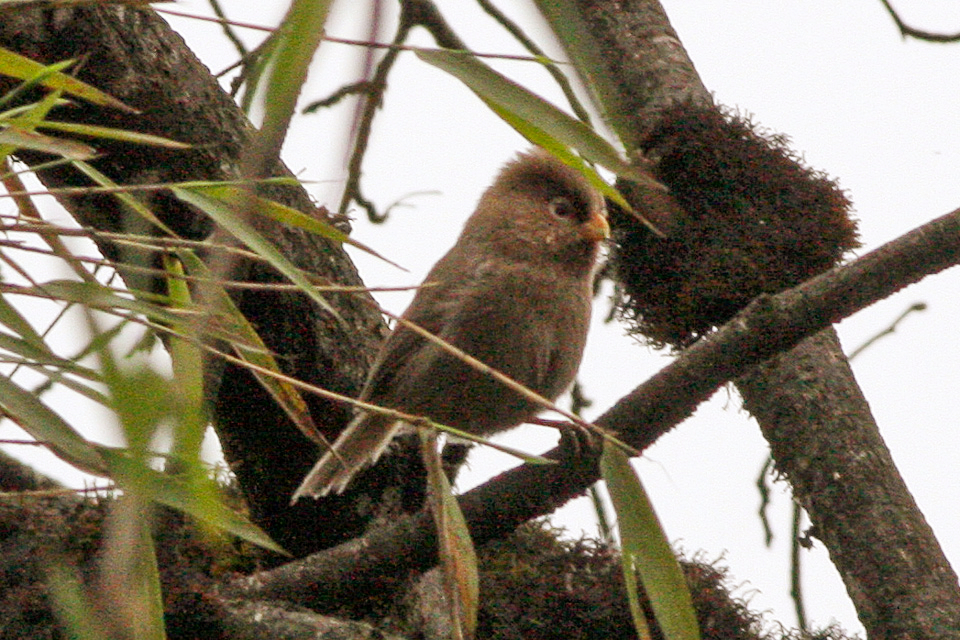
Marmora's Warbler is a small bird, measuring around 13 to 14 cm in length, with a wingspan of 18 to 20 cm. The adult male boasts a slate-gray plumage, which lends the bird a rather understated elegance. The head and upperparts are uniformly gray, contrasted by a slightly lighter throat and breast. Males possess a striking red eye-ring, which stands out against their muted tones. In contrast, females and juveniles tend to have a browner hue, with less pronounced eye-rings.
Juvenile Marmora's Warblers can be distinguished by their more subdued coloration, which lacks the distinct slate-gray of adult males. Instead, they present a mix of gray and brown plumage, providing effective camouflage among the Mediterranean scrub. Both sexes display a faint whitish mustache stripe, which can be a useful identification feature in the field.
In terms of similar species, the Dartford Warbler (Sylvia undata) might cause some confusion. However, the Dartford Warbler has a more pronounced reddish hue to its underparts and lacks the uniform gray seen in Marmora's Warbler. When in flight, Marmora's Warbler presents a compact silhouette, often described as 'loose' due to its relatively long tail and rounded wings. It perches with an upright posture, often flitting about energetically among low shrubs.
Having trouble telling birds apart? Upload a photo to our bird identification tool for an instant species match.
Marmora's Warbler Habitat and Range
Preferred Habitat
Marmora's Warbler is primarily associated with Mediterranean scrub habitats, often referred to as 'maquis.' These areas are characterized by dense, low-growing vegetation, including heather, gorse, and juniper. The bird thrives in these environments, which provide ample cover and foraging opportunities. Typically, Marmora's Warbler occupies elevations ranging from sea level to about 1,500 meters, though it favors lower altitudes during the colder months.
This species shows a preference for open areas interspersed with rocky outcrops, where it can forage and nest. Seasonal habitat shifts do occur, with some individuals moving to more sheltered valleys and lower elevations during winter to escape harsher weather conditions. Unlike some urban-adapted warblers, Marmora's Warbler is rarely found in urban environments, preferring the tranquility and resources of rural landscapes.
The bird's reliance on specific habitats underscores the importance of conservation efforts aimed at preserving Mediterranean scrublands. Such efforts not only benefit Marmora's Warbler but also a host of other species that depend on this unique ecological niche.
Geographic Range
The breeding range of Marmora's Warbler is largely confined to the western Mediterranean, with significant populations on the islands of Sardinia, Corsica, and to a lesser extent, the Balearic Islands. These islands provide ideal breeding grounds, with their abundant scrub habitats and mild climates. Outside the breeding season, some populations migrate short distances, while others remain relatively sedentary, making altitudinal movements to find suitable winter habitats.
In terms of migration, Marmora's Warbler does not undertake extensive journeys like some other warblers. Instead, it exhibits partial migratory behavior, with some populations moving to coastal areas or lower elevations during winter. This limited migration is primarily driven by the availability of food resources and the need for milder winter conditions.
Although the bird is not widespread across mainland Europe, isolated sightings have been reported along the Mediterranean coast of France and Italy. These occurrences are usually attributed to dispersal or vagrancy rather than established populations. Overall, Sardinia and Corsica remain the strongholds for Marmora's Warbler, where their population densities are the highest.
Want to know which birds visit your area? Browse our backyard birds by location guides for region-specific species lists.
What Does the Marmora's Warbler Eat?
Marmora's Warbler primarily feeds on insects and other invertebrates, which constitute the bulk of its diet. During the breeding season, the bird actively forages for caterpillars, beetles, and spiders, which provide the necessary protein for raising young. It employs a variety of foraging techniques, including gleaning insects from foliage and capturing prey mid-air with agile flights.
As seasons change, Marmora's Warbler exhibits dietary flexibility, incorporating a greater proportion of berries and seeds into its diet during the autumn and winter months. This shift helps sustain the bird when insect populations decline. The warbler is known for its methodical foraging behavior, often flitting from branch to branch, meticulously searching for food.
Prey size varies, but Marmora's Warbler typically targets small to medium-sized insects, which it can easily handle. Feeding generally occurs during daylight hours, with peaks in activity during the early morning and late afternoon, coinciding with periods of higher insect activity. This schedule ensures the bird maximizes its energy intake while minimizing competition with other insectivores.
Marmora's Warbler Behavior and Social Structure
Marmora's Warbler exhibits a complex social structure, with solitary or pair-bonded individuals during the breeding season. Males establish and defend territories through vocal displays and physical presence, often engaging in song duels with neighboring males. These territorial behaviors are crucial for attracting mates and ensuring sufficient resources for raising young.
Courtship displays involve a variety of behaviors, including aerial chases, wing-fluttering, and synchronized singing between pairs. Once formed, pairs exhibit strong bonds, collaborating closely in nest-building and chick-rearing activities.
Outside the breeding season, Marmora's Warbler tends to be less territorial, with some individuals forming loose flocks. These flocks provide safety in numbers, reducing the risk of predation. In response to predators, Marmora's Warbler employs both vocal alarms and evasive maneuvers, often diving into dense cover to escape.
Daily activity patterns of Marmora's Warbler are influenced by environmental conditions and food availability. The bird is most active during the early morning and late afternoon, avoiding the midday heat. This behavior aligns with the activity patterns of its prey, ensuring efficient foraging.
Marmora's Warbler Nesting and Reproduction
Marmora's Warbler constructs its nests in low shrubs, often choosing dense, thorny vegetation for added protection against predators. The nest is cup-shaped and composed of grasses, twigs, and fine roots, lined with softer materials like feathers and animal hair to provide insulation and comfort for the eggs and chicks.
The typical clutch size ranges from 3 to 5 eggs, with incubation duties primarily falling to the female. The incubation period lasts around 12 to 14 days, during which time the male may assist by providing food to the female. Once hatched, chicks are altricial, requiring considerable parental care. Both parents participate in feeding the young, delivering a steady supply of insects to the nest.
Fledging occurs approximately 10 to 12 days after hatching, but young birds remain dependent on their parents for several weeks as they develop flight skills and learn to forage independently. Marmora's Warbler typically raises one to two broods per year, depending on environmental conditions and food availability.
Marmora's Warbler Sounds and Vocalizations
The primary song of Marmora's Warbler is a fast-paced, melodious warble composed of a series of varied, liquid notes. This song serves as both a territorial marker and a courtship display, often delivered from an exposed perch or in flight. The rhythm of the song is lively, with a distinctive musical quality that can be likened to a continuous, bubbling stream.
In addition to its song, Marmora's Warbler produces a range of call notes, including sharp 'tchack' sounds used as contact calls between mates or to alert others to potential threats. Alarm calls are more urgent, with a rapid, repetitive quality designed to warn of predators.
During the dawn chorus, males are particularly vocal, with their songs resonating through the scrub as they establish their territories. The vocalizations of Marmora's Warbler are a defining feature, easily distinguishing it from other warbler species within its range.
Interesting Facts About the Marmora's Warbler
- 1Marmora's Warbler is named after an Italian naturalist, Alberto della Marmora, who documented Sardinian wildlife in the 19th century.
- 2Despite its limited range, Marmora's Warbler can be surprisingly elusive, often remaining hidden within dense vegetation.
- 3The bird's song is an important identification tool, as its visual appearance can easily blend into the Mediterranean scrub.
- 4Marmora's Warbler is predominantly sedentary, with only some populations exhibiting partial migratory behavior.
- 5During the breeding season, Marmora's Warbler males can spend hours singing to establish and defend their territories.
- 6The warbler's slate-gray plumage provides excellent camouflage, making it a challenge to spot even for experienced birders.
- 7Marmora's Warbler plays a critical role in controlling insect populations within its habitat, contributing to the ecosystem's health.
Marmora's Warbler Conservation Status
Marmora's Warbler is currently classified as Least Concern by the IUCN, reflecting a stable global population trend. However, localized threats persist, primarily due to habitat loss and degradation. The conversion of Mediterranean scrublands to agriculture, urban development, and tourism infrastructure pose significant challenges to the species' long-term survival. Conservation efforts focus on habitat protection and management, ensuring that key breeding and foraging areas remain intact. In some regions, initiatives to restore degraded habitats have been implemented, providing additional support for Marmora's Warbler populations. Historically, the species has experienced fluctuations in population size, often correlating with changes in land use practices. Continued monitoring and targeted conservation actions will be essential to safeguard Marmora's Warbler and the unique ecosystems it inhabits.
Other Sylviidae Species



Birds Similar to the Marmora's Warbler
These species are often confused with the Marmora's Warbler due to similar appearance or overlapping range.

