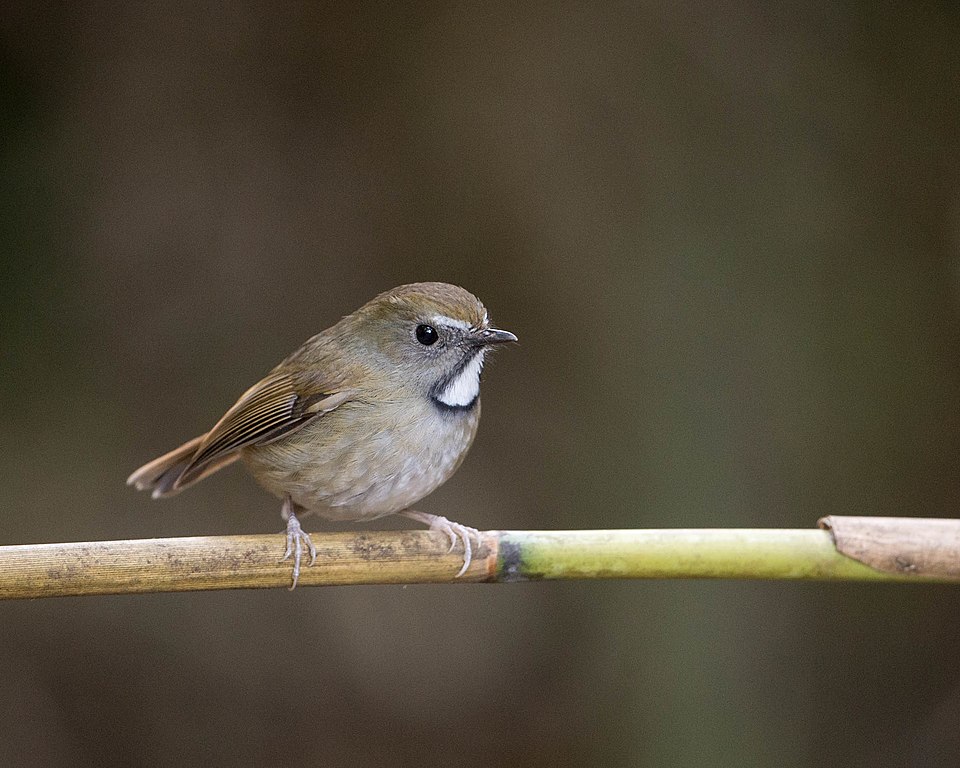
Matinan Flycatcher
Cyornis sanfordi
Order: Passeriformes / Family: Muscicapidae

Wikimedia Commons
About the Matinan Flycatcher
The Matinan Flycatcher, scientifically known as Cyornis sanfordi, is a captivating member of the Muscicapidae family. This small songbird is endemic to the Indonesian island of Sulawesi, where it inhabits predominantly lowland and montane forests. Its presence is a testament to the rich biodiversity of Sulawesi, an island known for its unique fauna and flora. The flycatcher plays a crucial ecological role as both a predator of insects and a prey species for larger birds.
This bird's significance extends beyond its ecological role. It is a symbol of the intricate interdependencies within tropical ecosystems. The Matinan Flycatcher relies on the dense canopy and undergrowth for feeding and nesting, highlighting the importance of conserving these habitats. Its presence indicates a healthy forest ecosystem, as it thrives in areas with abundant insect life.
Seasonally, the Matinan Flycatcher exhibits subtle behavioral changes. During the breeding season, which aligns with the rainy months, males become more vocal and territorial. Their melodious songs resonate through the forest, serving both to attract mates and to assert dominance over a territory. Outside of the breeding season, these flycatchers are less conspicuous, often blending into mixed-species flocks. They then focus more on foraging and less on territorial displays, demonstrating adaptability in their social behavior.
The ecological role of Cyornis sanfordi cannot be understated. As insectivores, these flycatchers help control insect populations, which benefits the forest health by preventing overpopulation of certain insect species. They also serve as prey for raptors, creating a balanced food web. Conservation of the Matinan Flycatcher and its habitat is crucial, given the bird's restricted range and specialized habitat requirements. Protecting this species ensures the preservation of a unique component of Sulawesi's natural heritage.
The Matinan Flycatcher belongs to the family Muscicapidae, within the order Passeriformes. These birds typically live average 3-5 years, with a maximum recorded of 7 years..
How to Identify a Matinan Flycatcher
The Matinan Flycatcher is a small, vibrant bird, easily identified by its striking blue plumage. Adult males exhibit a rich cobalt blue on the head, back, and wings, contrasting sharply with a lighter blue to whitish underbelly. Females, while less vivid, display a more subdued blue coloration, often tinged with light brown or gray, particularly on the underparts and wings.
Juveniles resemble females but are generally duller, with more pronounced brown tones. Distinguishing them from similar species, such as the Blue-breasted Flycatcher, involves noting the Matinan's unique shade of blue and its specific habitat preferences. In flight, the Matinan Flycatcher presents a compact silhouette, with short, rounded wings and a slightly forked tail. Their flight is agile and fast, allowing them to deftly maneuver through dense forest canopies.
Perching posture often reveals their slight, rounded body structure, with the head held high and the beak slightly upwards. This posture is typical of flycatchers, enabling them to scan for prey efficiently. Observers in the field should note these characteristics to differentiate the Matinan Flycatcher from other sympatric flycatcher species.
Having trouble telling birds apart? Upload a photo to our bird identification tool for an instant species match.
Matinan Flycatcher Habitat and Range
Preferred Habitat
The Matinan Flycatcher thrives in the lush, humid forests of Sulawesi, preferring lowland and montane tropical forests. These areas provide the dense canopy cover and rich insect life essential for its survival. The bird typically inhabits elevations ranging from sea level up to about 1,500 meters.
Unlike more adaptable species, the Matinan Flycatcher shows a strong preference for primary forests, although it can occasionally be found in secondary growth areas where the canopy remains intact. Seasonal habitat shifts are minimal as the bird remains largely sedentary, seldom venturing into heavily altered landscapes such as urban or agricultural areas.
In rural settings, the flycatcher might be spotted near forest edges or in plantations adjacent to native forests, highlighting the importance of maintaining ecological corridors. Its reliance on forest habitats underscores the significant conservation challenges posed by deforestation and habitat degradation on Sulawesi.
Geographic Range
The Matinan Flycatcher has a highly restricted range, confined to the Indonesian island of Sulawesi. As an endemic species, it does not migrate and can be found year-round in suitable habitats across the island. Its range is largely dictated by the availability of primary and secondary forests with adequate canopy cover.
Within Sulawesi, the bird is more frequently observed in the northern and central regions where extensive tracts of forest remain. These areas serve as population density hotspots, harboring the largest concentrations of this species. The flycatcher's limited range renders it vulnerable to habitat loss, emphasizing the need for targeted conservation strategies.
Despite its restricted distribution, the Matinan Flycatcher is not currently known to occupy any specific migration corridors, allowing it to maintain a relatively stable presence in its chosen habitats throughout the year.
Want to know which birds visit your area? Browse our backyard birds by location guides for region-specific species lists.
What Does the Matinan Flycatcher Eat?
The Matinan Flycatcher primarily feeds on insects, playing a significant role in controlling local insect populations. Its diet comprises a wide variety of insects, including beetles, flies, moths, and caterpillars. During the breeding season, when energy demands are higher, the flycatcher may increase its hunting activity to meet the nutritional needs of its chicks.
Foraging typically occurs in the mid to upper canopy levels, where the bird uses its keen eyesight to spot prey. It employs a sit-and-wait strategy, perching silently before darting out to snatch insects in mid-air with remarkable agility. This flycatching behavior is not only efficient but also minimizes energy expenditure.
Seasonal dietary shifts are subtle, but during periods of insect scarcity, the Matinan Flycatcher might supplement its diet with small fruits or seeds. This opportunistic feeding behavior allows it to survive in varying environmental conditions, though insects remain its primary food source.
Matinan Flycatcher Behavior and Social Structure
The Matinan Flycatcher exhibits fascinating behaviors characteristic of its family. It is primarily solitary or found in pairs, especially during the breeding season. Males become notably territorial, singing from prominent perches to ward off rivals and attract females.
Courtship displays are subtle but involve both vocalizations and visual signals such as wing flicking and tail fanning. Once paired, the flycatchers exhibit strong pair bonds, often remaining monogamous for the season. Outside of breeding periods, these birds may join mixed-species flocks, benefiting from the collective vigilance against predators.
The Matinan Flycatcher is diurnal, with activity peaking during the early morning and late afternoon. During these times, it actively forages and defends its territory. In the face of predators, the flycatcher may employ distraction displays to draw attention away from its nest. Its response to perceived threats is quick and involves alarm calls to alert nearby birds.
Matinan Flycatcher Nesting and Reproduction
Nest building for the Matinan Flycatcher involves intricate construction, primarily by the female. Nests are typically cup-shaped and constructed from a mixture of grass, leaves, and small twigs, bound together with spider silk for added strength. Location choices include tree forks or dense shrubbery, providing both camouflage and protection.
A typical clutch consists of 2 to 3 eggs, which are incubated solely by the female for about 14 days. During this period, the male plays a supportive role by providing food and guarding the nesting territory. After hatching, both parents participate in feeding the chicks.
The fledging period lasts approximately 12 to 15 days, after which the chicks leave the nest but remain dependent on parental care for several weeks. The Matinan Flycatcher typically raises one brood per year, although in exceptionally favorable conditions, a second brood may occur.
Matinan Flycatcher Sounds and Vocalizations
The Matinan Flycatcher's primary song is a melodious series of clear, whistling notes, often delivered from an elevated perch. This song plays a crucial role in territory establishment and mate attraction during the breeding season.
Call notes are softer and include a variety of short chirps and whistles, used for communication between mates or with fledglings. Alarm calls are sharper and more urgent, designed to alert others of potential danger.
During the dawn chorus, the Matinan Flycatcher contributes its voice to the cacophony of forest sounds, its song cutting through the humid air with clarity. Its vocalizations, while distinctive, can be reminiscent of other forest songbirds, yet the quality and rhythm are unique to the species.
Interesting Facts About the Matinan Flycatcher
- 1The Matinan Flycatcher is named after Mount Matinan in North Sulawesi, a region rich in biodiversity that supports many endemic species.
- 2Despite its vibrant plumage, the Matinan Flycatcher can be challenging to spot due to its preference for dense forest canopies.
- 3The Matinan Flycatcher is part of the Old World flycatchers, a group distinct from the New World flycatchers found in the Americas.
- 4Unlike many tropical birds, the Matinan Flycatcher does not migrate, relying entirely on Sulawesi's forests for its survival.
- 5The Matinan Flycatcher's distinct song can be heard echoing through Sulawesi's forests at dawn, a signature sound of the island's avian landscape.
- 6Insects make up over 90% of the Matinan Flycatcher's diet, highlighting its role as a critical insect predator in its ecosystem.
- 7Efforts to study the Matinan Flycatcher have increased understanding of Sulawesi's unique avian biodiversity and conservation needs.
Matinan Flycatcher Conservation Status
The Matinan Flycatcher is currently listed as Near Threatened on the IUCN Red List, with a population trend that appears to be decreasing. The primary threats to its survival are habitat loss due to deforestation and land conversion for agriculture. Conservation efforts focus on preserving the remaining forested areas of Sulawesi, with some success in establishing protected areas. Local conservation organizations work to raise awareness about the importance of these habitats not only for the Matinan Flycatcher but for the entire ecosystem. Historically, this species has faced challenges due to the rapid rate of habitat destruction. Continued conservation efforts are essential to stabilize and potentially increase its population, ensuring the long-term survival of this unique songbird.