
Moorland Chat
Pinarochroa sordida
Order: Passeriformes / Family: Muscicapidae

Wikimedia Commons
About the Moorland Chat
The Moorland Chat, scientifically known as Pinarochroa sordida, is a remarkable bird species native to the high-altitude regions of East Africa. This bird is a member of the Muscicapidae family, a diverse group of small passerines generally known as Old World flycatchers. The Moorland Chat is particularly adapted to life in the montane grasslands of Ethiopia and Kenya. These high-altitude areas, often above 2500 meters, provide a unique ecosystem in which the Moorland Chat plays a significant role. The bird's presence in these regions is crucial for the control of insect populations, as it primarily feeds on a variety of invertebrates, helping maintain ecological balance. During the breeding season, which typically occurs between March and June, the Moorland Chat becomes more conspicuous. Males often engage in displays of flight and song to attract females. Outside of the breeding season, this species is generally solitary, although it can occasionally be seen in small flocks, especially when food resources are abundant. The ecological role of the Moorland Chat extends beyond pest control. It also acts as a prey species for larger raptors found within the same range. This bird's adaptability to its specific habitat conditions, such as its ability to withstand cooler temperatures and thinner air at high elevations, highlights its evolutionary success. As climate change continues to impact global ecosystems, the survival and adaptation of species like the Moorland Chat become increasingly important for the health of montane habitats.
The Moorland Chat belongs to the family Muscicapidae, within the order Passeriformes. These birds typically live average 5-7 years with a maximum recorded of 10 years..
How to Identify a Moorland Chat
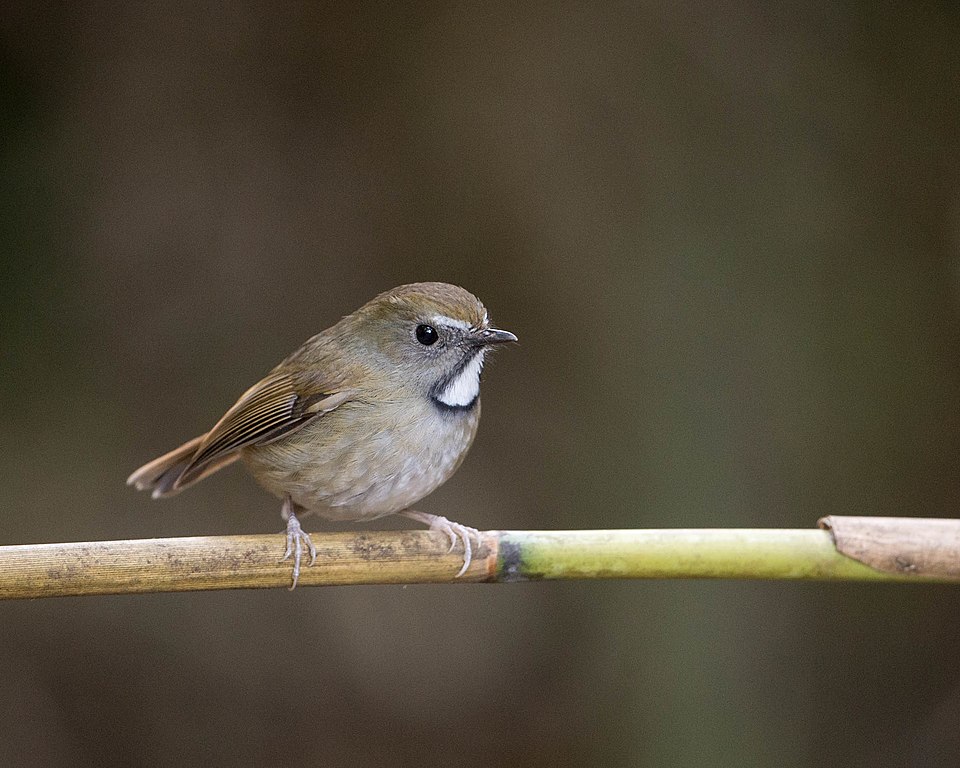
Moorland Chats are medium-sized songbirds with a body length of approximately 17 to 18 cm. They exhibit a predominantly dull brown plumage that provides an effective camouflage against the rocky and grassy environments they inhabit. A distinct white eyebrow or supercilium is a key identifying feature, contrasting against their darker head. The underparts are typically lighter, displaying a pale gray hue that may extend to the belly. Males and females are similar in appearance, though females may exhibit slightly duller plumage. Juveniles, on the other hand, are more speckled, which aids in their concealment from predators. The Moorland Chat's bill is slender and slightly curved, adapted for catching insects. In flight, these birds showcase a somewhat rounded silhouette with broad wings, which facilitates their agile maneuvering through dense vegetation. When perched, they often assume an upright posture, accentuating their long legs-a trait that enhances their ability to forage effectively on the ground. Confusion with similar species, such as the Abyssinian Ground Thrush, can occur but is mitigated by focusing on the Moorland Chat's unique eyebrow and overall more uniform brown coloration.
Having trouble telling birds apart? Upload a photo to our bird identification tool for an instant species match.
Moorland Chat Habitat and Range
Preferred Habitat
The Moorland Chat primarily inhabits montane grasslands and shrublands at elevations ranging from 2500 to 4000 meters. These environments include the high-altitude ecosystems of Ethiopia's Bale Mountains and Kenya's Aberdare Range. The bird favors open areas with a mix of rocks and grass, where it can forage for insects. Seasonal habitat shifts are minimal, although some local movements to slightly lower elevations may occur during adverse weather conditions. Unlike some birds that thrive in urban settings, the Moorland Chat is not commonly found in heavily populated areas. Instead, it remains closely tied to its native highland habitats, where it occupies a niche within a relatively undisturbed ecosystem.
Geographic Range
The Moorland Chat's range encompasses several countries within East Africa, most notably Ethiopia and Kenya. In Ethiopia, its presence is prominent in the Bale and Simien Mountains, while in Kenya, it is found in the Aberdare and Mount Kenya regions. These areas provide the high-altitude environments that are ideal for its survival. The species is non-migratory, residing year-round in its established territories. Although it does not undertake long-distance migrations, some altitudinal movements may occur seasonally, allowing the bird to exploit different resources as environmental conditions change. Population density is highest in areas with optimal habitat conditions, where grasslands are interspersed with rocky outcrops.
Want to know which birds visit your area? Browse our backyard birds by location guides for region-specific species lists.
What Does the Moorland Chat Eat?
The Moorland Chat's diet consists mainly of insects and other small invertebrates, which it actively forages from the ground and low vegetation. Common prey items include beetles, caterpillars, and grasshoppers, as well as spiders and small snails. Its feeding strategy involves a combination of short flights and quick dashes on the ground, enabling it to capture agile prey. During the breeding season, its diet may expand to include additional protein sources, vital for chick development. Foraging typically occurs during the cooler parts of the day, such as early morning and late afternoon, when insect activity peaks. The bird's ability to adapt its diet to seasonal availability demonstrates its ecological versatility.
Moorland Chat Behavior and Social Structure
Socially, the Moorland Chat is predominantly solitary, except during the breeding season when pairs form temporary bonds. The male establishes a territory through song and visual displays, often perching on elevated rocks to broadcast his presence. Courtship involves aerial displays accompanied by singing, aimed at attracting a mate. Once paired, the birds become highly territorial, defending their nesting area against intruders. Outside of the breeding season, Moorland Chats may occasionally gather in small groups, particularly when food resources are abundant. Their daily activity pattern involves foraging during daylight, with peak activity during the morning and late afternoon. In response to predators, such as raptors, they employ evasive tactics, seeking cover among rocks and dense vegetation.
Moorland Chat Nesting and Reproduction
Moorland Chats construct open cup-shaped nests using a variety of materials, including grass, twigs, and moss. Nests are often strategically placed within crevices or sheltered by rocks, providing protection from the elements and predators. A typical clutch contains 2 to 4 eggs, which are incubated by the female for approximately 14 to 16 days. During this period, the male supports the female by defending the territory and occasionally providing food. After hatching, both parents participate in feeding the chicks. The fledging period lasts about 16 to 18 days, after which the young birds gradually become independent. Moorland Chats may raise one to two broods per year, depending on environmental conditions and food availability.
Moorland Chat Sounds and Vocalizations
The primary song of the Moorland Chat is a melodious series of phrases, characterized by clear, flute-like notes. It often sings from elevated perches, making its presence known across the open landscape. Call notes include sharp 'chak' sounds, used for communication between individuals and as alarm calls to alert to predators. During the breeding season, its vocalizations become more frequent and varied, contributing to the dawn chorus that defines the acoustic environment of its montane habitat. These songs and calls play a critical role in territory establishment and maintenance, as well as in mate attraction.
Interesting Facts About the Moorland Chat
- 1The Moorland Chat can thrive at elevations up to 4000 meters, making it well-suited to life in some of Africa's highest landscapes.
- 2Unlike many birds, the Moorland Chat exhibits little sexual dimorphism, meaning males and females look quite similar.
- 3The species' dull brown plumage is a perfect camouflage against the rocky, grassy terrain it inhabits, aiding in predator evasion.
- 4Moorland Chats have been observed using rocks as vantage points for hunting, showcasing their adaptability in foraging strategies.
- 5During breeding season, the male's song can travel over long distances, a vital trait for territory establishment in open habitats.
- 6Despite its high-altitude lifestyle, the Moorland Chat is a ground forager, demonstrating remarkable versatility in its feeding habits.
- 7The Moorland Chat's ability to withstand cold temperatures and thin air is a testament to its specialized adaptations for montane life.
Moorland Chat Conservation Status
The Moorland Chat is currently listed as Least Concern on the IUCN Red List, with stable population trends across its range. However, ongoing threats such as habitat degradation due to agricultural expansion and climate change pose potential risks to its montane grassland habitats. Conservation efforts focus on preserving these high-altitude ecosystems and mitigating human impacts. Historical population data suggest relatively stable numbers, but continued monitoring is essential to ensure the species' long-term viability in the face of environmental changes.
Other Muscicapidae Species


Birds Similar to the Moorland Chat
These species are often confused with the Moorland Chat due to similar appearance or overlapping range.

