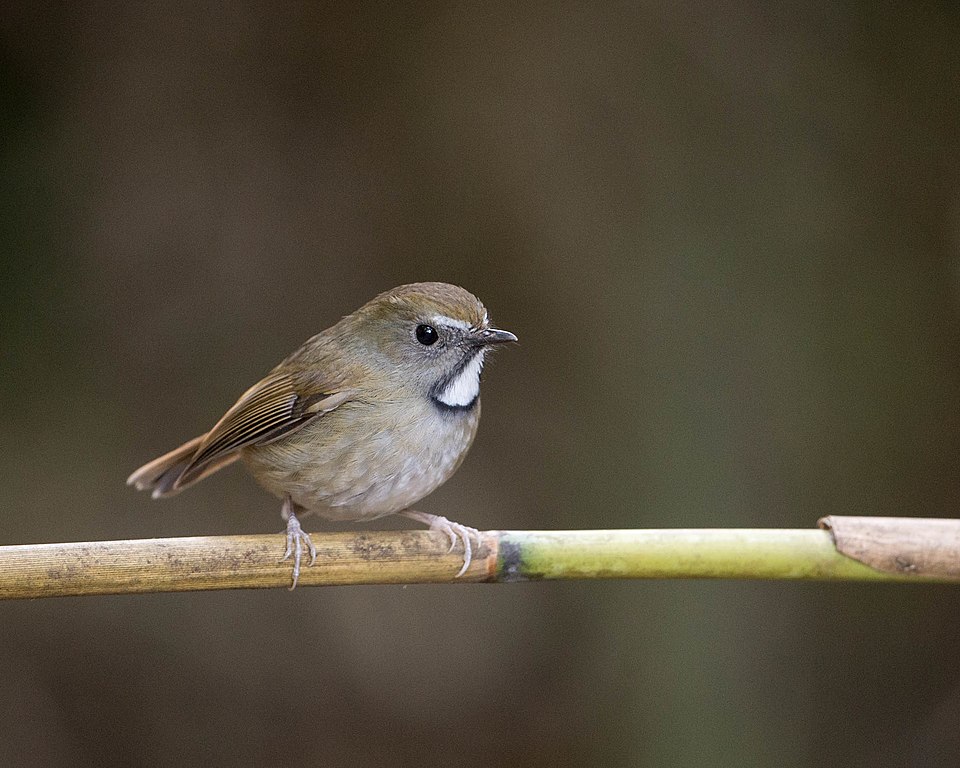
Gray-streaked Flycatcher
Muscicapa caudacuta
Order: Passeriformes / Family: Muscicapidae

Wikimedia Commons
About the Gray-streaked Flycatcher
The Gray-streaked Flycatcher (Muscicapa caudacuta) is a migratory passerine bird that plays a significant role in controlling insect populations within its habitats. It is found predominantly across East Asia, including countries such as Japan, Russia, and China. During the breeding season, it inhabits open woodlands, forest edges, and even urban parks, displaying remarkable adaptability to different environments. This bird has an ecological role as a predator of flying insects, thus contributing to the regulation of insect populations in its native habitats. As autumn approaches, the Gray-streaked Flycatcher embarks on its southward migration to wintering grounds in Southeast Asia, including countries like Thailand, Malaysia, and Indonesia, where it occupies secondary forests and coastal mangroves. The species is integral to the ecosystems it inhabits, serving as both a prey item for larger avian predators and a consumer of insects. Its presence in diverse habitats highlights its adaptability and resilience, yet it faces challenges from habitat loss and climate change. The Gray-streaked Flycatcher's migratory patterns and habitat preferences make it a fascinating subject of study for ornithologists and birdwatchers alike, emphasizing the interconnectedness of ecosystems across continents.
The Gray-streaked Flycatcher belongs to the family Muscicapidae, within the order Passeriformes. These birds typically live typically 5-7 years, with some individuals reaching up to 9 years..
How to Identify a Gray-streaked Flycatcher
The Gray-streaked Flycatcher is a small bird, measuring around 13-14 centimeters in length, with a wingspan of approximately 22-25 centimeters. It is characterized by its grayish-brown upperparts and pale underparts streaked with gray, providing excellent camouflage against tree bark and foliage. This streaking is a key feature that distinguishes it from similar species. The bird's head is marked with a subtle pale eye-ring, and its bill is relatively short and black, suitable for its insectivorous diet. Juvenile Gray-streaked Flycatchers may display a slightly more mottled appearance with less distinct streaks, and they often have buffy wing bars. There are no significant differences in plumage between males and females, which is common among many flycatcher species. In flight, the Gray-streaked Flycatcher exhibits a rapid, direct flight pattern, with quick wingbeats. When perched, it often adopts an upright posture, which aids in spotting prey. Similar species, such as the Asian Brown Flycatcher, can cause confusion, but the distinctive streaking and subtly different habitat preferences help in correctly identifying the Gray-streaked Flycatcher.
Having trouble telling birds apart? Upload a photo to our bird identification tool for an instant species match.
Gray-streaked Flycatcher Habitat and Range
Preferred Habitat
The Gray-streaked Flycatcher primarily inhabits open woodlands, deciduous forests, and forest edges. It is often found in areas with tall trees interspersed with open spaces, which facilitate its aerial insect hunting. During the breeding season, it frequents mixed forests in hilly and mountainous regions, typically at elevations ranging from sea level up to 2,000 meters. In urban areas, it may be observed in parks and gardens, where tree cover and insect availability are ample. As it migrates to its wintering grounds, the bird adapts to a variety of habitats, including secondary forests, coastal mangroves, and shrublands. This adaptability to both urban and rural environments exemplifies its ecological versatility. Seasonal habitat shifts are evident, with the flycatcher moving from temperate breeding areas to tropical wintering sites, following the availability of food resources.
Geographic Range
The breeding range of the Gray-streaked Flycatcher spans eastern Siberia, northeastern China, and Japan. During the winter months, the bird migrates to Southeast Asia, with confirmed sightings in countries such as Thailand, Malaysia, the Philippines, and Indonesia. Migration corridors include parts of East and Southeast Asia, where the bird can be seen during spring and autumn migrations. Within its breeding range, population densities are generally higher in areas with abundant insect prey and suitable nesting sites. The species is known to breed as far north as the Amur River basin in Russia and as far south as the Japanese archipelago. Its wintering range encompasses a broad swath of tropical Southeast Asia, where it favors habitats that offer ample food supply. This expansive range across continents highlights the Gray-streaked Flycatcher's impressive migratory capabilities.
Want to know which birds visit your area? Browse our backyard birds by location guides for region-specific species lists.
What Does the Gray-streaked Flycatcher Eat?
The Gray-streaked Flycatcher's diet consists primarily of flying insects, such as flies, beetles, and moths. It employs a sit-and-wait hunting technique, perching on a vantage point before launching into the air to capture prey. This bird's foraging strategy involves short sallies to snatch insects mid-flight, showcasing its agility and precise flight control. During the breeding season, when insect availability is high, the flycatcher may consume a wide variety of arthropods to meet its energetic demands. In its wintering grounds, the diet remains largely insectivorous, although it may occasionally consume small fruits or seeds when insect prey is scarce. The Gray-streaked Flycatcher typically feeds during daylight hours, with peak activity occurring in the early morning and late afternoon. Its diet and foraging behavior make it an important player in the control of insect populations within its habitats.
Gray-streaked Flycatcher Behavior and Social Structure
The Gray-streaked Flycatcher is a solitary bird outside of the breeding season, often seen alone or in loose association with mixed-species foraging flocks. During the breeding season, it exhibits territorial behavior, with males defending their nesting territories through song and physical displays. Courtship involves aerial displays and the presentation of food gifts by the male to the female. The species does not form large flocks, but it may congregate in small numbers during migration. In response to predators, such as raptors, the flycatcher employs evasive flight maneuvers and seeks cover in dense foliage. Daily activity patterns include bouts of intense foraging interspersed with periods of rest, often in shaded areas. The bird's behavioral adaptations, such as its territoriality and foraging strategies, contribute to its success across diverse environments.
Gray-streaked Flycatcher Nesting and Reproduction
The Gray-streaked Flycatcher typically constructs its nest in trees, preferring forked branches or dense foliage for concealment. The nest is a compact cup made of twigs, moss, and grass, lined with softer materials such as feathers or animal hair. Nesting locations are often selected to provide camouflage and protection from predators. The clutch size ranges from three to five eggs, which are incubated by the female for approximately 12 to 14 days. Both parents participate in feeding the nestlings, which fledge about 14 to 17 days after hatching. The species may raise one or two broods per year, depending on food availability and environmental conditions. Parental roles are well defined, with the female primarily responsible for incubation and the male assisting in feeding and territory defense.
Gray-streaked Flycatcher Sounds and Vocalizations
The Gray-streaked Flycatcher's primary song is a series of soft, melodious whistles, often described as sweet and slightly plaintive. These vocalizations serve to establish territory and attract mates. The bird also produces short call notes, which are sharp and chip-like, used for communication between individuals. Alarm calls are more abrupt, serving to alert others of potential threats. During the dawn chorus, the flycatcher's song is more frequent and pronounced, contributing to the morning soundscape typical of its habitats. The gentle quality of its song can be likened to the sound of a distant flute, subtle yet distinctive in its rhythm and pitch.
Interesting Facts About the Gray-streaked Flycatcher
- 1The Gray-streaked Flycatcher can travel thousands of kilometers during migration, showcasing its endurance.
- 2Despite its name, the Gray-streaked Flycatcher is not closely related to North American flycatchers in the Tyrannidae family.
- 3This bird's ability to adapt to urban environments reflects its flexibility in habitat preferences.
- 4The flycatcher's streaked plumage provides excellent camouflage against the bark of trees.
- 5During migration, it is known to stop over in a variety of habitats, from coastal areas to inland forests.
- 6The Gray-streaked Flycatcher's song is often described as a gentle series of whistles, adding a unique melody to its environment.
- 7It plays a critical role in controlling insect populations, contributing to the ecological balance of its habitats.
Gray-streaked Flycatcher Conservation Status
The Gray-streaked Flycatcher is currently listed as Least Concern by the IUCN, with a stable population trend. However, habitat loss due to deforestation and urban expansion poses significant threats to its breeding and wintering habitats. Conservation efforts focus on habitat preservation and the establishment of protected areas along its migratory routes. Historically, the population has remained relatively stable, although local declines may occur in areas experiencing rapid environmental change. Continued monitoring and research are essential to ensure the long-term survival of this species, highlighting the importance of international cooperation in conservation strategies.