
Muscicapa crepitans
Muscicapa crepitans
Order: Passeriformes / Family: Muscicapidae
About the Muscicapa crepitans
The Muscicapa crepitans, commonly known as the Little Grey Flycatcher, is a small passerine bird belonging to the family Muscicapidae. This bird is primarily found in West Africa, where it inhabits a variety of forested environments, including lowland rainforests, secondary forests, and even savanna woodlands. Its range spans countries such as Sierra Leone, Liberia, and Ghana, extending into parts of Nigeria and Cameroon. The Little Grey Flycatcher plays a critical role in its ecosystem by controlling insect populations, feeding predominantly on flying insects caught mid-flight or gleaned from foliage. This dietary preference aids in the maintenance of balanced insect communities within its habitat. During the breeding season, which typically aligns with the rainy season, the Muscicapa crepitans engages in elaborate courtship displays, including aerial chases and vocalizations. These behaviors not only facilitate mating but also reinforce pair bonds between the birds. Outside the breeding season, these birds may form small, loose flocks, particularly when food is abundant. The Muscicapa crepitans's ability to adapt to both primary and secondary forests highlights its ecological versatility. However, it remains vulnerable to habitat destruction due to logging and conversion of forests to agricultural land. Conservation efforts focused on preserving forest habitats are essential to ensure the continued survival of this species. As a relatively understudied bird, further research is needed to fully understand its behavior, population dynamics, and response to environmental changes. Despite these challenges, the Little Grey Flycatcher remains a vital component of West Africa's avian biodiversity.
The Muscicapa crepitans belongs to the family Muscicapidae, within the order Passeriformes. These birds typically live average 5-8 years, with a maximum recorded of 11 years..
How to Identify a Muscicapa crepitans
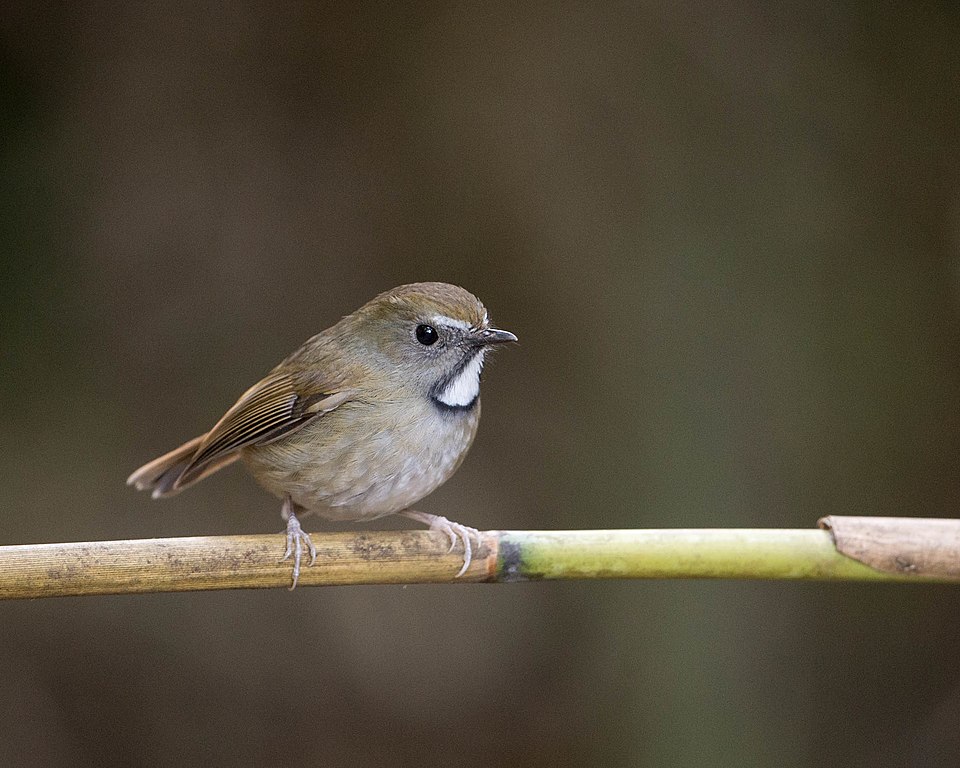
The Little Grey Flycatcher, Muscicapa crepitans, exhibits a relatively nondescript appearance, making field identification a challenge. Adults possess a subtle plumage with predominantly grey upperparts and paler underparts, which aids in blending into their forested surroundings. Their wings and tail are darker, with a slight contrast against the body. Juveniles often appear more mottled, displaying additional brownish tinges on their plumage. Both males and females look similar, with no pronounced sexual dimorphism, which can complicate visual identification during field observations. The bird's overall size, measuring approximately 12 to 14 centimeters in length, classifies it as a small passerine. Its flight silhouette is characterized by rapid, fluttering wingbeats interspersed with short glides. When perched, the Muscicapa crepitans often exhibits a slightly upright posture, frequently flicking its wings and tail. This behavior, coupled with its distinctive snapping call, serves as a more reliable identification cue than plumage alone. While it may be confused with other small grey flycatchers, the Muscicapa crepitans can be distinguished by its habitat preference and vocalizations.
Having trouble telling birds apart? Upload a photo to our bird identification tool for an instant species match.
Muscicapa crepitans Habitat and Range
Preferred Habitat
The Muscicapa crepitans thrives in a variety of forest habitats across West Africa. It is commonly found in lowland rainforests, which provide abundant insect prey and dense canopy cover. The bird also occupies secondary forests and open woodland areas, demonstrating a degree of adaptability to altered landscapes. Typically residing at elevations ranging from sea level to about 1000 meters, the Little Grey Flycatcher shows some flexibility in its habitat preferences. During certain times of the year, it may venture into savanna woodlands, especially when insect populations peak. Although less common in urban settings, it may occasionally be observed in forested parks or gardens within city limits, particularly where native vegetation remains intact. Habitat shifts are generally minimal between seasons, as the bird tends to remain in forested environments year-round.
Geographic Range
The Little Grey Flycatcher, Muscicapa crepitans, occupies a restricted yet significant range within West Africa. Its breeding and resident range extends from Sierra Leone and Liberia in the west, through southern Guinea, to Ghana and the Ivory Coast. The bird's range continues eastward into parts of Nigeria and western Cameroon. Within these regions, population densities vary, with higher concentrations often found in undisturbed primary forests and protected areas. While there are no significant long-distance migratory movements, the bird may undertake short-range dispersals in response to local food availability and environmental conditions. Despite its limited range, the Muscicapa crepitans maintains a stable presence across much of its habitat, although habitat degradation poses ongoing threats to its population stability.
Want to know which birds visit your area? Browse our backyard birds by location guides for region-specific species lists.
What Does the Muscicapa crepitans Eat?
The diet of the Muscicapa crepitans primarily consists of flying insects, which the bird captures with agility and precision. Common prey items include various species of flies, beetles, and moths, which are obtained through aerial sallies from a perch. The bird's feeding technique involves sudden, acrobatic flights to catch insects in mid-air, a behavior that underscores its role as an insectivore. During certain times of the year, particularly the rainy season, there may be an increase in insect abundance, allowing the flycatcher to exploit a wider range of prey. Occasionally, the bird may also consume small spiders or caterpillars gleaned from foliage. Feeding activity peaks during the early morning and late afternoon, aligning with periods of heightened insect activity.
Muscicapa crepitans Behavior and Social Structure
The Muscicapa crepitans exhibits a range of interesting behaviors that reflect its adaptation to forest life. This species is generally solitary or found in pairs, particularly during the breeding season. Territorial behavior is evident as males establish and defend small territories through vocalizations and displays. Courtship involves intricate flight patterns and vocal exchanges, serving both to attract mates and deter rival males. Outside the breeding season, Little Grey Flycatchers may form loose flocks, especially when food resources are abundant, exhibiting a degree of social flexibility. The bird's daily activity patterns are largely diurnal, with peak activity occurring in the early morning and late afternoon. When faced with predators, such as raptors or larger birds, the Muscicapa crepitans relies on rapid flight and evasive maneuvers to escape. Its alertness and flight agility are key to its survival in the dynamic forest environment.
Muscicapa crepitans Nesting and Reproduction
The nesting habits of the Muscicapa crepitans are closely tied to its forest habitat. The bird constructs a small cup-shaped nest, often situated on a horizontal branch or within a fork in a tree. Nest materials typically include twigs, grasses, and leaves, with the interior lined with softer materials such as feathers or plant down. Clutch size generally ranges from two to three eggs, which are incubated by the female over a period of approximately 12 to 14 days. The male plays a role in territory defense and may assist in feeding the female during incubation. Once hatched, the chicks remain in the nest for about 12 to 15 days before fledging. Both parents participate in feeding the young, ensuring a steady supply of insects to meet the chicks' nutritional needs. The Muscicapa crepitans typically raises one to two broods per year, with breeding activity closely aligned with periods of peak insect availability.
Muscicapa crepitans Sounds and Vocalizations
The vocalizations of the Muscicapa crepitans play a pivotal role in its behavioral repertoire. Its primary song consists of a series of sharp, snapping notes, often described as resembling the sound of cracking twigs or small snaps. This song serves as both a territorial marker and a courtship display. Additionally, the bird produces a variety of call notes, including soft whistles and trills used in communication with mates or to signal alarm. The Little Grey Flycatcher is particularly vocal during the early morning hours, participating in the dawn chorus that characterizes many forested environments. Its vocalizations, though not as melodious as some other songbirds, are distinctive within its habitat and aid in species recognition.
Interesting Facts About the Muscicapa crepitans
- 1Muscicapa crepitans is named for its snapping call, which is unique among flycatchers and serves as a key identification feature.
- 2Little Grey Flycatchers are adept aerial hunters, capable of catching insects in flight with remarkable agility and precision.
- 3This bird's preference for both primary and secondary forests showcases its adaptability to different environments.
- 4During breeding season, the Muscicapa crepitans engages in complex aerial displays as part of its courtship rituals.
- 5Despite being a small bird, the Little Grey Flycatcher plays a significant role in controlling insect populations within its habitat.
- 6The species remains largely understudied, highlighting the need for further research into its ecology and behavior.
- 7Muscicapa crepitans can sometimes be found in urban parks, demonstrating its occasional presence in human-modified landscapes.
Muscicapa crepitans Conservation Status
The Muscicapa crepitans currently holds a conservation status of Least Concern according to the IUCN Red List. However, its population faces pressures from habitat loss due to deforestation and agricultural expansion in West Africa. Despite these challenges, the species has shown some resilience, maintaining stable populations in areas where forest habitats remain intact. Conservation efforts are crucial to safeguard remaining forested areas, which provide critical habitat for the Little Grey Flycatcher and countless other species. Historical population data is limited, but current trends do not indicate any immediate risk of significant decline. Continued monitoring and habitat preservation are essential to ensure the long-term survival of this relatively understudied bird.
Other Muscicapidae Species


Birds Similar to the Muscicapa crepitans
These species are often confused with the Muscicapa crepitans due to similar appearance or overlapping range.