
Muscicapa cyanirostris
Muscicapa cyanirostris
Order: Passeriformes / Family: Muscicapidae
About the Muscicapa cyanirostris
The Gray-headed Canary-flycatcher, scientifically known as Muscicapa cyanirostris, belongs to the family Muscicapidae and is a small passerine bird widespread across parts of Asia. Its presence spans from the foothills of the Himalayas in India and Nepal to the forests of Southeast Asia, including Thailand and Malaysia. This bird is integral to the ecosystems it inhabits, playing a significant role as an insect predator, which helps control insect populations and maintain ecological balance.
This flycatcher thrives in a variety of forested habitats, from subtropical and tropical moist lowland forests to montane forests. It particularly favors areas with dense undergrowth and abundant insect life. Its adaptability allows it to inhabit both primary and secondary growth forests, making it a resilient species in the face of moderate habitat changes. However, continued deforestation poses a threat to its habitat, emphasizing the importance of conservation measures in the regions it inhabits.
Seasonally, the Gray-headed Canary-flycatcher exhibits altitudinal migration, moving to higher elevations during the breeding season from March to July in the Indian subcontinent. During this time, the bird is often seen actively foraging for insects to feed its young. In the non-breeding season, it descends to foothills and lower elevations, where it remains relatively active, continuing its role as an insectivore. Its presence in diverse habitats and regions makes it a fascinating subject for ornithologists and bird watchers alike.
The Muscicapa cyanirostris belongs to the family Muscicapidae, within the order Passeriformes. These birds typically live average 5-7 years, with a maximum recorded of 9 years..
How to Identify a Muscicapa cyanirostris
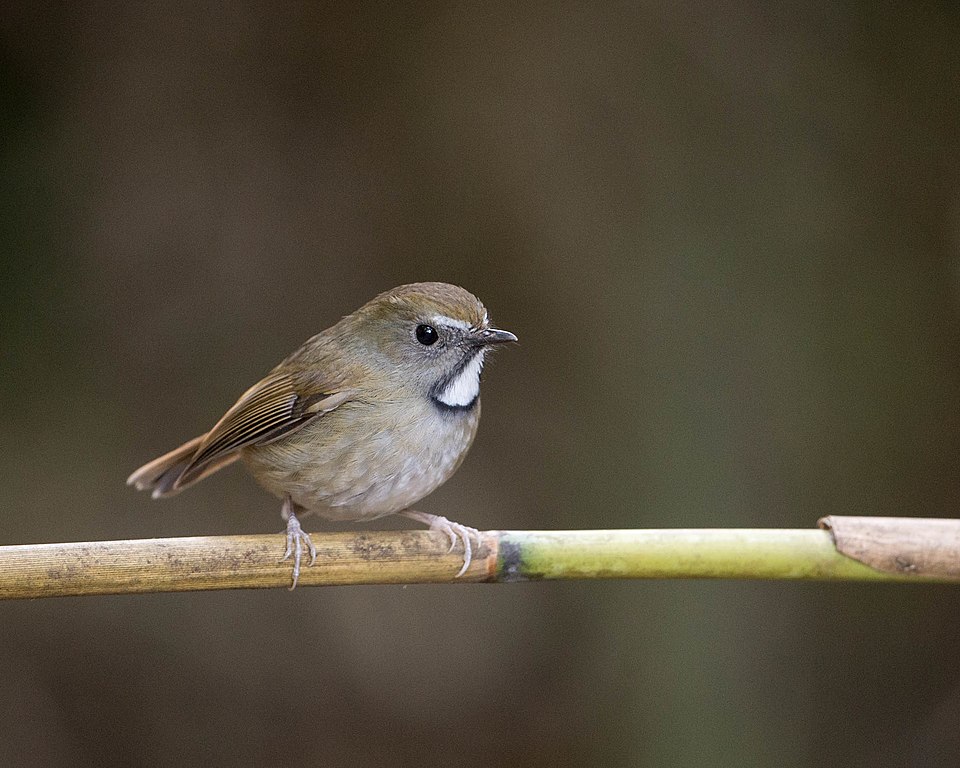
The Gray-headed Canary-flycatcher is a small bird, measuring about 13 cm in length, with a wingspan that enhances its agile flight. Adult plumage is characterized by a striking contrast between its gray head and vibrant yellow body, making it easily distinguishable in the field. The gray of the head extends to the nape and throat, while its underparts, back, and wings display bright yellow, providing a colorful appearance against the green foliage of its habitat.
Juvenile birds appear slightly duller, with less pronounced gray on the head and a more muted yellow on the body. Males and females exhibit similar plumage, making sex differentiation challenging without behavioral observation during breeding when males may be more vocal and active.
In flight, the Gray-headed Canary-flycatcher displays a buoyant, flitting flight pattern, often snapping up insects mid-air. Its perching posture is characteristically upright, and it often flicks its wings and tail. Similar species, such as the Common Iora, may cause confusion; however, the distinct gray head of the Muscicapa cyanirostris serves as a reliable identifying feature.
Having trouble telling birds apart? Upload a photo to our bird identification tool for an instant species match.
Muscicapa cyanirostris Habitat and Range
Preferred Habitat
The Gray-headed Canary-flycatcher inhabits a range of forested environments. It is commonly found in subtropical and tropical moist lowland forests, where dense undergrowth and ample insect life create ideal conditions. Montane forests are also a preferred habitat, particularly during the breeding season when it seeks cooler, higher elevations.
Elevation plays a key role in its habitat selection. While it can be found as low as 300 meters, it is more commonly encountered between 1,000 to 2,500 meters, especially in the Himalayan region. Seasonal shifts in habitat are noted, with migrations to lower elevations during non-breeding months, allowing the bird to exploit different ecological niches throughout the year.
Though primarily a forest bird, it occasionally ventures into rural gardens and plantations, provided there is sufficient tree cover and insect availability. Its presence in urban areas remains rare, as it prefers more secluded and natural settings.
Geographic Range
The breeding range of the Gray-headed Canary-flycatcher extends across the Indian subcontinent, including India, Nepal, Bhutan, and parts of Myanmar. In these regions, it is found at higher elevations during the breeding season. Wintering grounds expand to Southeast Asia, encompassing Thailand, Laos, Vietnam, and Malaysia, where it occupies various forest habitats.
Migration patterns show altitudinal shifts rather than long-distance migratory behavior. During the non-breeding season, it descends to lower elevations, sometimes even reaching the plains, particularly in southern India and Sri Lanka.
Population density hotspots are noted in the Western Ghats of India and the eastern Himalayan foothills, where the bird is locally abundant. These areas offer ideal conditions with rich biodiversity and ample food supply, supporting healthy populations of Muscicapa cyanirostris.
Want to know which birds visit your area? Browse our backyard birds by location guides for region-specific species lists.
What Does the Muscicapa cyanirostris Eat?
The diet of the Gray-headed Canary-flycatcher is predominantly insectivorous, focusing on a wide variety of insects and their larvae. Primary food sources include flies, beetles, caterpillars, and occasionally small moths. During the breeding season, the bird intensifies its foraging efforts to provide for its young, targeting protein-rich insects essential for chick development.
Dietary habits shift slightly with the seasons. Insect availability varies with climate, prompting the flycatcher to adapt its diet accordingly. In the non-breeding season, when certain insect populations dwindle, it may augment its diet with small fruits or seeds, although insects remain the primary focus.
Foraging techniques are agile and dynamic. The bird often employs a 'sallying' strategy, launching from a perch to snatch prey mid-flight before returning to its vantage point. This behavior is frequently observed in the early morning and late afternoon, aligning with peak insect activity.
Muscicapa cyanirostris Behavior and Social Structure
The Gray-headed Canary-flycatcher exhibits intriguing social and territorial behaviors. Generally solitary or found in pairs, it becomes more social during migration, occasionally joining mixed-species foraging flocks. This behavior provides protection and enhances foraging efficiency.
Territorial during the breeding season, males establish and defend their territories through vocal displays and occasional aerial chases. Courtship involves elaborate displays, with males performing fluttering flights and vocalizations to attract females.
In response to predators, such as raptors or snakes, the flycatcher employs alarm calls and evasive flight maneuvers. Its daily activity pattern follows a diurnal rhythm, with peak activity during dawn and dusk when insect prey is most abundant. During these times, the bird is highly active, foraging and singing to establish territory and attract mates.
Muscicapa cyanirostris Nesting and Reproduction
Nesting habits of the Gray-headed Canary-flycatcher reveal a preference for well-concealed locations, often choosing tree cavities, crevices in rocks, or dense foliage. The nest is a compact cup constructed from moss, lichen, and spider webs, providing both camouflage and structural integrity.
The breeding season spans from March to July in the Indian subcontinent. Clutch size typically ranges from two to four eggs, with both parents participating in incubation over approximately 12 to 14 days. The fledging period lasts around 14 to 16 days, during which both parents continue to feed and care for the chicks.
Parental roles are shared, with both male and female taking turns in feeding and protection of the young. The species generally raises one brood per year, although a second brood may occur in favorable conditions with abundant resources.
Muscicapa cyanirostris Sounds and Vocalizations
The primary song of the Gray-headed Canary-flycatcher is a soft, melodic series of notes, often described as a 'tsee-tsee-tsee' or 'tseep-tseep-tseep'. This song is delivered with a sweet, clear quality, and is most frequent during the breeding season, serving as both a territorial and courtship call.
Call notes are similarly soft, consisting of short, sharp 'chip' sounds used for communication between individuals or as alarm calls in response to predators. During the dawn chorus, its song blends with those of other forest birds, creating a rich symphony of natural sounds.
Compared to familiar sounds, its calls resemble the gentle tinkling of a small bell, providing a distinctive audio signature that aids in identification even when the bird is not visible.
Interesting Facts About the Muscicapa cyanirostris
- 1The Gray-headed Canary-flycatcher is one of the few flycatchers that can be found at elevations up to 2,500 meters, showcasing remarkable adaptability.
- 2Despite its small size of just 13 cm, it can cover vast distances during altitudinal migrations, moving between different elevations seasonally.
- 3Its ability to catch insects mid-flight with precision is a testament to its agility and keen eyesight, often capturing prey unseen by human observers.
- 4The species' preference for forest edges and clearings helps maintain ecological balance by controlling insect populations in these transitional zones.
- 5The Gray-headed Canary-flycatcher’s nest is often almost invisible, camouflaged with moss and lichen, blending seamlessly into its surroundings.
Muscicapa cyanirostris Conservation Status
The Gray-headed Canary-flycatcher currently holds a conservation status of Least Concern according to the IUCN Red List, with a stable population trend observed across its range. However, localized threats such as deforestation and habitat fragmentation pose potential risks, particularly in regions experiencing rapid development. Conservation efforts focus on protecting forest habitats through the establishment of protected areas and promoting sustainable land-use practices. Historical population trends show resilience, with the species maintaining stable numbers despite environmental changes. Continued monitoring is essential to ensure that any emerging threats are promptly addressed, ensuring the long-term survival of this vibrant species in its native habitats.
Other Muscicapidae Species


Birds Similar to the Muscicapa cyanirostris
These species are often confused with the Muscicapa cyanirostris due to similar appearance or overlapping range.