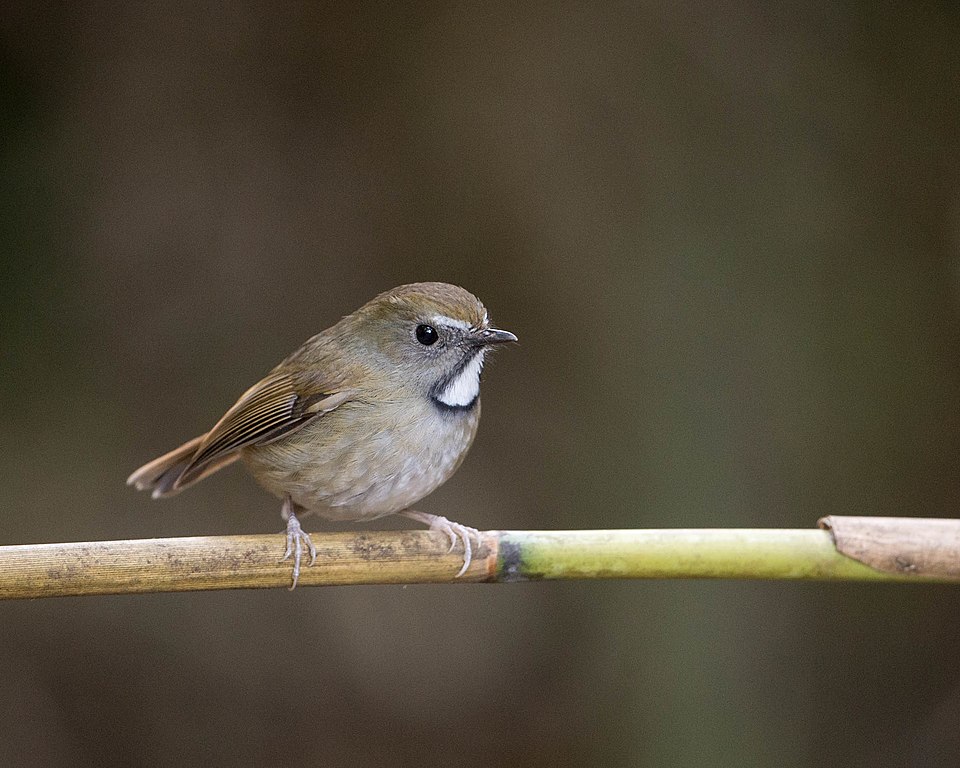
Muscicapa diops
Muscicapa diops
Order: Passeriformes / Family: Muscicapidae

Wikimedia Commons
About the Muscicapa diops
The Muscicapa diops, commonly known as the Mugimaki Flycatcher, is a small passerine bird found predominantly in the forests and woodlands of East Asia. This species plays a pivotal role in its ecosystem by helping control insect populations, thus contributing to the ecological balance. Primarily inhabiting deciduous and mixed forests, these birds are particularly associated with areas rich in oak and other broadleaf trees. They thrive in regions stretching from eastern Russia through northeastern China to Korea and Japan. During the breeding season, they favor the dense cover of mature forests, where they can find ample nesting sites and food resources. As autumn approaches, the Mugimaki Flycatcher embarks on its migratory journey to Southeast Asia, including countries such as Thailand, Malaysia, and Indonesia, where it spends the winter months. This seasonal migration is a critical component of its life cycle, ensuring access to food and suitable climatic conditions year-round. In addition to their ecological role, the Mugimaki Flycatcher's presence in diverse habitats makes them a species of interest for ornithologists and bird watchers. Their migration patterns are particularly noteworthy, as they highlight the interconnectedness of ecosystems across vast geographic areas. The Mugimaki Flycatcher also serves as a biological indicator, reflecting the health of the forests it inhabits. Changes in its population dynamics can signal shifts in environmental conditions, such as deforestation or climate change. Thus, monitoring the Mugimaki Flycatcher provides valuable insights into broader ecological trends and challenges. In conclusion, the Mugimaki Flycatcher is not only a visually striking bird but also an integral part of its habitat, contributing to both biodiversity and scientific understanding of forest ecosystems.
The Muscicapa diops belongs to the family Muscicapidae, within the order Passeriformes. These birds typically live 3-5 years, with a maximum recorded of 7 years..
How to Identify a Muscicapa diops
The Mugimaki Flycatcher is characterized by its vibrant orange breast and face, contrasted by dark upperparts that appear almost black. The wings feature prominent white wing bars, which are especially visible during flight. Adult males exhibit a more vivid coloration compared to females and juveniles, which display a more subdued palette. Females and young birds have a brownish-gray upper body, lacking the bright orange but retaining the white wing markings. The bird's compact size, about 13-14 cm in length, and its agile, upright posture while perched distinguish it from similar species. In flight, the Mugimaki Flycatcher displays a rapid, slightly undulating flight pattern typical of flycatchers. Its silhouette is compact, with a relatively short tail and pointed wings, aiding in quick maneuverability. Compared to similar species like the Asian Brown Flycatcher, the Mugimaki Flycatcher's distinct coloration provides a reliable field mark for identification. While perched, the Mugimaki Flycatcher often adopts an alert stance, with its body held upright and tail slightly cocked, a typical posture for spotting and capturing prey.
Having trouble telling birds apart? Upload a photo to our bird identification tool for an instant species match.
Muscicapa diops Habitat and Range
Preferred Habitat
The Mugimaki Flycatcher primarily inhabits deciduous and mixed woodlands where broadleaf trees, such as oak and beech, are prevalent. These birds prefer mature forests with dense undergrowth, providing ample cover and foraging opportunities. They are most commonly found at elevations ranging from 200 to 2,000 meters, often exploiting the vertical stratification of the forest to hunt for insects. During the breeding season, they inhabit temperate forests in regions like eastern Russia, northeastern China, and Japan. In the non-breeding season, they migrate to tropical and subtropical forests in Southeast Asia, including Thailand and Malaysia. Here, they can be found in both primary and secondary forests. While primarily forest dwellers, the Mugimaki Flycatcher can occasionally be spotted in more open areas, such as edges and clearings, where they forage for insects. However, they rarely venture into urban or heavily modified landscapes, indicating a preference for natural or semi-natural habitats.
Geographic Range
The Mugimaki Flycatcher's breeding range extends across northeastern Asia, particularly in eastern Russia, northeastern China, Korea, and Japan. Within these regions, they are typically found in temperate deciduous and mixed forests, utilizing the rich resources available during the breeding season. As autumn approaches, they migrate southward to spend the winter in Southeast Asia. Their wintering grounds include countries such as Thailand, Malaysia, and Indonesia, where they inhabit tropical and subtropical forests. The migration corridors used by these birds are vital routes linking their breeding and wintering territories. Along these pathways, they may stop over in various habitats to rest and refuel. While not considered a common species, the Mugimaki Flycatcher is widespread within its range, with certain areas acting as hotspots for population density, particularly during migration.
Want to know which birds visit your area? Browse our backyard birds by location guides for region-specific species lists.
What Does the Muscicapa diops Eat?
The Mugimaki Flycatcher's diet primarily consists of insects and other small arthropods, which they catch using a variety of foraging techniques. They exhibit typical flycatcher behavior by sallying from perches to snatch prey mid-air or gleaning insects from leaves and branches. Their agile flight and strong visual acuity make them effective hunters, capable of capturing a range of prey sizes. During the breeding season, their diet may include a higher proportion of protein-rich insects like beetles and caterpillars, which are essential for feeding growing chicks. In the winter months, when certain insects become scarce, the Mugimaki Flycatcher may also consume small fruits and berries, supplementing its diet with available plant material. Feeding typically occurs during daylight hours, with peak activity in the early morning and late afternoon when prey abundance is highest. This opportunistic feeding strategy allows the Mugimaki Flycatcher to thrive in various environments and adapt to seasonal changes in food availability.
Muscicapa diops Behavior and Social Structure
The Mugimaki Flycatcher exhibits a range of behaviors characteristic of its family, Muscicapidae. It is primarily solitary or found in pairs, especially during the breeding season when territoriality is pronounced. Males often engage in courtship displays that include song and aerial acrobatics to attract females and establish territories. These territories are fiercely defended from intruding males through vocalizations and physical displays. Outside the breeding season, the Mugimaki Flycatcher becomes more social, sometimes joining mixed-species flocks during migration and wintering periods. Such associations provide increased foraging efficiency and protection from predators. This bird is diurnal, with peak activities occurring in the early morning and late afternoon. It responds to threats with a series of sharp alarm calls and may employ evasive flight techniques to avoid predators. The Mugimaki Flycatcher's daily routine involves frequent short flights interspersed with periods of perching and scanning for food.
Muscicapa diops Nesting and Reproduction
Mugimaki Flycatchers construct their nests in the cavities or forks of trees, often choosing sites that offer concealment from predators and protection from the elements. The nests are cup-shaped, made from a variety of materials including moss, grasses, and spider webs, which provide both structure and camouflage. During the breeding season, which occurs from late spring to early summer, the female typically lays a clutch of 3 to 5 eggs. These eggs are incubated for about 12 to 14 days, primarily by the female, while the male may assist by bringing food. Once hatched, the chicks are altricial and require constant care and feeding from both parents. The fledging period lasts approximately 12 to 15 days, after which the young birds gradually become independent. The Mugimaki Flycatcher may raise one or two broods per year, depending on environmental conditions and resource availability.
Muscicapa diops Sounds and Vocalizations
The Mugimaki Flycatcher's primary song is a melodious series of whistles and trills, often delivered from a high perch. Its song serves both to attract mates and to assert territorial boundaries. Call notes are short and sharp, used in communication between individuals and as alarm signals. During the dawn chorus, the Mugimaki Flycatcher's song can be heard more frequently and energetically, contributing to the auditory tapestry of the forest. Alarm calls are distinct, often a rapid series of 'chip' notes, serving as a warning to others of potential danger. These vocalizations are an essential aspect of the bird's behavior, facilitating interactions with conspecifics and other species.
Interesting Facts About the Muscicapa diops
- 1The Mugimaki Flycatcher can migrate over 3,000 kilometers from its breeding grounds to its wintering sites in Southeast Asia.
- 2Despite its small size, the Mugimaki Flycatcher is known for its bold territorial displays, often chasing intruders much larger than itself.
- 3The name 'Mugimaki' derives from Japanese, reflecting the bird's presence in Japan and its significance in local culture.
- 4Juvenile Mugimaki Flycatchers can be distinguished by their spotted wing coverts, a trait not seen in adults.
- 5During migration, the Mugimaki Flycatcher may travel in mixed-species flocks that include other small insectivores.
- 6The Mugimaki Flycatcher's distinctive song includes both mimicry of other species and unique whistled phrases.
- 7These birds play a crucial role in pest control, feeding on insects that are considered harmful to forests.
Muscicapa diops Conservation Status
The Mugimaki Flycatcher is currently listed as Least Concern by the IUCN, with a stable population trend. However, habitat loss due to deforestation and land conversion remains a significant threat. Conservation efforts focus on preserving mature forests and establishing protected areas to safeguard breeding and wintering habitats. While not currently endangered, ongoing monitoring is crucial to detect potential declines. Historical data suggest that while populations have fluctuated, they have remained relatively stable over the past few decades. Continued conservation initiatives and habitat management are key to ensuring the long-term survival of the Mugimaki Flycatcher.