
Muscicapa inornata
Muscicapa inornata
Order: Passeriformes / Family: Muscicapidae

Wikimedia Commons
About the Muscicapa inornata
The Muscicapa inornata, commonly known as the Brown-streaked Flycatcher, is a small passerine bird belonging to the family Muscicapidae. This bird is often observed in the varied and diverse landscapes of South and Southeast Asia. With its understated plumage, the Brown-streaked Flycatcher blends seamlessly into its environment, making it a challenge to spot despite its preference for open spaces. Its ecological significance is enhanced by its role in controlling insect populations, as it predominantly feeds on flies and other small insects. This dietary preference assists in maintaining ecological balance, particularly in forested and semi-wooded areas where insect populations can burgeon. The Muscicapa inornata is found throughout the Indian subcontinent, extending eastwards to parts of southern China and the Malayan Peninsula. It displays a preference for broad-leaved forests and wooded areas, although it can also be seen in plantations and gardens, especially during non-breeding seasons. Seasonal behavior of this flycatcher includes a pronounced shift in elevation, as it migrates to lower regions during winter months, favoring warmer climates. The movement patterns of the Muscicapa inornata reflect its adaptability to changing environmental conditions, showcasing its resilience and ecological adaptability. Despite its widespread presence across Asia, the Muscicapa inornata is not heavily studied, and much remains to be learned about its breeding habits and long-term population trends. Its song, although not as melodious as some of its relatives, plays a crucial role in territorial defense and mate attraction, particularly during the breeding season. Understanding the lifecycle and behaviors of the Brown-streaked Flycatcher is vital for conservation efforts, ensuring that this unassuming yet important bird continues to thrive in its native habitats.
The Muscicapa inornata belongs to the family Muscicapidae, within the order Passeriformes. These birds typically live average 5-7 years, with a max recorded of 9 years..
How to Identify a Muscicapa inornata
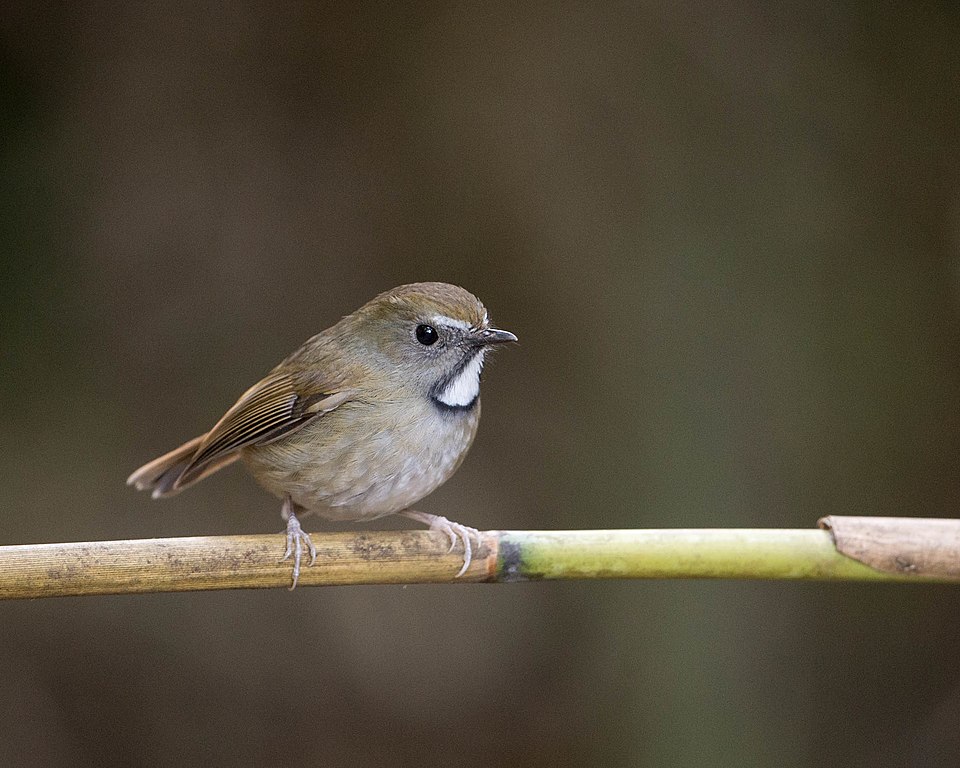
The Brown-streaked Flycatcher is a small bird, measuring around 14 cm in length. Adult plumage is predominantly brown with subtle streaking on the breast, which provides effective camouflage amongst the forest understory. Its upperparts are a plain brown, while the underparts are a lighter, buffy tone. Juveniles resemble adults but exhibit a more pronounced streaking pattern on the breast and a slightly rufous tint to their plumage, which fades as they mature. Sexual dimorphism is minimal, with males and females appearing similar in plumage and size, making field identification challenging without close observation. In flight, the Muscicapa inornata shows rounded wings and a relatively short tail, typical of flycatchers, which aids in its agile aerial maneuvers. Despite its subtle coloration, the Brown-streaked Flycatcher's flight pattern is distinctive, characterized by quick, darting movements as it pursues insect prey. When perched, it often adopts an upright posture, providing a brief glimpse of its underparts and the faint streaking that is its namesake. The bird's lack of distinctive markings can lead to confusion with similar species such as the Asian Brown Flycatcher, but the Brown-streaked Flycatcher can typically be distinguished by its more defined streaking and habitat preferences.
Having trouble telling birds apart? Upload a photo to our bird identification tool for an instant species match.
Muscicapa inornata Habitat and Range
Preferred Habitat
Muscicapa inornata primarily inhabits broad-leaved and mixed forests, preferring areas with dense canopy cover and abundant undergrowth. It is found at elevations ranging from sea level up to 1800 meters, though it often descends to lower altitudes during the non-breeding season. The species is adaptable, occasionally venturing into plantations, gardens, and other semi-wooded habitats, particularly in human-altered landscapes. It shows some adaptability to urban environments, especially in regions where natural habitats are fragmented. Seasonal habitat shifts are common, with the Brown-streaked Flycatcher moving to lower altitudes and more open areas during colder months. Despite its adaptability, the species favors natural forested environments, where it can effectively hunt and nest.
Geographic Range
The breeding range of the Muscicapa inornata extends across the Indian subcontinent, including India, Nepal, and Bangladesh. It is also found in parts of southern China and throughout the Malayan Peninsula. During winter, the bird migrates southwards, reaching as far as Indonesia and the Philippines. This flycatcher follows established migration corridors along river valleys and through mountain passes, facilitating its seasonal movements. Population densities are highest in forested regions of India and Southeast Asia, where suitable habitats are abundant. The species' adaptability to various environments allows it to occupy a range of habitats, though its core range remains centered around the dense forests of South and Southeast Asia.
Want to know which birds visit your area? Browse our backyard birds by location guides for region-specific species lists.
What Does the Muscicapa inornata Eat?
The Brown-streaked Flycatcher primarily consumes small insects, with a focus on flies and beetles. Its diet shifts seasonally, with an increase in the consumption of caterpillars and other larval forms during the breeding season when protein demands are higher. The flycatcher employs a typical sallying technique, perching on a branch and darting out to snatch insects mid-air before returning to its perch. This method is energy-efficient and allows the bird to exploit a wide range of prey sizes, from minute flies to larger moths and butterflies. Feeding primarily occurs during daylight hours, with peak activity in the early morning and late afternoon when insect activity is highest.
Muscicapa inornata Behavior and Social Structure
Muscicapa inornata is generally solitary or found in pairs, especially during the breeding season. Territorial behavior is pronounced, with males defending their chosen area through song and occasional physical confrontations. Courtship displays are subtle, involving short flights and vocalizations to attract females. Outside of the breeding season, the Brown-streaked Flycatcher may join mixed-species foraging flocks, benefiting from the increased vigilance against predators. The bird exhibits a diurnal activity pattern, with most foraging and vocal activities occurring during the day. In response to predators, the flycatcher often employs cryptic behavior, relying on its drab plumage to blend into the surroundings, or it may engage in rapid, erratic flight to avoid capture.
Muscicapa inornata Nesting and Reproduction
The Brown-streaked Flycatcher typically nests in tree forks or on branches concealed by foliage. Nests are cup-shaped and constructed from twigs, moss, and leaves, lined with softer materials such as feathers or hair. Clutch size ranges from two to four eggs, with an incubation period of approximately 12 to 14 days. Both parents participate in feeding the chicks, which fledge after about two weeks. Parental roles are shared, with both male and female taking turns incubating the eggs and later feeding the young. The species typically raises one brood per year, though under favorable conditions, a second brood may be attempted.
Muscicapa inornata Sounds and Vocalizations
The primary song of the Muscicapa inornata is a series of soft, high-pitched notes delivered in a rapid, repetitive sequence. The quality of the song is thin and whistling, lacking the musical complexity found in some other songbirds. Call notes are short and sharp, often used in communication between mates or to signal alarm. Alarm calls are more urgent and higher-pitched, serving as an effective deterrent to predators. During the dawn chorus, the Brown-streaked Flycatcher's song is more prominent, marking territory and attracting potential mates.
Interesting Facts About the Muscicapa inornata
- 1The Brown-streaked Flycatcher was first described scientifically in 1847, highlighting its long history of interaction with human observers.
- 2Despite its name, the streaking on the Brown-streaked Flycatcher is often subtle and can be difficult to discern in low light.
- 3Muscicapa inornata has been observed using the same nesting sites for consecutive years, demonstrating site fidelity.
- 4The species can tolerate a range of altitudes, from lowland forests to mountainous regions up to 1800 meters.
- 5Although not the most colorful, the Brown-streaked Flycatcher's plumage provides excellent camouflage in its natural habitat.
- 6The flycatcher's diet includes a variety of insects, making it an important controller of pest populations in its native ecosystems.
- 7Muscicapa inornata is part of a larger group of Old World flycatchers, which are renowned for their aerial acrobatics.
Muscicapa inornata Conservation Status
The Muscicapa inornata is currently classified as Least Concern by the IUCN, with stable population trends across its range. However, habitat loss due to deforestation and agricultural expansion poses long-term threats to its preferred habitats. Conservation efforts focus on preserving natural forests and promoting sustainable land-use practices. Historical data suggests that while populations are not currently declining, continued habitat degradation could impact future numbers. Maintaining healthy forest ecosystems will be crucial for the long-term survival of this species.
Other Muscicapidae Species


Birds Similar to the Muscicapa inornata
These species are often confused with the Muscicapa inornata due to similar appearance or overlapping range.
