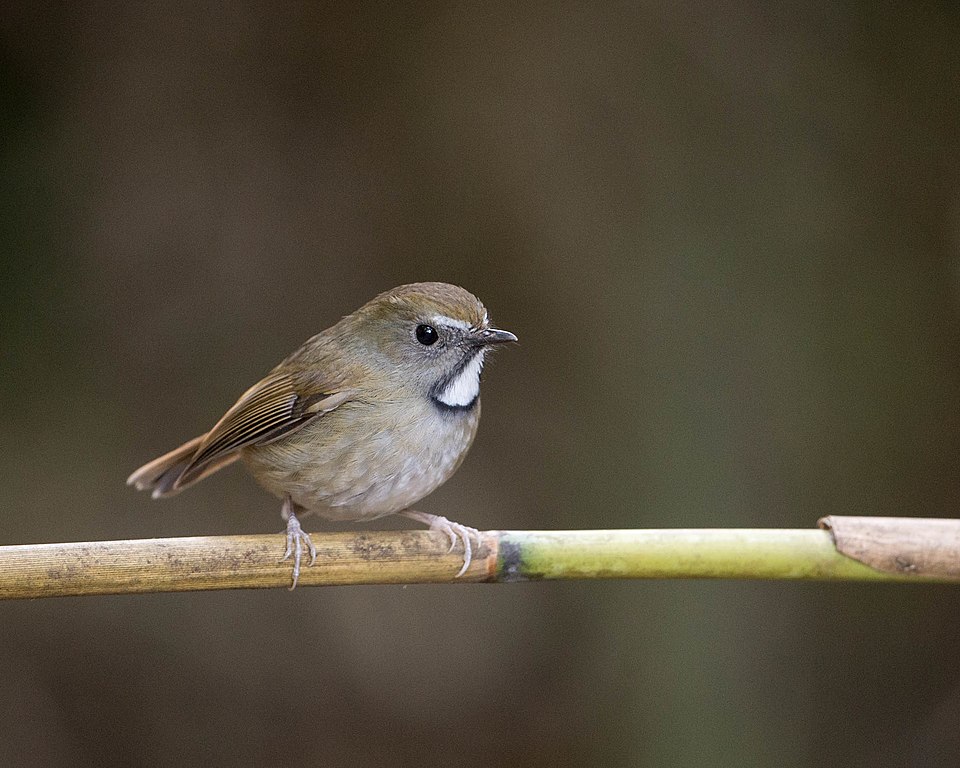
Orange-breasted Flycatcher
Muscicapa miniata
Order: Passeriformes / Family: Muscicapidae

Wikimedia Commons
About the Orange-breasted Flycatcher
The Orange-breasted Flycatcher (Muscicapa miniata) is a small but vibrant bird found predominantly in the subtropical and tropical forests of Southeast Asia. Known for its vivid orange breast, this flycatcher is a favorite among bird watchers and researchers alike. Its presence in the dense canopies of regions like Thailand, Malaysia, and Indonesia underscores its affinity for humid, lush environments.
This species plays a significant role in the ecosystem as both predator and prey. As an insectivore, the Orange-breasted Flycatcher helps control insect populations, maintaining ecological balance. Its diet primarily consists of small insects, including flies, beetles, and caterpillars, which it expertly captures in mid-air.
The Orange-breasted Flycatcher exhibits seasonal behaviors, particularly during the breeding season when its activity increases as it partakes in courtship displays. Its ecological role extends to its interactions with other species; its presence indicates a healthy, thriving habitat. This bird's adaptability to various forest types, from lowland forests to montane regions, highlights its resilience and ecological importance.
While not migratory, the Orange-breasted Flycatcher may exhibit some local movements, particularly in response to food availability and weather conditions. Conservationists regard it as a species of interest due to its specialized habitat requirements and potential threats from deforestation and habitat degradation.
The Orange-breasted Flycatcher belongs to the family Muscicapidae, within the order Passeriformes. These birds typically live typically around 6 years, with some individuals reaching up to 8 years..
How to Identify a Orange-breasted Flycatcher
The Orange-breasted Flycatcher is instantly recognizable due to its bright orange breast and contrasting grayish-brown upperparts. Adult males and females are similar in appearance, though females may exhibit slightly duller coloration. The bird's compact size, typically around 12-13 cm in length, along with its short, straight bill, aids in its identification.
Juvenile Orange-breasted Flycatchers differ slightly from adults, featuring more muted colors and a speckled appearance on their upperparts, which gradually fades as they mature. In flight, this species displays a rapid, darting pattern, characteristic of many flycatchers, aided by its broad wings and relatively short tail.
Confusion with other species can occur, particularly with other flycatchers that share its range, such as the Gray-headed Canary-flycatcher. However, the distinctive orange breast of the Orange-breasted Flycatcher provides a reliable field mark, setting it apart from similar species. Its typical perching posture, often upright with a slight forward lean, further aids in identification during field observations.
Having trouble telling birds apart? Upload a photo to our bird identification tool for an instant species match.
Orange-breasted Flycatcher Habitat and Range
Preferred Habitat
The Orange-breasted Flycatcher thrives in subtropical and tropical moist lowland forests, preferring dense, humid environments rich in insect life. It is commonly found at elevations ranging from sea level up to 1200 meters, though it occasionally ventures into montane forests.
Seasonally, the bird may shift its habitat slightly, moving to areas where food sources are more abundant during different times of the year. While primarily a forest dweller, the Orange-breasted Flycatcher can also be spotted in secondary growth and degraded forest areas, demonstrating some adaptability to habitat changes.
Urban and rural presence is limited, as this species tends to avoid heavily disturbed areas. Instead, it favors the tranquility and resource abundance of dense forest canopies, where it can efficiently forage and nest.
Geographic Range
The Orange-breasted Flycatcher is native to Southeast Asia, with a range that spans across multiple countries, including Thailand, Malaysia, and Indonesia. It is a resident breeder in these regions, showing little to no long-distance migratory behavior.
In Thailand, this species is primarily found in the southern regions, thriving in both primary and secondary forests. Malaysia offers suitable habitats across Peninsular Malaysia and on the island of Borneo, where forest coverage remains extensive.
Indonesia hosts a significant population of Orange-breasted Flycatchers, particularly on the islands of Sumatra and Java. These areas provide ideal conditions for breeding and foraging, contributing to relatively stable population densities within these localized hotspots.
Although not migratory, the bird may engage in altitudinal movements, especially in response to seasonal changes in food availability and breeding conditions.
Want to know which birds visit your area? Browse our backyard birds by location guides for region-specific species lists.
What Does the Orange-breasted Flycatcher Eat?
The diet of the Orange-breasted Flycatcher primarily consists of insects, a testament to its classification within the Muscicapidae family. Flies, beetles, and caterpillars form the core of its dietary intake, with occasional consumption of spiders and other small invertebrates.
Seasonal variations in diet are minimal, though the bird may adjust its feeding habits based on insect availability. During wetter months, when insect populations flourish, the Orange-breasted Flycatcher increases its foraging activity, taking advantage of the abundance of prey.
This species employs a typical flycatcher foraging technique, characterized by short sallies from a perch to snatch insects mid-flight. Its keen eyesight and rapid reflexes enable it to capture prey with remarkable precision. Feeding typically occurs during daylight hours, with heightened activity in the early morning and late afternoon when insects are most active.
Orange-breasted Flycatcher Behavior and Social Structure
The Orange-breasted Flycatcher exhibits a solitary or paired social structure, especially during the breeding season when pairs become territorial. Males engage in elaborate courtship displays, often involving vocalizations and acrobatic flight maneuvers to attract females.
Territorial behavior is pronounced, with both sexes actively defending their chosen territory from intruders. This territoriality is crucial during nesting periods, ensuring adequate resources and safety for raising young.
Outside the breeding season, the Orange-breasted Flycatcher may join mixed-species foraging flocks, benefiting from increased protection and foraging efficiency. Its daily activity pattern follows a diurnal cycle, with peak foraging occurring in the cooler hours of the morning and late afternoon.
The bird's response to predators includes alarm calls and evasive flight maneuvers. Its vigilance and agility make it a difficult target, though it remains on high alert in the presence of potential threats.
Orange-breasted Flycatcher Nesting and Reproduction
The nesting habits of the Orange-breasted Flycatcher are characteristic of the Muscicapidae family. Nests are typically cup-shaped, constructed using fine materials such as moss, grass, and spider webs, providing both strength and camouflage.
Preferred nest locations include the forks of tree branches or sheltered niches within dense foliage, providing protection from predators and harsh weather conditions. Clutch sizes generally range from two to four eggs, which the female incubates for approximately 12-14 days.
Both parents participate in feeding the nestlings, ensuring a steady supply of food until fledging occurs at around 15-18 days post-hatching. The species is known for having one to two broods per year, depending on environmental conditions and resource availability.
Parental roles are shared, though females often undertake the majority of incubation duties while males focus on territory defense and food provisioning.
Orange-breasted Flycatcher Sounds and Vocalizations
The Orange-breasted Flycatcher is known for its melodious song, characterized by a series of short, high-pitched notes delivered in rapid succession. The song's rhythm and pitch create a harmonious and somewhat repetitive tune that carries well through the forest canopy.
Call notes are more straightforward, consisting of a sharp 'chip' sound used for communication between individuals, particularly during territorial disputes or when alerting to potential threats.
Alarm calls are more urgent, often a rapid succession of 'chip-chip' sounds, signaling the presence of predators. During the dawn chorus, the Orange-breasted Flycatcher's song is particularly prominent, joining the symphony of other forest inhabitants.
Compared to other flycatchers, its song is notably more musical and complex, making it a delight for bird enthusiasts to identify and enjoy.
Interesting Facts About the Orange-breasted Flycatcher
- 1The Orange-breasted Flycatcher can catch insects in flight with pinpoint accuracy thanks to its agile flight and keen vision.
- 2Despite its vivid coloration, the Orange-breasted Flycatcher remains well-camouflaged amidst the forest's dappled light and shadow.
- 3This flycatcher has a rapid wingbeat that allows it to hover momentarily to capture insects near foliage.
- 4The Orange-breasted Flycatcher's song can be heard up to 100 meters away, a testament to its vocal capabilities.
- 5Muscicapa miniata's adaptability to disturbed forests highlights its resilience in the face of environmental change.
- 6The species is often found in mixed-species flocks, enhancing its foraging efficiency and predator awareness.
- 7The Orange-breasted Flycatcher has a life span of up to 6 years in the wild, reflecting its survival strategies and adaptability.
Orange-breasted Flycatcher Conservation Status
The Orange-breasted Flycatcher is currently listed as Least Concern by the IUCN, with populations considered stable. However, habitat loss due to deforestation and land conversion poses significant threats to its long-term survival. Conservation efforts focus on protecting and restoring forest habitats, particularly in areas where logging and agricultural expansion encroach on its natural environment. Historical population changes have been relatively minor, though continued monitoring is essential to detect any negative trends. The bird’s resilience and adaptability to secondary habitats offer some hope, yet maintaining primary forest areas remains crucial for ensuring its continued presence in these regions. Public awareness and engagement in conservation activities can further bolster efforts to protect this striking species.