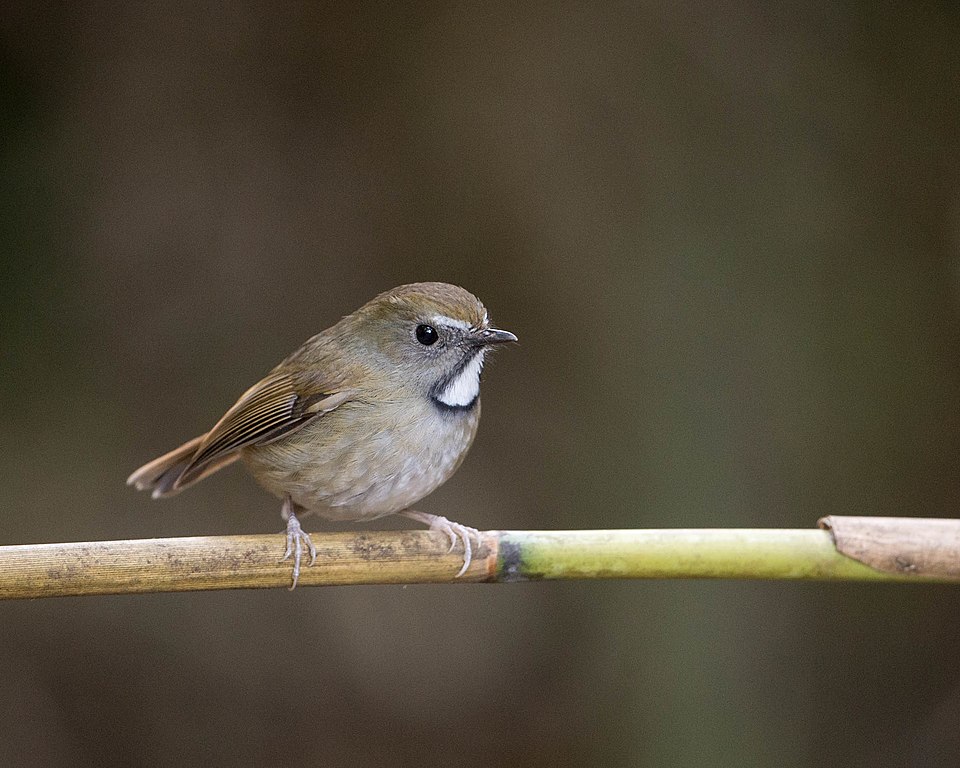
Muscicapa rubra
Muscicapa rubra
Order: Passeriformes / Family: Muscicapidae

Wikimedia Commons
About the Muscicapa rubra
Muscicapa rubra, commonly known as the Red Flycatcher, captures the attention of birdwatchers with its vivid red plumage and agile flight. This bird belongs to the family Muscicapidae and is classified under the order Passeriformes. The Red Flycatcher is predominantly found in the tropical and subtropical regions of Southeast Asia. It thrives in diverse habitats, including dense forests, open woodlands, and sometimes mangroves, showcasing its adaptability to various ecological conditions. This species plays a significant role in its ecosystem by controlling insect populations, as it primarily feeds on flying insects. During the breeding season, the Muscicapa rubra becomes an integral part of the forest soundscape, contributing to the chorus with its distinct calls. The bird's ecological role extends beyond mere insect control, as it also serves as prey for larger avian predators. Its presence indicates a healthy insect population, which is crucial for the balance of forest ecosystems. Seasonally, the Red Flycatcher exhibits slight migratory behavior, moving to lower elevations or different parts of its range depending on food availability and climatic conditions. In regions like Borneo and Sumatra, the Muscicapa rubra is a resident species, often seen darting through the trees in search of food. Its adaptability to both lowland and montane forests makes it a fascinating subject for ornithologists studying avian ecology and behavior. Despite being a less-studied species compared to other flycatchers, the Muscicapa rubra's vibrant coloration and active lifestyle make it a favorite among bird enthusiasts and a key species for understanding the dynamics of tropical forest ecosystems.
The Muscicapa rubra belongs to the family Muscicapidae, within the order Passeriformes. These birds typically live average 5 years with a maximum recorded of 8 years..
How to Identify a Muscicapa rubra
The Muscicapa rubra is easily recognized by its bright red plumage, which covers most of its body. Adult males exhibit the most vivid coloration, particularly on the head and back, while females and juveniles may display a slightly duller hue with some brownish tints on the wings and tail. The bird measures approximately 14 centimeters in length, with a wingspan of about 20 centimeters, placing it in the small size category among flycatchers. In terms of field marks, the Red Flycatcher possesses a relatively short bill and a rounded head, contributing to its distinctive silhouette. Its flight is characterized by quick, darting movements, often accompanied by a slight ruffling of its tail feathers. When perched, the Muscicapa rubra displays an upright posture, frequently flicking its wings and tail. This behavior, coupled with its striking color, aids in distinguishing it from similar species, such as the Scarlet Flycatcher, which lacks the same intensity in plumage. The Red Flycatcher's calls, although varied, can also serve as an identifying feature, as they differ in tone and rhythm from other sympatric flycatchers.
Having trouble telling birds apart? Upload a photo to our bird identification tool for an instant species match.
Muscicapa rubra Habitat and Range
Preferred Habitat
The Red Flycatcher thrives in a variety of habitats, predominantly occupying tropical and subtropical forests. It is commonly found in both primary and secondary forests, often at elevations ranging from sea level up to 1500 meters. This bird shows a preference for areas with dense foliage, which provides ample cover and food resources. Additionally, the Muscicapa rubra can sometimes be spotted in mangrove forests, particularly during the dry season when food availability shifts. In urban areas, it is less common but may occasionally visit parks or gardens that mimic its natural habitat. The Red Flycatcher's adaptability to different forest types and elevations highlights its resilience in the face of changing environmental conditions. However, it remains primarily a forest-dwelling species, relying on the complex structure and biodiversity of these ecosystems for its survival.
Geographic Range
The Muscicapa rubra's range extends across Southeast Asia, with populations in countries such as Thailand, Malaysia, Indonesia, and the Philippines. It is particularly abundant in the islands of Borneo and Sumatra, where dense rainforests provide ideal living conditions. During the breeding season, the Red Flycatcher is commonly found in lowland forests, while some populations may migrate to higher altitudes or different regions within its range in response to environmental changes. Although it does not undertake long-distance migrations, the species exhibits local movements driven by food availability and climatic factors. Population density tends to be higher in undisturbed forest areas, where its primary food sources are most plentiful. While the Muscicapa rubra is not considered globally threatened, habitat destruction poses a significant risk in certain parts of its range, particularly in areas undergoing rapid deforestation.
Want to know which birds visit your area? Browse our backyard birds by location guides for region-specific species lists.
What Does the Muscicapa rubra Eat?
Primarily an insectivore, the Muscicapa rubra feeds on a wide array of flying insects. Its diet consists mainly of flies, beetles, and moths, which it catches in mid-air using its agile flight skills. During the breeding season, when energy demands increase, the Red Flycatcher may also consume spiders and small caterpillars, providing essential protein for nestlings. Seasonal variations in food availability can lead to dietary adjustments, with the bird expanding its foraging range to include more diverse insect prey. The Muscicapa rubra typically forages during the early morning and late afternoon when insect activity is at its peak. It employs a sit-and-wait strategy, perching on a branch before launching into a swift aerial pursuit of its prey. The bird's sharp vision and rapid reflexes ensure successful hunting, making it an effective controller of insect populations in its habitat.
Muscicapa rubra Behavior and Social Structure
The Muscicapa rubra exhibits a solitary or paired lifestyle, especially during the breeding season when it becomes highly territorial. Males engage in elaborate courtship displays, showcasing their vibrant plumage and aerial acrobatics to attract females. These displays involve rapid flights, wing flicks, and vocalizations that establish territory boundaries and deter rivals. Outside the breeding season, the Red Flycatcher may form small mixed-species flocks, joining other insectivorous birds to enhance foraging efficiency. In response to predators, such as hawks or large snakes, the Muscicapa rubra employs alarm calls and evasive maneuvers to protect itself and its young. Its daily activity pattern includes periods of rest during midday heat, with peak foraging occurring during cooler hours. The bird's alertness and agility play crucial roles in its survival, allowing it to adapt swiftly to environmental challenges.
Muscicapa rubra Nesting and Reproduction
The nesting habits of the Muscicapa rubra reflect its preference for forested environments. Nests are typically constructed in the fork of a tree branch, using materials such as grass, moss, and spider silk to create a compact cup-shaped structure. The female primarily undertakes nest building, while the male assists by gathering materials. A typical clutch consists of two to four eggs, which the female incubates for approximately 12 to 14 days. During this period, the male remains nearby, providing food and protection. Once hatched, the chicks are altricial, requiring constant care and feeding by both parents. Fledging occurs about 12 to 16 days after hatching, with the young remaining dependent on their parents for an additional few weeks. The Muscicapa rubra generally produces one to two broods per year, depending on environmental conditions and food availability.
Muscicapa rubra Sounds and Vocalizations
The Red Flycatcher's primary song is a series of melodious whistles, characterized by a rhythmic pattern and varying pitch. These songs, often delivered from a prominent perch, serve to establish territory and attract mates. The bird's call notes are sharp and distinct, used for communication between individuals, especially during flight or when foraging. Alarm calls, triggered by the presence of predators, are harsh and rapid, alerting other birds in the vicinity. At dawn, the Muscicapa rubra participates in the forest chorus, its song blending with those of other avian species to create a vibrant soundscape. While similar to other flycatchers, the Muscicapa rubra's vocalizations are unique in their tonal quality and rhythm, offering a reliable means of identification for experienced birders.
Interesting Facts About the Muscicapa rubra
- 1The Muscicapa rubra can catch insects mid-flight with remarkable precision, showcasing its agile flying skills.
- 2Despite its striking red coloration, the Red Flycatcher can blend into its surroundings, thanks to the dense foliage it inhabits.
- 3Muscicapa rubra's nest construction uses spider silk, which provides strength and flexibility to the structure.
- 4The Red Flycatcher's courtship display involves complex aerial maneuvers, including rapid dives and swoops.
- 5This species is less often seen in urban areas, making sightings in forests more rewarding for birdwatchers.
- 6The Red Flycatcher participates in mixed-species flocks, enhancing its foraging success in diverse habitats.
- 7The bird's dawn chorus contributions make it a key player in the acoustic environment of tropical forests.
Muscicapa rubra Conservation Status
Currently, the Muscicapa rubra is listed as Least Concern by the IUCN, with stable population trends across its range. However, habitat loss due to deforestation and land conversion poses significant long-term threats. Conservation efforts focus on habitat protection and sustainable forest management to ensure the preservation of its natural environment. In regions where deforestation rates are particularly high, targeted conservation initiatives aim to establish protected areas and promote reforestation. Historically, the Red Flycatcher has shown resilience in adapting to changing landscapes, but continued habitat degradation could lead to future population declines. Monitoring and research are essential to understanding its ecological needs and developing effective conservation strategies.