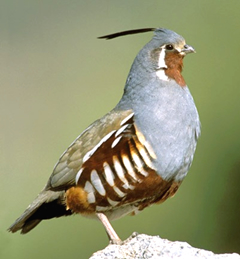
Nanortyx inexpectatus
Nanortyx inexpectatus
Order: Galliformes / Family: Odontophoridae
About the Nanortyx inexpectatus
The Nanortyx inexpectatus, commonly known as the unexpected quail, is a captivating member of the Odontophoridae family, which comprises New World quails. This bird is predominantly found in the diverse landscapes of North and Central America, specifically in regions like the arid grasslands and shrublands of Mexico and southern United States. Its significance in the ecosystem is substantial, as it plays a crucial role in seed dispersal and pest control, contributing to the ecological balance. During the breeding season, the unexpected quail becomes more conspicuous, showcasing its vibrant plumage and engaging in intricate courtship displays. This species exhibits a fascinating adaptation to its environment, often found in areas with dense cover that provides protection against predators. In winter, its behavior shifts as it forms small flocks, taking advantage of the camouflage offered by its surroundings. As a non-migratory bird, the Nanortyx inexpectatus maintains a year-round presence in its preferred habitats. However, it may exhibit slight altitudinal movements in response to seasonal food availability. Its ability to thrive in a range of environments, from open grasslands to scrubby woodlands, demonstrates its adaptability. The unexpected quail's ecological role extends to its interactions with other species, as it often shares its habitat with a variety of birds, mammals, and insects. Its foraging habits, which include consuming seeds, insects, and small invertebrates, help maintain the balance of its ecosystem by controlling insect populations and promoting plant diversity. Despite its elusive nature, the unexpected quail has piqued the interest of ornithologists and bird enthusiasts alike, who continue to study its behaviors and interactions within its habitat. The bird's adaptability and ecological contributions underscore the importance of conserving its natural environments, ensuring that this remarkable species continues to flourish.
The Nanortyx inexpectatus belongs to the family Odontophoridae, within the order Galliformes. These birds typically live Unknown.
How to Identify a Nanortyx inexpectatus
Adult Nanortyx inexpectatus are medium-sized, plump birds with a distinctive mottled appearance. Their plumage consists of a rich tapestry of browns, grays, and whites, providing effective camouflage in their natural habitats. Males and females exhibit subtle differences, with males typically having more pronounced markings and slightly brighter colors. Juveniles resemble adults but are often duller, with less defined patterns. The unexpected quail can be confused with similar species such as the Montezuma quail, but it can be distinguished by its unique plumage and vocalizations. In flight, the unexpected quail exhibits a compact silhouette with rapid wingbeats, contrasting its relatively short, rounded wings and a short tail. When perched, it assumes a low, hunched posture, often remaining motionless to avoid detection. These field marks make it identifiable to experienced birders who know where to look and listen.
Having trouble telling birds apart? Upload a photo to our bird identification tool for an instant species match.
Nanortyx inexpectatus Habitat and Range
Preferred Habitat
The unexpected quail inhabits a variety of environments, predominantly favoring arid grasslands, open woodlands, and scrubby areas. These habitats provide ample cover and food resources, essential for its survival. It is typically found in elevations ranging from sea level to 2,000 meters, though it prefers areas with dense vegetation for concealment. Seasonal habitat shifts are minimal, as it is a non-migratory species, but it may move locally in search of food. While it can adapt to some altered landscapes, it is more commonly associated with rural areas than urban settings, where human disturbance is minimal.
Geographic Range
The breeding range of the Nanortyx inexpectatus encompasses parts of North and Central America, with significant populations in Mexico and extending into the southern United States. It is a non-migratory bird, so its wintering range overlaps with its breeding territory. Population density is higher in regions with suitable habitat, such as the Mexican highlands and the scrublands of Texas. The species does not undertake long migratory journeys, but local movements may occur in response to seasonal changes in food availability. Conservation efforts focus on preserving its natural range and mitigating habitat loss.
Want to know which birds visit your area? Browse our backyard birds by location guides for region-specific species lists.
What Does the Nanortyx inexpectatus Eat?
The diet of the unexpected quail primarily consists of seeds, grains, and insects. During the breeding season, it relies heavily on protein-rich insects to support its energetic needs. As seasons change, it adds more seeds and grains to its diet, taking advantage of the abundance of these resources in its habitat. Foraging occurs primarily on the ground, where the bird uses its strong legs to scratch and uncover food. It feeds in the early morning and late afternoon, avoiding the heat of midday. Prey items are generally small, including beetles, ants, and grasshoppers.
Nanortyx inexpectatus Behavior and Social Structure
Socially, the unexpected quail forms loose coveys, particularly outside the breeding season. These groups provide safety in numbers and facilitate foraging. The bird exhibits territorial behavior during the breeding season, with males engaging in elaborate courtship displays to attract mates. Displays include puffing up feathers, vocalizations, and hopping movements. In response to predators, the unexpected quail relies on camouflage and rapid, low-flight escape tactics. Daily activity patterns include early morning and late afternoon foraging, with periods of rest during the hottest parts of the day.
Nanortyx inexpectatus Nesting and Reproduction
The unexpected quail nests on the ground, typically in a shallow depression lined with grass, leaves, and feathers. Preferred nest sites are well-concealed under shrubs or clumps of grass. Clutch size ranges from 8 to 12 eggs, which are incubated by the female for approximately 21 to 23 days. Both parents participate in caring for the chicks after hatching. The fledging period lasts about 10 to 14 days, after which young birds become more independent. The species typically raises one brood per year, though favorable conditions may allow for a second.
Nanortyx inexpectatus Sounds and Vocalizations
The primary song of the unexpected quail is a series of short, sharp whistles, often described as rising in pitch and intensity. These sounds serve to establish territory and attract mates. Call notes are softer and more subdued, used for communication within coveys. Alarm calls are abrupt and harsh, alerting others to potential threats. The species participates in the dawn chorus, with vocal activity increasing at first light. The unexpected quail's calls can be compared to those of other quails, though they possess a distinctive rhythm and tone.
Interesting Facts About the Nanortyx inexpectatus
- 1The Nanortyx inexpectatus was first described relatively recently, in the mid-20th century, making it a newcomer to scientific literature.
- 2Despite being a non-migratory bird, the unexpected quail exhibits local movements in response to food availability, showcasing remarkable adaptability.
- 3The unexpected quail's unique vocalizations are essential for communication, often serving as a distinguishing feature from similar species.
- 4This quail's preference for dense cover reflects its evolutionary strategy to avoid predators, which include hawks and terrestrial mammals.
- 5During courtship, males perform elaborate displays that involve puffing up their feathers and producing distinctive calls to attract females.
- 6Unexpected quails are vital to their ecosystems for seed dispersal, helping to maintain plant diversity in their habitats.
- 7The species' camouflage is so effective that it can remain undetected in its environment even when observers are nearby.
Nanortyx inexpectatus Conservation Status
The IUCN currently lists the Nanortyx inexpectatus as a species of least concern, indicating a stable population trend. However, habitat loss due to agricultural expansion and urban development poses significant threats. Conservation efforts focus on habitat preservation and restoration. Historical population levels have fluctuated in response to environmental changes, but current conservation measures aim to maintain stable numbers. Public awareness and habitat management play crucial roles in ongoing conservation strategies.