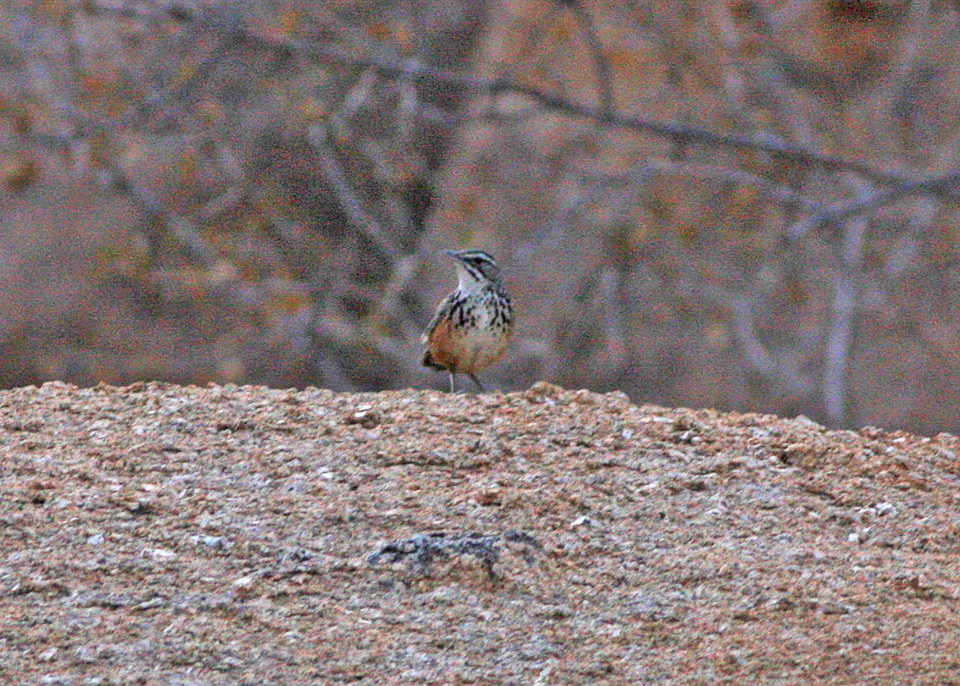
Northern Crombec
Sylvietta brachyura
Order: Passeriformes / Family: Macrosphenidae

Wikimedia Commons
About the Northern Crombec
The Northern Crombec, scientifically known as Sylvietta brachyura, is a fascinating member of the family Macrosphenidae. This small, tail-less passerine is native to sub-Saharan Africa, where it occupies a variety of habitats. The Northern Crombec is characterized by its compact size and its nearly non-existent tail, which is a unique feature among songbirds. Its presence is a significant indicator of the health of its ecosystem, as it thrives in both savanna and woodland habitats, playing a crucial role in insect population control. Geographically, the bird is prevalent in countries such as Senegal, Nigeria, and Kenya, extending its range into southern regions like Tanzania and Zambia. Throughout the year, the Northern Crombec displays interesting behavioral adaptations, especially during the breeding season, when its activity becomes particularly pronounced. During the dry season, the bird tends to stay closer to water sources, where insects are more abundant, thus ensuring its continued survival in fluctuating environmental conditions. The Northern Crombec contributes significantly to the ecological balance by acting as both predator and prey. It feeds on a variety of insects, thus helping to regulate their populations in its habitats. In turn, it serves as a food source for larger birds and some mammals, fitting neatly into the food web of its environment. The bird's adaptability to various habitats, from open woodlands to denser forests, indicates its resilience and ecological versatility. As a species, the Northern Crombec has managed to maintain stable population numbers despite habitat changes, making it a vital subject for studies on avian adaptation and survival strategies. Understanding the behavior and ecology of the Northern Crombec allows researchers and conservationists to gain insights into the broader environmental health of the regions it inhabits. Its seasonal behaviors, especially its breeding patterns and dietary shifts, provide valuable data on the impacts of climate and environmental changes on avian species. This bird serves as a bioindicator, reflecting the ecological health of its environment through its population dynamics and distribution.
The Northern Crombec belongs to the family Macrosphenidae, within the order Passeriformes. These birds typically live average 4 years, with a maximum recorded of 6 years..
How to Identify a Northern Crombec
The Northern Crombec is a small bird, measuring approximately 8-10 cm in length, with a distinctive short tail that sets it apart from most other songbirds. Adults display a subtle plumage, with a pale gray or brown upper body and a lighter underbelly. The bird's back and wings often have a slight buff or rufous tinge, which can vary slightly between individuals and regions. Juveniles resemble adults but typically have a more muted color palette, lacking the slight gloss seen in mature birds. Males and females are similar in appearance, making it challenging to distinguish between the sexes based solely on plumage. However, keen observers might note subtle differences in size, with males being marginally larger. In flight, the Northern Crombec's silhouette is unmistakable due to its almost tail-less structure and pointed wings. When perched, the bird exhibits a characteristic upright posture, often seen flitting through the lower canopies of trees and shrubs, actively foraging for insects. The Northern Crombec can sometimes be confused with other small, insectivorous birds, such as warblers, but its unique tail characteristic and active foraging behavior provide reliable identification cues.
Having trouble telling birds apart? Upload a photo to our bird identification tool for an instant species match.
Northern Crombec Habitat and Range
Preferred Habitat
The Northern Crombec thrives in a range of habitats across sub-Saharan Africa. It is commonly found in open woodlands, savannas, and scrublands, favoring areas with dense undergrowth and scattered trees. The species shows a preference for acacia woodlands and can be found at elevations up to 1,500 meters. While it is predominantly a resident of rural and wilderness areas, it occasionally ventures into the outskirts of urban environments, especially where gardens mimic its natural habitat with native shrubs and trees. Seasonal habitat shifts occur mainly in response to food availability and breeding requirements. During the dry season, the Northern Crombec gravitates toward areas with consistent water sources, where insect populations remain stable. Conversely, in the wet season, it distributes more evenly across its range, taking advantage of the abundance of insects and other invertebrates.
Geographic Range
The Northern Crombec has an extensive range across sub-Saharan Africa, with notable populations in West African countries such as Senegal, Guinea, and Nigeria. It extends its presence eastward into countries like South Sudan, Ethiopia, and Kenya, continuing southwards into Tanzania and Zambia. The bird occupies a variety of ecological zones, from the Sahelian regions in the north to more temperate zones in the south. While primarily a resident species, it exhibits some local movements, particularly in response to seasonal changes in food availability and climatic conditions. In areas like the Central African Republic and Uganda, it is found in higher densities, often forming the core of local avian communities. These hotspots highlight regions where the Northern Crombec plays a crucial ecological role, maintaining its status as a common and widespread species within its range.
Want to know which birds visit your area? Browse our backyard birds by location guides for region-specific species lists.
What Does the Northern Crombec Eat?
The Northern Crombec is primarily insectivorous, with a diet that includes a wide range of arthropods. Its primary food sources consist of ants, beetles, and caterpillars, which it gleans from leaves and branches. During the breeding season, it may also consume small spiders to provide a protein-rich diet for its young. The bird employs a dynamic foraging technique, actively moving through the lower tree canopies and shrubs, using its sharp bill to probe into crevices where insects hide. Seasonal dietary changes occur, with the Crombec incorporating more diverse prey types during the rainy season when insect populations peak. Prey size is typically small to medium, reflecting the bird's modest size and feeding capabilities. The Northern Crombec maintains a flexible feeding schedule, foraging throughout the day but with increased activity during the cooler morning and late afternoon periods.
Northern Crombec Behavior and Social Structure
The Northern Crombec exhibits a range of interesting behaviors, characterized by its social structure and territorial nature. It often forms small family groups, particularly during the non-breeding season, although it is not known for large flocking behavior. Territoriality is prominent during the breeding season, with pairs defending their nesting areas from intruders. Courtship displays are subtle, with males performing aerial maneuvers and vocalizations to attract females. The bird's response to predators involves a combination of alarm calls and evasive maneuvers, often retreating into dense foliage for cover. Daily activity patterns reflect a diurnal lifestyle, with periods of heightened activity during early morning and late afternoon when temperatures are more favorable. The Northern Crombec is mostly solitary or found in pairs, maintaining a close association with its chosen territory throughout the year.
Northern Crombec Nesting and Reproduction
The Northern Crombec nests in a variety of locations, typically choosing sites that offer protection and camouflage. Nests are often constructed in dense shrubs or low trees, using materials such as grass, leaves, and spider webs to form a compact, cup-shaped structure. Clutch size ranges from 2 to 4 eggs, with an incubation period of approximately 12-14 days. Both parents share the responsibility of incubation and feeding the chicks. After hatching, the young fledge within 14-16 days, during which time they remain under the close supervision of their parents. The Northern Crombec usually produces one or two broods per year, depending on environmental conditions and food availability. Parental care extends beyond fledging, with adults continuing to feed and protect their offspring as they learn to forage independently.
Northern Crombec Sounds and Vocalizations
The Northern Crombec's primary song consists of a series of high-pitched, rapid notes, often described as a 'tsee-tsee-tsee'. This song is typically delivered from a concealed perch within dense foliage. Call notes, used for communication between individuals, are short and sharp, serving as contact calls within family groups. Alarm calls are more intense and rapid, alerting other birds to potential threats. During the dawn chorus, the Northern Crombec contributes its distinct voice to the early morning symphony, often competing with other songbirds in its habitat. Its vocalizations, though not as melodious as some other birds, are an integral part of its communication and territorial behaviors.
Interesting Facts About the Northern Crombec
- 1The Northern Crombec's tail is so short that it appears almost nonexistent, giving it a unique silhouette among songbirds.
- 2Despite its small size, the Northern Crombec can consume a significant number of insects daily, helping to control pest populations.
- 3This bird's vocalizations are often used as an identifying feature by birders due to its distinct high-pitched calls.
- 4The Northern Crombec can adapt to various habitats, from open savannas to dense woodlands, showing remarkable ecological versatility.
- 5During the breeding season, the Northern Crombec's activity increases, making it more visible and audible compared to other times of the year.
- 6Its nests are cleverly constructed using spider webs, which provide both strength and flexibility to the structure.
- 7The Northern Crombec has a broad geographical range, allowing it to serve as a bioindicator for the health of multiple ecosystems.
Northern Crombec Conservation Status
The Northern Crombec is currently listed as Least Concern on the IUCN Red List, with stable population trends across its range. Primary threats include habitat loss due to agricultural expansion and deforestation, though its ability to adapt to a range of habitats has mitigated some of these impacts. Conservation efforts focus on preserving key habitats and promoting sustainable land-use practices that benefit both the Crombec and other wildlife. Historically, the bird has maintained stable populations, benefiting from its wide distribution and ecological adaptability. Continued monitoring and habitat protection are essential to ensure its ongoing survival.